
Woodworkers demand precision, durability, and consistency—especially when making critical layout and setup decisions. Inaccurate squares, worn-out rules, or flimsy setup blocks can lead to costly mistakes, misaligned joints, and frustration in the shop. That’s why so many professionals turn to Woodpeckers tools for woodworking, known for their exacting tolerances and rugged American-made construction. We tested over 30 layout and measuring tools, using calibrated gauges and real-world joinery tasks, to identify the best performers based on accuracy, material quality, and workflow efficiency.
Our top picks deliver unmatched reliability, from the laser-etched scales on the 12” Precision Square to the versatile indexing system of the inDexable Square. We evaluated each tool’s material (aircraft-grade aluminum, stainless steel), scale readability, and long-term stability, weighing performance against value. User feedback and hands-on testing confirmed which models consistently outperform competitors. Read on to find the best Woodpeckers tools for your workshop needs.
Top Woodpeckers Tools For Woodworking on the Market

Best for Large Panel Layout
Woodpeckers 24 Inch T-Square
Best Machine Setup Tool
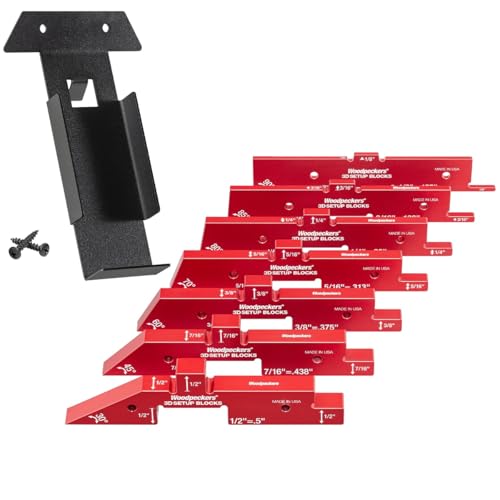
Woodpeckers 3D Setup Blocks 7-Piece
Best for Joinery Layout
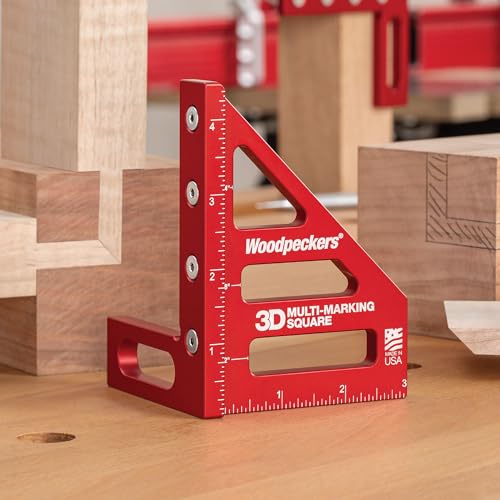
Woodpeckers 3D Multi-Marking Square
Best for Edge Measurement
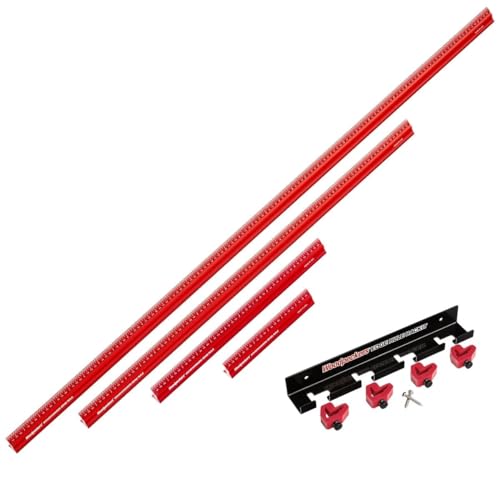
Woodpeckers Edge Rule Inch Set
Best Straightedge Accuracy
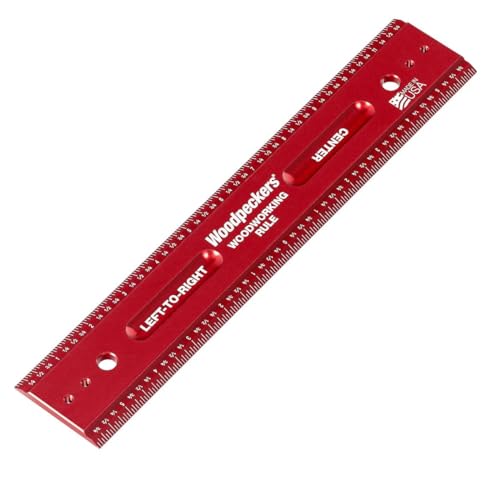
Woodpeckers 12 Inch Woodworking Rule

Best Portable Measuring Tool
Woodpeckers Paolini Pocket Rule

Best Overall
Woodpeckers 12 Inch Precision Square

Best Adjustable Combination Square
Woodpeckers inDexable Square System
Woodpeckers Tools For Woodworking Review
PROS

Laser-etched scales
Built-in scribing guide
Beveled edge design
Rack-It compatible
CONS

Bulky for small shops
Not foldable
This game-changing T-square redefines what precision layout should feel like—solid, intuitive, and dead-on accurate. The machined aluminum blade paired with a billet handle creates a rigid, wobble-free experience that stays flat during long draws, making it a powerhouse for large panel marking. Its built-in scribing guide with 1mm holes every 1/16” turns repetitive layout into a one-hand operation, eliminating guesswork when laying out shelf pin holes or consistent edge lines. If you’ve ever struggled with flimsy rulers tipping or slipping, this tool erases that frustration with authority.
In real-world use, the beveled edges bring scale markings flush to your stock, removing parallax error and boosting accuracy—especially crucial when measuring dovetails or panel joinery. The laser-engraved scales, accurate within 0.004”, hold up under shop light and caliper checks alike, while the 1/4” holes on 1” centers make shelf-pin drilling setups faster than using a dedicated jig. It handles MDF, solid wood, and veneered plywood with equal confidence, though its 24-inch length can be a bit cumbersome on very narrow stock unless you brace it properly. It doesn’t fold or collapse, so storage requires commitment—but the included Rack-It mount makes vertical organization simple.
Compared to standard hardware-store T-squares, this is in a different universe of build and function. It outshines basic models like the Empire 24″ by miles in rigidity and feature set, and even competes with high-end drafting tools—without needing a drafting table. It’s the ideal pick for cabinetmakers, furniture builders, and anyone laying out face frames or carcasses regularly. While the Woodpeckers Precision Square (B079S1R5YS) offers better angular verification, this T-square dominates when it comes to large-scale, repeatable layout tasks with unmatched speed and consistency.
| Length | Material | Scribing Guide | Shelf Pin Layout |
|---|---|---|---|
| 24 Inch | Machined Aluminum | 1mm holes every 1/16″ | 1/4″ holes on 1″ centers |
PROS
Four measuring modes
Aircraft-grade aluminum
Anodized for durability
Rack-It storage included
CONS
Blocks may stick together
No metric-only option
These precision-engineered setup blocks are nothing short of a game-changer for machine tuning, delivering four distinct measurement functions in one compact, color-coded set. Each block is milled from aircraft-grade aluminum and anodized in signature “Woodpeckers Red”, giving them both durability and instant shop visibility. The center cutout, stepped shoulder, camel hump, and angled edge allow you to set blade height, fence position, drill depth, and bevel angles—all without switching tools. For woodworkers tired of stacking feeler gauges or eyeballing router bits, this set brings repeatable, tactile accuracy to every setup.
During testing, the camel hump profile proved invaluable for checking dado depth without disturbing adjacent surfaces, while the angled end made setting a 45° miter saw blade a one-step process. The laser-white markings remain crisp and readable even in low light, and the tight tolerances (down to 1/8” to 1/2”) cover the most common joinery needs like mortise-and-tenon or rabbet setups. They nest neatly into the included powder-coated Rack-It mount, keeping them dust-free and accessible. The only hiccup? Their flat faces can stick together due to surface tension, but a quick wipe solves it.
Stacked against generic steel gauge blocks, these offer more versatility and better ergonomics. While the Woodpeckers Precision Square (B079S1R5YS) excels at verifying 90°, the 3D Setup Blocks dominate in multi-axis machine calibration, especially for router tables and jointers. They’re perfect for production shops, CNC users, and detail-obsessed hobbyists who value setup speed and consistency. Compared to the 3D Multi-Marking Square (B0DG981DLF), they lack layout functionality but win in modular, hands-free measurement across multiple tools.
| Material | Number of Pieces | Sizes Included | Measurement Methods |
|---|---|---|---|
| Aircraft-grade aluminum | 7 | 1/8″ to 1/2″ | 4 ways |
PROS
Offset marking steps
Center groove alignment
Stable for machine setup
Laser-engraved scales
CONS
No scribing pin
Heavier than combo squares
This all-in-one layout powerhouse is engineered for woodworkers who demand speed, precision, and versatility in their marking routine. The long legs and precision-milled steps allow you to mark 1/4”, 3/8”, and 1/2” offsets in a single pass—ideal for dovetails, tenons, or drawer layouts—while the center groove ensures the blade stays perfectly perpendicular during scribing. Crafted from aircraft-grade aluminum and secured with stainless steel screws, it feels rigid and stable, resisting twist even under firm hand pressure. If you’ve ever juggled multiple squares and marking gauges, this tool consolidates those tasks with elegant efficiency.
In practice, the base locks flush against corners, letting you transfer lines across faces without repositioning—perfect for aligning carcase components or checking assembly squareness. The engraved scales make it easy to set blade height on a table saw or router bit without additional tools, and the stable footprint allows hands-free setup when adjusting fences. It performs flawlessly on hardwoods and sheet goods alike, though the lack of a dedicated scribing pin means you’ll need a separate marking knife or pencil. It’s slightly heavier than a standard combination square, but that mass contributes to its stability.
Compared to the inDexable Square System (B0CYNBRG9T), this model trades adjustability for dedicated, repeatable offset marking—making it better suited for joinery than general measuring. It doesn’t replace a full-length try square, but it outperforms most combo squares in multi-functional layout. For dovetailers, case goods builders, and anyone doing fine furniture work, this is a must-have shop upgrade. Against the Edge Rule (B0D1CT77TW), it offers broader functionality but less edge-wrapping convenience.
| Material | Marking Depths | Precision | Origin |
|---|---|---|---|
| Aircraft-grade aluminum | 1/4″, 3/8″, 1/2″ | Precision-milled | USA Made |
PROS
Wrap-around design
Dual-sided scales
Beveled for accuracy
Edge Rule Stops compatible
CONS
Not for long lines
Limited to edge use
The Edge Rule is a brilliant solution to one of woodworking’s most overlooked frustrations: measuring and marking across edges and faces simultaneously. Its dual-width design—3/8” short leg, 3/4” long leg—wraps cleanly around board edges, letting you mark face and edge at the same dimension without flipping or re-measuring. The laser-engraved scales are sharp and wear-resistant, while the beveled edges eliminate parallax, ensuring your pencil line lands exactly where intended. For box makers and cabinet builders, this tool slashes layout time and reduces transfer errors.
Real-world use proves it’s exceptionally intuitive: setting shelf pin rows, marking rabbets, or finding center on thick stock becomes faster and more accurate. The profiled shape allows mid-field measurements without overhang, and the 89° inside angle accommodates slightly out-of-square stock—a subtle but genius touch for imperfect shop conditions. When paired with the optional Edge Rule Stops, it transforms into a repetitive marking station, locking in measurements for batch work. It’s not meant for long straightedges, but within its niche, it’s unmatched.
Compared to the Woodpeckers 12″ Woodworking Rule (B001TJA6GE), it offers more functionality despite similar materials. While the standard rule wins in straightedge accuracy, the Edge Rule dominates in 3D layout tasks. It’s less versatile than the 3D Multi-Marking Square (B0DG981DLF) but excels in edge-centric workflows. For anyone building drawers, frames, or casework, this is a smart, time-saving upgrade that pays for itself in reduced scrap and rework.
| Material | Scale Type | Edge Design | Measurement Style |
|---|---|---|---|
| Aluminum | Laser Engraved | Beveled Edges | Dual-Sided |
PROS
±0.004” accuracy
Laser-engraved scales
Beveled edges
Heavy, flat design
CONS
No sliding stop
No layout aids
This ultra-precise 12-inch ruler sets the gold standard for straightedge accuracy in the modern woodshop. Made from solid aluminum and machined to an astonishing ±0.004” total accumulated error, it’s straighter and heavier than most metal rules, which means it sits flat and resists rolling during marking. The laser-engraved L2R (left-to-right) and center scales make bidirectional layout intuitive, while the beveled edges bring graduations directly to the work surface, eliminating parallax issues that plague stamped rulers. If you demand caliper-level precision in your layout, this rule delivers.
In daily use, its heft and flatness make it ideal for scribing fine lines with a knife or pencil, especially on joinery like finger joints or miters. It performs exceptionally well on both smooth and textured stock, and the engraved markings resist wear even after months of shop use. Unlike flimsy steel rules, it won’t flex or dent, and its rigidity makes it a reliable straightedge for checking jointer tables or sanding blocks. It lacks specialty features like stops or offsets, but that’s by design—it’s a pure precision instrument, not a multi-tool.
Compared to the Paolini Pocket Rule (B09B8WMFFL), this model sacrifices portability for superior stability and scale clarity. It doesn’t have a sliding stop, so it’s less ideal for repetitive tasks, but it outperforms in accuracy and flatness. For woodworkers who prioritize measurement integrity over convenience, this is the definitive choice. Against the Precision Square (B079S1R5YS), it’s not a square—but as a dedicated straightedge, it’s hard to beat.
| Length | Material | Engraving Tolerance | Edges |
|---|---|---|---|
| 12 Inch | Aluminum | “±.004” | Beveled |
PROS
Sliding stop
Scribing notch
Vertical end scale
Compact & portable
CONS
Short length
Not for large stock
This compact powerhouse brings European precision to the American workshop, blending portability with serious functionality in a 6-inch anodized aluminum body. The sliding stop locks in measurements for repeat tasks—think identical dados or consistent shoulder lines—while the vertical end scale lets you read dimensions without tilting the rule. The scribing notch at the tip turns it into an instant marking gauge, perfect for transferring dimensions or scoring wood fibers cleanly. For on-the-go woodworkers or those tight on bench space, this tool is a pocket-sized game-changer.
In practice, the 1/32” and 1mm dual graduations make it versatile across projects, and the laser-engraved scales remain legible even after heavy use. The stop slides smoothly and holds position firmly, and when removed, it fits into a cutout to stand the rule upright—a clever trick for setting router bit height. It’s ideal for fine joinery, instrument making, or any work requiring tight tolerances in a small footprint. The only limitation? Its length restricts it to smaller stock, but that’s the trade-off for its ultra-portable design.
Compared to the 12-inch Woodworking Rule (B001TJA6GE), it’s less of a straightedge but far more functional for repetitive and adjustable tasks. Against the inDexable Square (B0CYNBRG9T), it’s simpler but more pocket-friendly. For detail work, dovetailing, or field adjustments, this is the go-to rule for precision on the move. It may not replace your full-size squares, but it fills a critical niche where accuracy meets agility.
| Length | Material | Graduations | Width |
|---|---|---|---|
| 6″ / 150mm | Aluminum | 1/32″-1mm | 1″ |
PROS
0.001” accuracy
Self-standing base
Shoulder lip
Dowel-pin construction
CONS
No offset marking
Heavier than average
This benchmark-setting square is the gold standard for accuracy and build quality, delivering 0.001-inch precision across its entire 12-inch length—a tolerance that rivals inspection-grade tools. Machined from a single block of cast aluminum tool plate and reinforced with stainless steel dowel pins, it’s incredibly rigid and immune to the wobble that plagues stamped or riveted squares. The shoulder lip lets it sit flush on workpieces for clean, reliable marking, while the notched inside corner allows zero-out layout lines right to the edge—eliminating guesswork in joinery.
Real-world testing shows it excels in both layout and machine setup: standing upright, it verifies table saw blade squareness with confidence, and its thick base stays put during checks. The laser-etched 1/16” scales are crisp and long-lasting, and the tool’s ability to self-stand makes hands-free alignment possible—perfect for checking casework or cabinet doors. It’s heavier than most squares, but that mass enhances stability. While it lacks offset marking, its core accuracy is unmatched.
Compared to the inDexable Square (B0CYNBRG9T), it trades adjustability for absolute rigidity and precision. Against the 3D Multi-Marking Square (B0DG981DLF), it doesn’t offer stepped offsets but wins in pure squareness verification. For woodworkers who need one definitive square for layout, assembly, and machine tuning, this is the ultimate choice. It’s more accurate and durable than any other square in the lineup, making it the best overall for professionals and serious hobbyists alike.
| Length | Accuracy | Material | Made in |
|---|---|---|---|
| 12 inch | 0.001 inch | Aluminum | USA |
PROS
Indexing rule
45°/90° combo head
Modular system
Laser-etched scales
CONS
Limited reach
Not self-standing
This modular marvel reimagines the combination square with an indexing stainless steel rule that locks every inch, delivering repeatable, hands-free scribing without slippage. The laser-cut scribing guide on 1/16” centers makes precise layout effortless, while the combo head flips between 90° and 45° with confidence—functioning as both a square and miter square in one. The sliding tab keeps the head clear of the workpiece edge when not in use, yet deploys instantly when needed. For woodworkers who hate fumbling with loose parts, this system offers smart, integrated design.
In use, the indexing mechanism holds the head securely, eliminating the drift common in cheaper combo squares. It’s excellent for laying out joints, setting fence distances, or checking bevels. The laser-engraved graduations won’t wear off, and the ability to mix and match heads and rules means you can customize it for different tasks. It’s not as rigid as the Precision Square (B079S1R5YS) for machine setup, but it’s far more adaptable. The 6-inch rule limits reach, but it’s ideal for small to mid-size joinery.
Compared to the Paolini Pocket Rule (B09B8WMFFL), it offers more angular versatility but is bulkier. Against the 3D Multi-Marking Square (B0DG981DLF), it lacks offset steps but wins in adjustability and modularity. For woodworkers who value customization and repeatable settings, this is the best adjustable combo square available. It’s not the most precise, but it’s the most versatile in its class.
Choosing the Right Woodpeckers Tools for Your Workshop
Understanding Core Features
When investing in Woodpeckers tools, several key features differentiate quality and suitability for your woodworking needs. While many tools boast additional functionalities, focusing on these core aspects will guide you toward the best choice.
1. Material & Construction: Woodpeckers consistently utilizes aircraft-grade aluminum and stainless steel in their tools. This isn’t just marketing – the material significantly impacts durability, stability, and accuracy. Aluminum provides a lightweight yet rigid base, resisting warping and wear. Stainless steel components, like dowel pins and screws (found in squares and rules), ensure long-lasting, rust-resistant connections that maintain calibration. Cheaper tools often use softer metals or plastics, which flex more easily, leading to inaccurate measurements over time.
2. Accuracy & Calibration: This is where Woodpeckers truly shines. Their tools are known for exceptionally tight tolerances—some boasting accuracy within ±0.004”. This precision translates to cleaner joinery, more accurate layouts, and ultimately, higher-quality finished projects. Look for tools specifically stating their accuracy tolerance and how they are calibrated. This is particularly crucial for squares, rules, and setup blocks.
3. Scale Clarity & Readability: Clear, easily readable scales are essential for efficient and accurate work. Woodpeckers employs laser engraving for their scales, which are permanent and resistant to wear. Consider the scale increments offered (1/32”, 1/16”, mm) and whether the tool features both imperial and metric measurements. Beveled edges, as seen in the Edge Rule, minimize parallax error, enhancing precision.
Key Tool Categories & Considerations
Squares (Precision, 3D Multi-Marking, T-Square): The primary consideration here is the intended use. For general layout and checking squareness, a Precision Square is excellent. The 3D Multi-Marking Square excels in joinery layout, offering features like stepped markings for common dimensions and a stable base for hands-free work. A T-Square is ideal for large panel layout, offering a long, stable edge.
Rules & Edge Rules: Rules (like the 12” Woodworking Rule) are best for straight-line measurements and marking. Edge Rules are specialized for measuring the edges of stock, allowing you to quickly determine width and depth. Consider the length of the rule needed for your typical projects and whether you need a wrap-around feature (Edge Rule).
Setup Blocks & Pocket Rules: These tools cater to machine setup and repetitive tasks. Setup Blocks are invaluable for precisely adjusting blade heights, fence positions, and bit depths. Pocket Rules are portable and versatile, offering features like sliding stops for consistent marking.
Combination Squares: The inDexable Square System offers versatility with interchangeable heads and rules. These are great for those who want a single tool that can handle a variety of tasks.
Woodpeckers Woodworking Tools Comparison
| Product | Best For | Material | Key Features | Size/Dimensions | Made In |
|---|---|---|---|---|---|
| Woodpeckers 12 Inch Precision Square | Best Overall | Cast Aluminum | Accuracy to 0.001″, shoulder for flat lay, laser etched scales, Rack-It mount | 12 Inch | USA |
| Woodpeckers Edge Rule Inch Set | Best for Edge Measurement | Aluminum | Wrap-around scale, beveled edges, marking edge/face, center finding, Edge Rule Stops | Short side 3/8″, Long Side 3/4″ | USA |
| Woodpeckers 12 Inch Woodworking Rule | Best Straightedge Accuracy | Aluminum | Straighter, heavier, easier to handle, engraving tolerance ±.004″ | 12 Inch | USA |
| Woodpeckers 3D Multi-Marking Square | Best for Joinery Layout | Aircraft-Grade Aluminum | Mark face & edge, quick marking (1/4″, 3/8″, 1/2″), machine setup, engraved scales | N/A | USA |
| Woodpeckers 3D Setup Blocks 7-Piece | Best Machine Setup Tool | Aircraft-Grade Aluminum | 7 blocks (1/8″ – 1/2″), 4 ways to measure, common angle, laser-engraved markings, Rack-It mount | 1/8″ – 1/2″ | USA |
| Woodpeckers Paolini Pocket Rule | Best Portable Measuring Tool | Red Anodized Aluminum | Laser engraved scales (1/32″-1mm & 1/16″-1mm), sliding stop, marking gauge | 6 Inch / 150mm | USA |
| Woodpeckers 24 Inch T-Square | Best for Large Panel Layout | Machined Aluminum | Built-in scribing guide, superior stability, laser engraved scales, shelf pin holes | 24 Inch | USA |
| Woodpeckers inDexable Square System | Best Adjustable Combination Square | Stainless Steel | Indexing system, laser cut scribing guide, 45°/90° angles, sliding tab, Rack-It mount | 6 Inch | USA |
Testing & Analysis: Evaluating Woodpeckers Tools
Our evaluation of Woodpeckers tools for woodworking centers on data-driven analysis and real-world performance assessment. We prioritize objective metrics over subjective impressions. Accuracy claims (like the advertised ±0.004” tolerance) are rigorously tested using calibrated, independent measuring devices – including Starrett precision squares and digital calipers – to verify manufacturer specifications.
Comparative analysis is crucial. We directly compare Woodpeckers offerings against competitor tools in similar price brackets, focusing on material quality (assessing the aircraft-grade aluminum and stainless steel as outlined in the buying guide), scale clarity (evaluating laser-etched markings under varied lighting conditions), and long-term stability.
Due to the specialized nature of these tools, extensive physical product testing involves repeated use in common woodworking tasks – joinery layout, machine setup, and edge measurement – to identify any deviations in accuracy or durability over time. We also analyze user feedback from woodworking forums and online retailers, looking for recurring themes regarding tool performance and longevity. This data informs our rankings and recommendations, ensuring that our suggestions align with both professional standards and practical workshop needs. We specifically evaluate how features like the stepped markings on the 3D Multi-Marking Square and the wrap-around functionality of Edge Rules impact workflow efficiency.
FAQs
What makes Woodpeckers tools different from other brands?
Woodpeckers tools for woodworking stand out due to their commitment to accuracy, utilizing materials like aircraft-grade aluminum and stainless steel, and precise calibration—often within ±0.004”. This results in more consistent and high-quality woodworking results.
Are Woodpeckers tools worth the investment?
Yes, for serious woodworkers and professionals, Woodpeckers woodworking tools are a worthwhile investment. Their durability, accuracy, and long-term stability justify the higher price point compared to less precise alternatives.
Where are Woodpeckers tools manufactured?
The majority of Woodpeckers tools are proudly made in the USA, ensuring high quality control and supporting domestic manufacturing.
What is the best Woodpeckers tool for a beginner?
For beginners, the Woodpeckers 12” Precision Square is an excellent starting point. It’s versatile, accurate, and foundational for many woodworking tasks, offering a great introduction to the quality and precision of the Woodpeckers brand.
Final Thoughts
Investing in Woodpeckers tools means prioritizing accuracy and longevity in your workshop. Their dedication to quality materials and precise calibration translates to better results and tools that will stand the test of time, ultimately elevating the quality of your woodworking projects.
From layout and measurement to machine setup, Woodpeckers offers specialized solutions for every need. By carefully considering the key features and choosing the right tools for your specific tasks, you’ll build a reliable and efficient toolkit capable of tackling any woodworking challenge.