Cutting precise, clean holes in wood is a fundamental task in woodworking, cabinetry, and home renovation. Whether you’re installing drawer pulls, running electrical conduit, or cutting out a sink base, the right tool makes the difference between a professional finish and a frustrating mess. With so many options—ranging from simple drill bits to advanced router setups—knowing which tool to use for your specific hole size, material, and desired finish is essential.
This guide breaks down the top tools for cutting holes in wood, comparing their strengths, ideal applications, and expert techniques. You’ll learn how to match the perfect tool to your project, avoid common mistakes, and achieve smooth, accurate results—every time. From 1/2″ pilot holes to 6″ circular cutouts, we cover everything you need to know to cut holes in wood safely, efficiently, and with confidence.
Choose the Right Tool Based on Hole Size
The diameter of your hole is the first factor in selecting the best cutting tool. Using the wrong bit or blade can lead to tear-out, inaccuracy, or even tool damage.
Small Holes (<1″): Use Twist or Auger Drill Bits
For holes under 1 inch—such as pilot holes for screws, dowel joints, or wire pass-throughs—twist drill bits and auger bits are your most effective choices. Twist bits are affordable, widely available, and work well in both softwood and hardwood when used correctly. To prevent wandering, always mark the center with a center punch or awl before drilling.
Auger bits go a step further with a self-feeding screw tip that pulls the bit into the wood, reducing operator effort and improving hole straightness. Their deep spiral flutes efficiently remove chips, minimizing heat buildup—especially in thick softwood. Use augers at low speeds (600–900 RPM) with a hand brace or drill for clean, deep bores.
Pro Tip: In hardwoods like oak or maple, drill a 1/8″ pilot hole first to prevent bit deflection and burning.
Medium Holes (1″–3″): Forstner Bits for Flat-Bottomed Precision
When you need a clean, flat-bottomed hole—such as for cabinet hinges, shelf pins, or inlay work—Forstner bits are unmatched. Unlike twist or spade bits, they cut with minimal tear-out and can drill overlapping holes, angled bores, or partial circles. This makes them ideal for fine woodworking and cabinetry.
Use Forstner bits at 600–900 RPM to avoid overheating. Retract the bit frequently to clear sawdust from the gullets, especially in thick stock. They perform best in solid wood, plywood, and MDF.
Warning: Never use Forstner bits on metal or masonry—this will damage the bit and pose serious safety risks.
Large Holes (>1″): Hole Saws for Fast, Clean Cuts
For openings over 1 inch—like door knobs, vents, or plumbing fixtures—hole saws are the fastest and cleanest solution. These cylindrical cutters remove a wood core, leaving a smooth-edged hole that often requires little to no sanding.
Available in high-speed steel (HSS), bimetal, and carbide-tipped models, hole saws range from ½” to nearly 8″ in diameter. Bimetal versions (like those from Exchange-A-Blade) combine durability and heat resistance, while carbide-tipped blades excel in abrasive materials like laminated plywood.
Key Feature: Always ensure the pilot bit is sharp and properly seated—it keeps the saw centered and prevents wobbling.
Cut Perfect Circles with Precision Tools

When accuracy and finish matter, standard drill bits won’t cut it. These tools deliver flawless circular cuts.
Forstner Bits: Flat-Bottomed Accuracy You Can Rely On
For holes that require exact depth and a flat base—such as hinge mortises or inlays—Forstner bits are the gold standard. They don’t rely on a central spur, allowing for angled drilling and overlapping bores. Use them in a drill press for maximum control, or handheld with steady pressure.
Limit depth per pass to avoid binding. For thick stock, drill halfway from each side to reduce tear-out. Always use sharp bits to minimize friction and burning.
Pro Tip: Clamp a scrap backing board underneath your workpiece to prevent exit-side splintering.
Hole Saws: Fast, Interchangeable, and Reliable
Hole saws offer fast, clean cuts in large diameters and are perfect for repetitive tasks. They come in a three-part system: the saw blade, arbor (mandrel), and pilot bit. Most fit standard 1/4″ or 3/8″ chucks.
- HSS models handle general wood cutting
- Bimetal versions cut wood, plastic, and light metals
- Thin-kerf blades reduce waste in delicate materials
- Flush-trim hole saws cut at surface level—ideal for cabinetry
Brands like Diablo and Exchange-A-Blade offer professional-grade bimetal and cobalt models that last up to twice as long as standard steel.
Best Practice: Use a variable pitch (4/6 TPI) blade for smoother cuts and better chip removal.
Make Irregular or Oversized Shapes with Ease
Not all holes are round. These tools handle curves, ovals, and complex cutouts.
Jigsaw: Ultimate Shape Flexibility
For sink cutouts, stove openings, or decorative designs, the jigsaw is your go-to tool. It follows any curved or freehand line with precision.
Steps to cut a hole with a jigsaw:
1. Draw the outline on the wood
2. Drill a starter hole near the edge
3. Insert the blade and cut along the line
4. Sand edges for a smooth finish
Use a fine-toothed blade (10–12 TPI) for clean cuts in hardwood or plywood. For veneered surfaces, a down-cut blade minimizes chipping on the top layer.
Safety Note: Always clamp the workpiece and keep hands clear of the blade path.
Router with Circle Jig: Precision for Large Circles
Need a perfect circle larger than your Forstner bit? Use a router with a circle jig. This setup delivers unmatched accuracy and repeatability.
How to set up a circle jig:
– Attach a pivot screw to scrap wood on the workbench
– Mount the router to a jig arm
– Set distance from pivot to outside edge of bit = hole radius
– Rotate clockwise around the center point
For holes wider than your bit:
1. Drill an initial hole with a Forstner bit
2. Use a rabbeting bit with bearing to widen gradually
3. Finish with a flush-trim bit for a smooth edge
Expert Tip: Use a compression spiral bit for clean cuts on both sides of plywood.
Alternative Methods for Large or Thick Stock
When standard tools reach their limits, these methods step in.
Bandsaw: Safe, Controlled Circular Cuts
For large-diameter circles in thick wood, the bandsaw is safe and effective. With a simple pivot setup, rotate the workpiece around the blade.
Setup steps:
1. Attach a scrap base to the table with double-sided tape
2. Drill a pilot hole and screw the workpiece to the base
3. Align the screw with the front of the blade
4. Rotate slowly and steadily
The cut will be rougher than a router, but it can be cleaned up with sanding or a flush-trim bit.
Advantage: No risk of kickback—perfect for beginners.
Table Saw Sled: Advanced Circular Cutting
With a sled and pivot screw, your table saw can cut precise circles. However, this method requires caution.
Process:
1. Build a sled with runners and a zero-clearance edge
2. Screw the workpiece to the sled at the desired radius
3. Make multiple straight cuts while rotating clockwise
4. Gradually round off corners
Critical Safety Rule: Never free-spin the workpiece until most material is removed. Always use push blocks.
Alternative Use: Cut a circle as a template, then use it with a flush-trim bit for final pieces.
Match the Tool to Your Material

Different woods react differently to cutting. Choose your tool and technique accordingly.
Softwood: Most Tools Work Well
Softwoods like pine or cedar are forgiving. Spade bits, hole saws, and twist drills all perform efficiently. Use medium to high speeds and steady pressure.
Avoid: Excessive speed with Forstner bits—can cause burning.
Hardwood: Sharp Bits and Slow Feeds
Hardwoods like oak or maple demand sharp tools and slower operation. Dull bits will bind or burn.
- Use sharp Forstner or auger bits
- Drill at 600–900 RPM
- Apply consistent, moderate pressure
- Retract frequently to clear chips
Pro Tip: Soak hardwood edges in water briefly to reduce splintering (test on scrap first).
Plywood and MDF: Prevent Chipping
These sheet goods chip easily, especially on the exit side.
- Use downcut or compression spiral router bits
- Clamp a backing board underneath
- Drill from both sides when possible
- Use sharp hole saws with fine teeth
Avoid: Spade bits—they cause significant chipping in veneered plywood.
Optimize Performance with Best Practices
Follow these tips to get the cleanest cuts and longest tool life.
Set the Right Speed (RPM)
Speed affects cut quality and tool life:
| Material / Bit Type | Recommended RPM |
|---|---|
| Softwood (small hole) | 1500–2000 RPM |
| Hardwood (Forstner) | 600–900 RPM |
| Large hole saw (>2″) | <1000 RPM |
| Plywood (router) | 12,000–18,000 RPM |
Rule of Thumb: Larger diameter = slower speed.
Clear Chips and Prevent Overheating
Built-up sawdust increases friction and dulls bits. To prevent overheating:
– Use an up-and-down motion while drilling
– Stop every few seconds to clear gullets
– In thick stock (>1″), drill halfway from each side
Forstner Tip: Withdraw bit fully every 1/2″ to eject chips.
Secure Your Workpiece
Movement leads to inaccuracies and splintering. Always:
– Clamp wood firmly to a workbench
– Use double-sided tape for small pieces
– Support large panels to prevent sagging
Safety First: Never hold the workpiece with your hand while drilling.
Final Thoughts: Choose the Right Tool for the Job
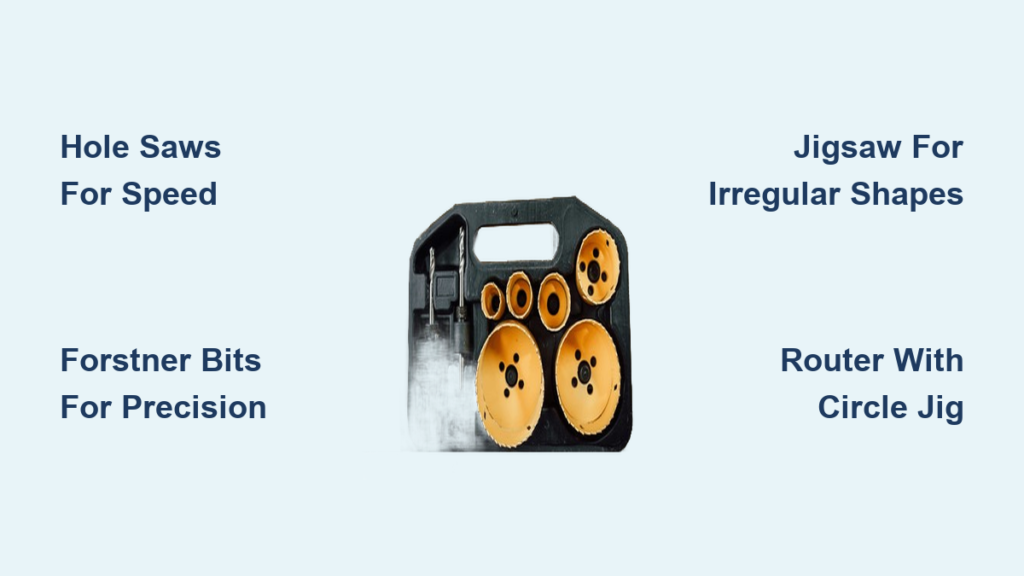
The best tool for cutting holes in wood depends on your project’s needs. Use hole saws for speed and simplicity. Choose Forstner bits for precision and flat bottoms. Reach for a jigsaw for irregular shapes. And for flawless, repeatable circles, a router with a circle jig is unbeatable. By matching the right tool to your hole size, material, and finish requirements—and following best practices—you’ll achieve clean, accurate results every time.