When it comes to building strong, durable wood projects—from simple shelves to handcrafted cabinets—knowing the best tool to join wood together can make all the difference. The strength, appearance, and longevity of your project depend not just on the wood you use, but on how well the pieces are connected. With so many tools and techniques available, it’s easy to feel overwhelmed. Should you use screws, dowels, biscuits, or traditional hand-cut joints?
This guide cuts through the clutter and delivers only the most effective, proven tools used by real woodworkers. Whether you’re a beginner assembling your first bookshelf or a seasoned builder crafting fine furniture, you’ll learn which tools deliver the strongest, cleanest, and most reliable joints—without wasting time or money.
We’ll explore everything from pocket hole jigs that save hours on assembly to hand tools that elevate craftsmanship. You’ll discover top-rated models, their pros and cons, and exactly which joints each tool excels at. No outdated methods, no fluff—just actionable insights to help you choose the right wood joining tool for your next project.
Pocket Hole Jigs: Fast, Strong, and Beginner-Friendly

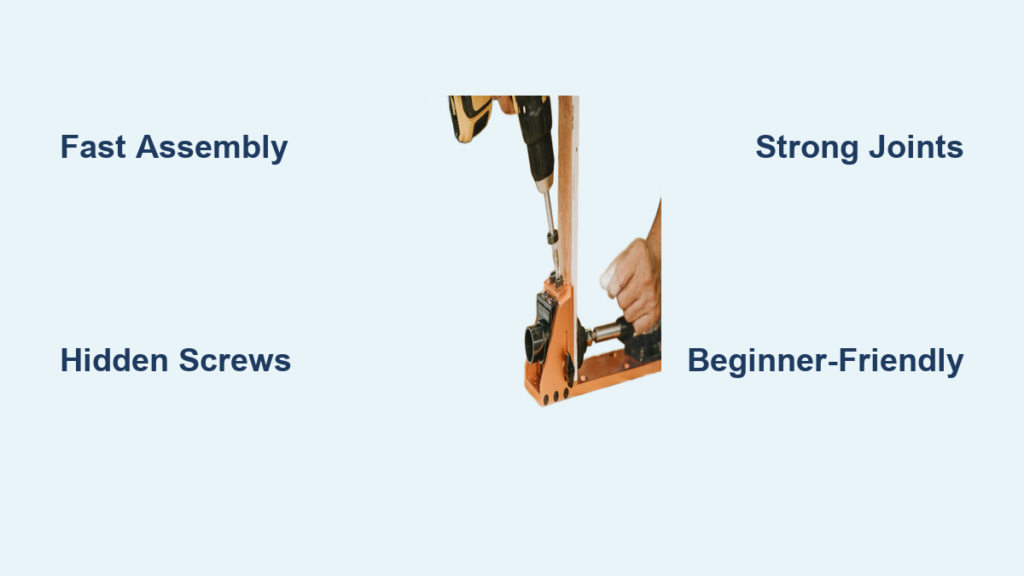
If you want a tool to join wood together that’s fast, strong, and foolproof, pocket hole jigs are hard to beat. These tools drill an angled hole into one board so a screw can pull it tightly against a second piece. The joint is hidden, strong, and requires minimal setup—perfect for face frames, cabinets, and DIY furniture.
Kreg K4: The Gold Standard
The Kreg K4 Pocket Hole Jig is the top choice for both professionals and DIYers, with a stellar 4.8/5 rating from over 7,300 reviews. Priced at $99, it adjusts for wood thickness from 1/2″ to 1 1/2″, features durable drill guides, and supports repeatable drilling—ideal for large or small projects.
Its micro-adjustable clamp and tool-free depth setting eliminate constant recalibration, saving time and frustration. Over 1,000 units are bought monthly, a testament to its reliability and ease of use.
Compact and Budget Options
For tight spaces or smaller budgets, consider:
– Kreg KPHJ320-22 ($49): Includes a face clamp, perfect for cabinetry
– Kreg MKJKIT Mini Jig ($18): Ultra-portable, great for drawers and repairs
Both support the same 1/2″ to 1 1/2″ stock range and deliver solid joints—some even strong enough to hold without glue.
Craig Rebel: The Future of Pocket Holes
Launched in 2025, the Craig Rebel is a game-changer: a 20V battery-powered system that needs no clamps. Its rubberized base grips wood with just 6 lbs of pressure, making it ideal for on-site or portable work. Features include:
– Top-mounted depth adjustment
– Quick-change drill bit system
– Fence adjusts for ½” to 1.5″ stock (up to 2x8s)
This cordless innovation brings pocket hole joinery into the modern age—faster, lighter, and more efficient than ever.
Why Choose a Pocket Hole Jig?
– ✅ Speed: Assemble projects in minutes
– ✅ Strength: Screw-based joints resist racking
– ✅ Hidden Fasteners: Screws sit below the surface
– ✅ Beginner-Friendly: Minimal learning curve
– ✅ Versatility: Great for frames, shelves, and repairs
Avoid if you prioritize visible craftsmanship—pocket holes are functional, not decorative.
Doweling Jigs: Hidden, Precise, and Strong

Doweling uses wooden pins glued into perfectly aligned holes to join two pieces. When done right, it creates clean, invisible joints ideal for picture frames, aprons, and table legs.
Top Doweling Jigs
- Milescraft 1333 DowelJig Kit ($22): Self-centering, includes bushings for 1/4″, 5/16″, and 3/8″ dowels. Rated 4.4/5 with 1,600+ reviews.
- Milescraft 1334 Joint Master ($45): Aluminum self-clamping jig for edge, corner, and surface joints. Rated 4.7/5.
Both ensure perfect hole alignment and eliminate guesswork.
Budget Alternatives
- Beaiguna Self-Centering Kit ($21): 6 bushings, adjustable width
- BLEKOO Blue Kit ($29): Durable with 6 guide bushings
These offer solid performance for casual woodworkers.
Pros and Cons of Dowel Joinery
– ✅ Clean appearance: No visible hardware
– ✅ Strong glue bond: Large surface area
– ✅ Self-aligning: Jigs prevent misalignment
– ❌ Less forgiving: Requires precise drilling
– ❌ Not for heavy loads: Not ideal for structural joints
Best used when aesthetics matter and alignment can be controlled.
Biscuit Joiners: Perfect for Edge Alignment
Biscuit joiners cut oval-shaped slots into two mating edges, then insert a compressed wood biscuit that swells with glue to lock the pieces together. This method is excellent for aligning panels and face frames.
WEN JN8504: Best Value Biscuit Joiner
Priced at $52, the WEN JN8504 features an 8.5-amp motor, cuts hardwoods with ease, and includes a carrying case and sample biscuits. With a 4.6/5 rating from over 2,400 reviews, it’s a top pick for DIYers.
It handles 0°, 45°, and 90° cuts, making it versatile for cabinets, tabletops, and frames.
When to Use Biscuits
– ✅ Edge-gluing panels: Keeps seams flush
– ✅ Face frame assembly: Speeds alignment
– ✅ Plywood and sheet goods: Works well with engineered wood
Avoid for structural joints—biscuits aid alignment but don’t add strength. The joint relies entirely on glue.
Box and Finger Joint Jigs: Strength Meets Beauty
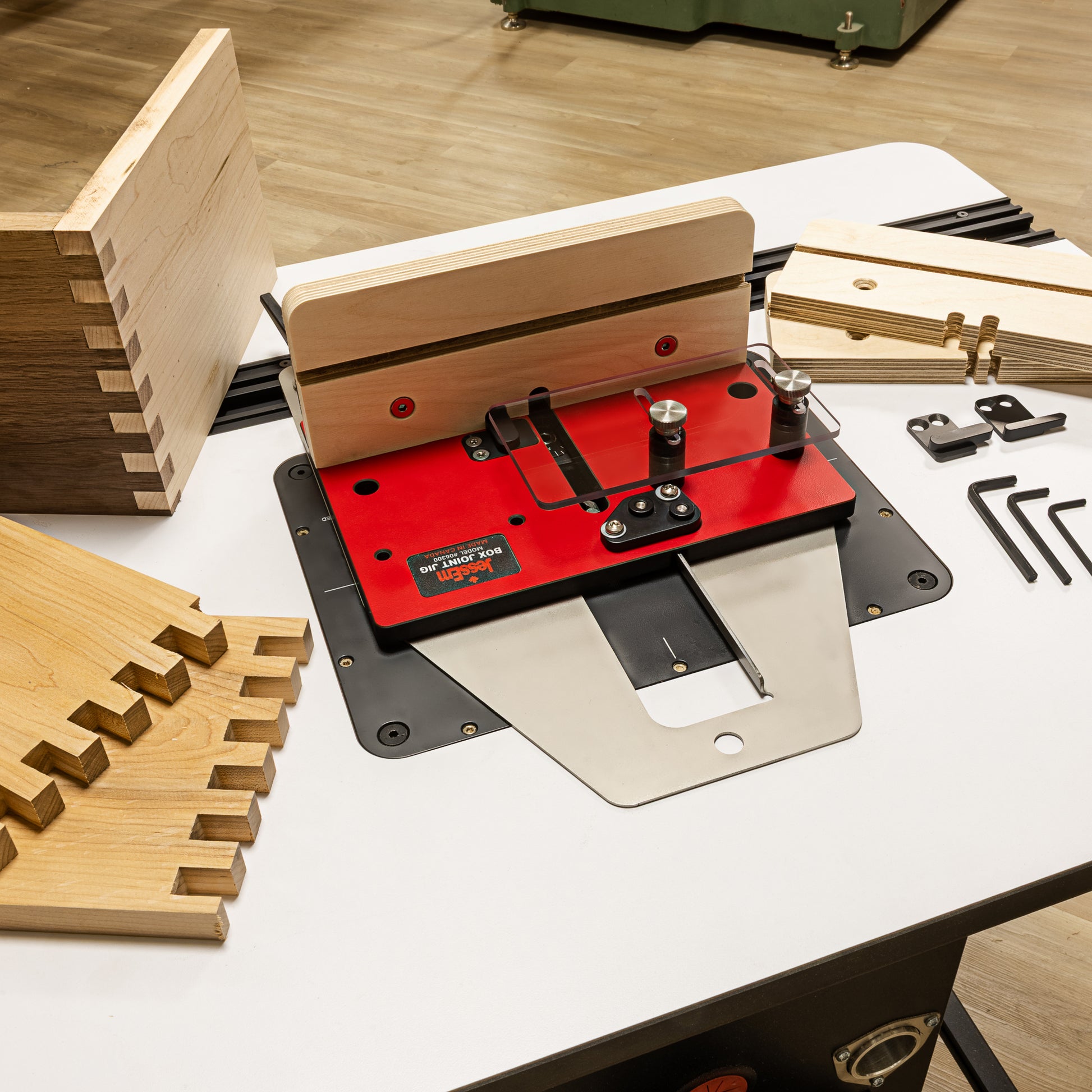
Box joints—also called finger joints—feature interlocking rectangular fingers that create strong, attractive corners. They’re perfect for drawers, boxes, and carcasses.
JessEm Box Joint Jig (2025 Innovation)
This game-changing jig assembles in under 5 minutes and includes:
– Three interchangeable fences for different wood thicknesses
– Three Whitco router bits (small, medium, large)
– Mounts via alignment pins or track clamps
It delivers dead-on accurate joints in hardwoods like walnut and maple—no trial and error.
POWERTEC Adjustable Box Jig
Priced at $130, this jig works on table saws and router tables, offering adjustable settings for various stock sizes. Ideal for repeatable, tight-fitting joints.
How to Cut Box Joints
1. Match fence and key to wood thickness
2. Set router bit height to match stock
3. Cut first piece fully through
4. Use it as a guide for subsequent cuts
5. Step down incrementally for perfect fit
Perfect for beginners who want professional results without hand-cutting.
Dovetail Jigs and Hand Tools: The Art of Craftsmanship
Dovetail joints are among the strongest and most beautiful in woodworking. Their interlocking trapezoidal pins and tails resist pulling apart and are often left visible as a sign of quality.
MNA 45° Lock Miter Bit Set
At $32, this 3-piece router bit set cuts lock miter joints in 1/2″, 5/8″, and 3/4″ stock. Great for boxes and carcasses.
Freud 8″ Box Joint Cutter Set
Priced at $73, this anti-kickback set delivers smooth, precise cuts on table saws—ideal for large box joints or sliding dovetails.
Hand Tools for Traditional Dovetails
- Dovetail saw: Fine teeth for precision
- Chisels (1/2″, 3/4″): Clean out waste
- Mallet: Nylon or wood for driving chisels
- Dovetail marker: Layout guides with 1:5 to 1:10 slopes ($14, 4.6/5)
Hand-cutting takes practice but rewards with unmatched craftsmanship.
Essential Hand Tools for Precision Joinery
Even with power tools, hand tools are vital for refining joints.
Chisels: Must-Haves for Mortises and Tenons
- DeWalt 3-Piece Set (½”, ¾”, 1″): Sharp out of box, holds edge on hardwoods
- Narex or Stanley: Premium options for serious woodworkers
- Harbor Freight: Budget-friendly, but require more sharpening
Use to clean mortises, shape tenons, and fine-tune fit.
Handsaws and Mallets
- Dovetail saw: For small, accurate cuts
- Tenon saw: Handles shoulder and tenon cuts
- Japanese pull saws: Smooth, clean cuts with less effort
- Nylon mallet: Protects chisel handles
A good saw costs around $30 but pays off in control.
Marking Tools
- Marking gauge: Ensures consistent layout lines
- Try square: Verifies 90° cuts
- Mortise gauge: Marks mortise width and depth
These tools ensure accuracy before any cut is made.
Power Tools That Enable Advanced Joinery
Routers: The Joinery Powerhouse
Routers can cut:
– Dados and rabbets
– Mortises and tenons
– Sliding dovetails
– Raised panels
Recommended Bits
– Exqutoo 3PCS Raised Panel Bits ($40): Carbide-tipped for tenons
– 3PCS 1/2″ Shank Cabinet Bits ($32): For door frames
GOINGMAKE Concealed Hinge Jig ($47): Essential for modern cabinet builds.
Drill Press: Precision Drilling
Ensures straight, repeatable holes for dowels and mortises.
Harvey Sniper (Coming 2026)
– Auto-centering system
– Motorized table with digital readout
– Tilting bed with touchscreen
Marketed as the “self-driving car” of drill presses—set to revolutionize accuracy.
Corner Clamps: Perfect 90° Glue-Ups
Clamps hold joints in place while glue dries. Right-angle clamps are essential for square assemblies.
Top Options
- WETOLS 4Pcs (Orange) ($14): Spring-loaded, adjustable
- 90° Aluminum Clamp (4 Pack) ($45): Durable, pro-grade
- Housolution Single Handle ($40): Swing jaw adjusts for misaligned corners
- ECY Cabinet Clamps (2 Pack) ($37): Anodized aluminum for face frames
Use for frames, cabinets, and box corners to ensure perfect 90° angles.
Which Tool Should You Use? Quick Guide
| Project Type | Best Tool | Why |
|---|---|---|
| Cabinets, Frames | Pocket hole jig | Fast, strong, hidden |
| Tabletops, Panels | Biscuit joiner | Aligns edges perfectly |
| Drawers, Boxes | Box joint jig or dovetail jig | Strong, attractive |
| Traditional Furniture | Chisels, handsaws, mallet | Authentic craftsmanship |
| Dowel-Fitted Frames | Doweling jig | Clean, hidden joints |
| Shelving, Repairs | Pocket screws + clamp | Quick and reliable |
Final Recommendation: Best All-Around Tool
The pocket hole jig—especially the Kreg K4 or KPHJ320-22—is the best tool to join wood together for most people. It’s fast, strong, beginner-friendly, and versatile. No other tool delivers such consistent results with so little setup.
For traditional builds, combine doweling jigs, biscuit joiners, and hand tools for precision and beauty. And for the future, tools like the Craig Rebel, Harvey Sniper, and JessEm Box Joint Jig are setting new standards.
Whichever tool you choose, remember: the best joint is strong, fits perfectly, and matches your project’s purpose. With the right wood joining tool, you’re not just connecting boards—you’re building something that lasts.