Cutting perfect circles in wood is a frequent challenge for woodworkers, from DIYers installing a kitchen sink to professionals crafting custom speaker enclosures. The right tool to cut circles in wood can make the difference between a polished, professional result and a jagged, frustrating mess. With so many options—from simple hole saws to high-end CNC routers—choosing the best method depends on circle size, material thickness, required precision, and your available tools.
This guide covers every practical way to cut circles in wood. You’ll discover which tools deliver the cleanest edges, how to avoid a center hole, and how to build budget jigs that outperform expensive gear. Whether you’re making a single round cutting board or producing hundreds of wooden ornaments, you’ll find the ideal solution here.
Choose the Right Tool Based on Circle Size
Small Circles (Under 6 Inches)
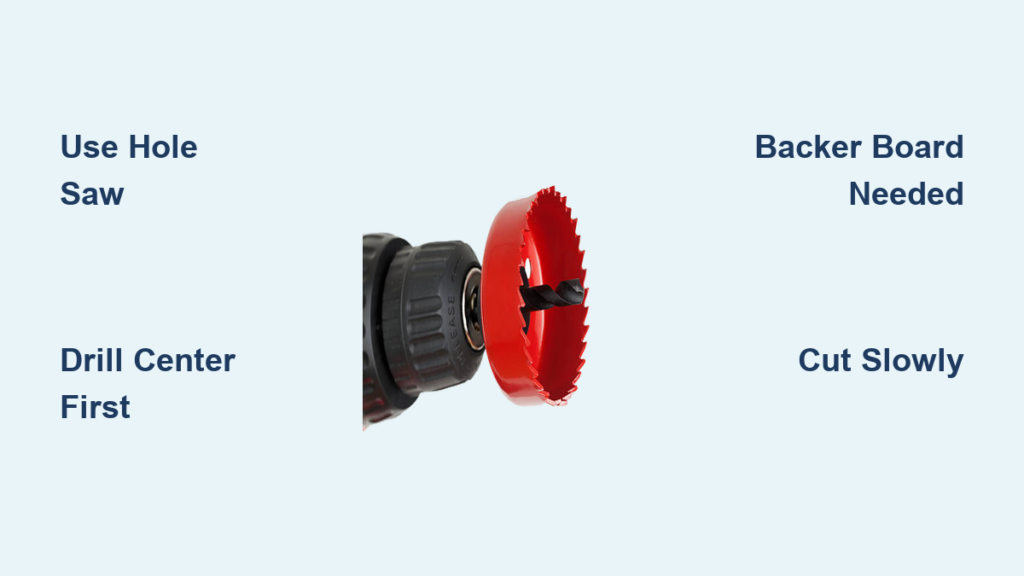
For circles under 6 inches, hole saws are the fastest and most effective option. These cylindrical blades attach to a standard drill and cut clean, round holes with minimal setup.
- Best for: Faucet holes, electrical cutouts, dowel openings
- Ideal materials: Softwood, plywood, MDF
- Limitations: Not ideal for hardwoods over 1.5″ thick; requires a pilot bit
Hole saws come in fixed diameters (1″, 2″, 4″, 6″) and are typically made from bi-metal for durability. Popular kits like the KATA 20PCS ($19.94) and HYCHIKA 19-Piece ($18.50) offer multiple sizes and include mandrels, making them excellent value for occasional use.
Pro Tip: Drill from both sides to reduce tear-out. Place a scrap board underneath to prevent blowout on the backside.
Medium to Large Circles (6+ Inches)
Once circles exceed 6 inches, hole saws become impractical. That’s when router circle jigs, bandsaw jigs, and CNC machines take over.
- Router with trammel: Delivers the cleanest edge on thick stock
- Bandsaw jig: Fastest for multiple identical cuts
- CNC router: Most precise and repeatable
The Milescraft 1219 Circle Guide ($49.99) is a top choice for woodworkers, allowing cuts from 1.5″ to 52″ with a handheld router—perfect for cutting boards, round table tops, and speaker baffles.
Very Small or Detailed Cuts
For inlays, templates, or tiny circular cutouts under 1″, use a Dremel with the 678 Circle Cutter ($14.73). It’s compact, precise, and works with Dremel’s rotary tools for fine control.
Avoid using large tools for small details—they lack the finesse and can easily splinter delicate wood.
Use Hole Saws for Fast, Clean Small Cuts

Why Hole Saws Excel for Small Diameters
Hole saws are the go-to tool for cutting clean, round holes quickly. The cylindrical blade slices through wood like a cookie cutter, removing a disc while leaving a smooth wall.
- Bi-metal blades cut efficiently through softwood and plywood
- Pilot bit keeps the saw centered
- Affordable and widely available
Top-rated kits include:
– KATA 20PCS: $19.94 | 13 blades + 2 mandrels
– HYCHIKA 19-Piece: $18.50 | Includes storage case
– 6-Inch Hole Saw: $12.99 | High user volume
How to Cut a Perfect Hole
- Mark the center with a center punch
- Clamp the workpiece to a backing board
- Start drilling slowly to let the pilot bit bite
- Apply steady pressure—don’t force it
- Back out frequently to clear chips
Warning: Hole saws heat up quickly. In thick wood, make shallow passes and let the blade cool.
Common Mistakes to Avoid
- ❌ Using on hardwood over 1.5″ thick without peck drilling
- ❌ Forcing the drill—causes binding and rough edges
- ❌ Skipping the backing board—leads to exit-side splintering
For best results, use a fine-tooth bi-metal blade and finish with light sanding.
Try Adjustable Hole Saws for Variable Sizes
When to Use an Adjustable Model
If you need circles between 1″ and 12″ but don’t want a full kit, an adjustable hole saw offers flexibility.
Popular models:
– 30–300mm Adjustable Saw: $14.99 | Sliding blade design
– NT Cutter C-3000GP: $33.97 | Aluminum body, up to 10″
– General Tools 55: $26.35 | Heavy-duty, 1.75″–7.87″
These tools use a movable cutting arm that slides to set diameter. Some even include vacuum ports for dust control.
Limitations to Know
- Less rigid than fixed hole saws—prone to wobble
- Edge finish is rougher, especially in hardwood
- Best for softwood, drywall, and occasional use
They’re not ideal for precision joinery or thick oak, but they’re great for DIYers who need occasional variable cuts.
Pro Tip: Lubricate the blade with wax or soap to reduce friction in dense materials.
Cut Large Circles with a Router and Circle Jig
Why Routers Deliver the Cleanest Finish
A router with a circle jig produces the smoothest, most accurate large circles. It’s the top method for cutting boards, round tables, and speaker baffles.
Key benefits:
– Clean, sandable edges
– Works on wood up to 2+ inches thick
– Repeats exact sizes
Top router jigs:
– Milescraft 1219: $49.99 | 1.5″–52″ | Offset base for plunge cuts
– Jasper 300 XLC: $64.96 | 7″–52.75″ | Includes centering disc
– Dremel 678: $14.73 | Small circles only | Fits Dremel models
How to Set Up a Router Circle Jig
- Drill a 1/4″ center hole in the workpiece
- Insert pivot pin into jig base
- Attach router and set bit depth (¼” max per pass)
- Align bit to radius mark on trammel arm
- Plunge and rotate clockwise around the center
Critical: Always route clockwise to maintain control and prevent kickback.
DIY Trammel Option
Can’t afford a commercial jig? Make one:
– Cut a ¼” plywood strip (length = desired radius)
– Drill pivot holes every ½”
– Screw to router base
– Use a Forstner bit to drill center hole
This low-cost method works surprisingly well for one-off projects.
Speed Up Production with a Bandsaw Circle Jig

Fastest Way to Cut Multiple Circles
If you’re making ornaments, round blanks, or shelf pins, a bandsaw circle jig is unbeatable for speed.
Build a simple jig:
– Use ¾” scrap plywood for the base
– Add a front stop aligned with the table
– Install a dovetail pivot pin (15° angle prevents loosening)
– Set distance from blade = radius
Two Methods: With or Without Center Hole
With center hole:
– Drill center hole
– Insert pivot pin
– Rotate workpiece into blade
Without center hole:
– Use double-sided tape to attach workpiece to a carrier board
– Mount carrier to pivot
– Cut through both layers
This method preserves material integrity—perfect for finished surfaces.
Pro Tip: Use a resaw blade (1/2″ or 3/4″) for smoother cuts and less vibration.
Try a Table Saw Sled for Big Circles
How to Cut Large Circles on a Table Saw
A table saw circle sled uses a pivot screw to rotate the workpiece into the blade.
Steps:
1. Build a sled with miter slot runners
2. Attach a pivot screw at the radius distance
3. Clamp workpiece to sled
4. Make multiple straight cuts (like slicing a pie)
5. Finish by rotating into the blade for a smooth curve
Danger Zone: This method risks kickback. Always:
– Rotate clockwise only
– Use push paddles
– Keep hands behind the blade
Not recommended for beginners. Safer to cut a template first, then route to match.
Use a Jigsaw for Budget-Friendly Cuts
Can You Cut Circles with a Jigsaw?
Yes—but with caveats. A jigsaw with a trammel jig is accessible but less precise due to blade flex.
Build a jigsaw trammel:
– Glue/screw plywood strips to jigsaw base
– Mark blade centerline
– Attach to a pivot pin at radius distance
Tips for Cleaner Results
- Use a fine-tooth, narrow blade
- Set bevel to 0°
- Cut slowly with steady pressure
- Make relief cuts for tight curves
Workaround: Cut just outside the line, then sand or flush-trim to final size.
Best for rough cuts or soft materials. Avoid for hardwood or fine furniture.
Go High-Tech with a CNC Machine
Ultimate Precision for Repeated Circles
If you need perfect, repeatable circles, a CNC router is unmatched.
Advantages:
– No center hole needed—hold work with tape or vacuum
– Cuts any size within bed limits
– Edge finish requires little to no sanding
– Program once, cut 100+ times
Ideal for:
– Production shops
– Inlays and templates
– Custom signage
Entry-level CNCs start around $1,000, but they pay off for high-volume work.
Software Tip: Use Carbide Create or Easel to design and run circular cuts with ease.
Pick the Right Tool for Your Skill Level
Beginner-Friendly Options
- Hole saw: Plug and play, minimal setup
- Jigsaw with DIY jig: Low cost, easy to learn
- Dremel 678: Great for small detail work
Start here if you’re new to circle cutting.
Intermediate: Precision and Control
- Router with Milescraft jig: Clean results, moderate learning curve
- Bandsaw jig: Fast, reusable, DIY-friendly
These tools expand your capabilities without breaking the bank.
Professional: Speed and Accuracy
- CNC machine: For shops needing repeatability
- High-end router jigs: Jasper or Milescraft for flawless finishes
Invest when quality and volume matter.
Follow Expert Tips for Flawless Results
General Best Practices
- ✅ Cut slightly outside the line—finish with sanding
- ✅ Use a backing board to prevent tear-out
- ✅ Secure workpiece with clamps or tape
- ✅ Test on scrap wood first
- ✅ Use fine-tooth blades for cleaner cuts
- ✅ Go slow—especially with routers and jigsaws
Router-Specific Tips
- Use spiral downcut bits for clean topside edges
- Never exceed ¼” depth per pass (for ¼” shank bits)
- Route clockwise to maintain control
Bandsaw Tips
- Ensure blade is sharp and tensioned
- Align pivot pin with blade center
- Rotate smoothly—no jerking
Safety First
- Wear safety glasses, gloves, and a dust mask
- Keep hands clear of blades
- Unplug tools when changing bits or adjusting jigs
- Use push sticks on table saw
Final Recommendations by Use Case
Need Small Holes? Use a Hole Saw
For 1″ to 6″ holes, a KATA or HYCHIKA hole saw kit is your best bet. Affordable, fast, and reliable.
Making Large, Clean Circles? Use a Router Jig
For cutting boards or table tops, the Milescraft 1219 delivers professional results with minimal effort.
Cutting Many Identical Circles? Build a Bandsaw Jig
Perfect for ornaments, toys, or blanks. Fast, reusable, and costs under $10 to build.
No Center Hole Allowed? Try CNC or Tape Method
Use double-sided tape on a bandsaw or a CNC to avoid drilling the center.
On a Budget? DIY a Jigsaw or Router Trammel
A $10 plywood jig can outperform expensive tools with patience and care.
Final Note: The best tool to cut circles in wood depends on your project, not your budget. Start with a hole saw for small jobs, add a router jig for precision, and build a bandsaw jig for speed. Together, these three tools cover nearly every circle-cutting need in woodworking.