Every woodworker knows that the right tools don’t just make the job easier—they make better craftsmanship possible. Whether you’re cutting your first dovetail or building a custom dining table, having the correct list of tools for woodworking in your shop can mean the difference between frustration and flawless results. This comprehensive guide breaks down every essential tool, from foundational hand tools to high-performance power equipment, organized by function, precision, and practicality.
You’ll discover not just what tools to own, but why they matter, how to use them effectively, and which models professionals rely on. Whether you’re setting up a new workshop or upgrading your setup, this guide ensures you’ll never overlook a critical tool again.
Core Hand Tools: Precision Without Power
Hand tools are the backbone of fine woodworking. They offer unmatched control, teach fundamental skills, and often deliver cleaner results than power tools—especially in joinery and surface refinement.
Hammers & Mallets: Controlled Force for Assembly
The right striking tool protects both your workpiece and your tools.
-
Claw Hammer (20 oz)
Ideal for general assembly and disassembly. Choose one with a smooth face to avoid marring wood surfaces. A hickory handle absorbs shock better than steel or fiberglass, reducing fatigue during long sessions. -
Wooden Mallet
Use this when driving chisels or assembling tight joints. A square-faced cabinetmaker’s mallet is durable and widely used, while a round carving mallet offers better weight distribution for precision work. -
Deadblow Mallet (22 oz)
Filled with steel shot, this mallet minimizes rebound, making it perfect for seating frame-and-panel joints without damaging edges.
Hand Saws: Cut with Control and Cleanliness
Hand saws deliver precision where power tools can’t—or shouldn’t—go.
-
Rip Hand Saw (26″, 5 TPI)
Designed to cut with the grain. Its chisel-like teeth remove material quickly, making it ideal for rough dimensioning before planing. -
Crosscut Hand Saw (26″, 8 TPI)
Cuts across the grain cleanly. Use it to size rough stock accurately before fine joinery. -
Tenon Saw (18″, ≥3.5″ depth)
A stiff-backed saw for precise joinery. Perfect for cutting tenons on table legs or frame components. -
Dovetail Saw (14–18 TPI)
Smaller and finer than a tenon saw. Use it for intricate dovetail joints—higher TPI yields cleaner cuts. -
Coping Saw
Ideal for curves and interior cutouts. Replace blades frequently to maintain clean performance. -
Japanese Ryoba Saw
Dual-edged: one side for rip, one for crosscut. The pull-stroke design reduces binding and offers superior control.
Planes: Flatten, Smooth, and Refine
Planes shape wood with a precision that sanding can’t match.
-
Jack Plane (#5)
Your go-to for initial stock removal. Use it after jointing to bring boards close to final thickness. -
Smoothing Plane (#4)
Prepares surfaces for finishing. A tight mouth and finely set blade produce glass-like results—often eliminating the need for sanding. -
Jointer Plane (#7 or #8)
Flattens long board edges for seamless glue-ups. At 22–24 inches long, it bridges gaps and corrects warps. -
Block Plane
Trims joints, eases sharp edges, and fits drawers. A low-angle model excels on end grain. -
Router Plane
Cleans rabbets, dados, and tenon cheeks. Maintains consistent depth for repeatable joinery.
Chisels: The Heart of Joinery Work
Sharp, reliable chisels are non-negotiable for clean mortises and tight-fitting joints.
-
Bench Chisels (1/4″ to 1.5″)
Bevel-edged for access into corners. Made from high-carbon or chromium-vanadium steel for edge retention. Sharpen to 30° for durability. -
Paring Chisel
Long, thin blade for controlled, hand-pressure-only cuts. Ideal for fitting joints and chamfering edges. -
Corner Chisel
Cuts square notches with hammer blows—useful for hinge mortises or stop joints.
Measuring & Marking Tools: Accuracy Starts Here
A poorly marked cut ruins even the sharpest blade.
-
Combination Square (6″ or 12″)
Marks 90° and 45° lines, checks squareness, and measures depth. Starrett models are the gold standard. -
Speed Square
A must-have for quick layout. Use it to mark straight lines across boards or guide circular saws. -
Marking Knife
Scores wood fibers for clean, splinter-free cuts. A pencil line shifts; a knife line doesn’t. -
Marking Gauge
Scribes parallel lines from an edge. Wheel gauges cut cleaner than pin types. -
Sliding Bevel
Transfers and replicates angles. Lock it after matching a mitre or taper for perfect duplicates. -
Calipers (Digital or Dial)
Measure thickness, hole depth, and dado width. While wood moves, calipers ensure consistency across joinery.
Clamps & Workholding: Secure, Strong, Repeatable
Strong, even pressure ensures durable glue joints and safe machining.
-
F-Clamps (6″ to 24″)
General-purpose bar clamps. Durable and widely available. -
Pipe Clamps
Extendable with threaded pipe. Build a set with multiple heads and varying pipe lengths for large glue-ups. -
Quick-Release Clamps (e.g., Bessey K-Body)
One-handed operation speeds assembly. Great for temporary holds during dry-fitting. -
Parallel Clamps
Deliver even pressure across wide panels. Ideal for gluing table tops or cutting boards. -
Bench Vise & Holdfasts
Secure workpieces to your bench. Pair with dog holes for maximum versatility.
Essential Power Tools: Boost Productivity and Precision
Power tools dramatically increase your capability, especially when working with sheet goods, thick stock, or complex joinery.
Table Saw: The Workshop Workhorse
This is the centerpiece of most woodworking shops.
- Key Features:
- Rip fence that stays parallel to blade
- Riving knife (not just a splitter) to prevent kickback
- Miter gauge with smooth T-groove
- Dust collection port
-
≥1.5 HP motor (15A circuit recommended)
-
Recommended Models:
- SawStop PCS – includes flesh-detection safety
- DeWalt DWE7491X – excellent value for entry-level
- Grizzly G0690 – cabinet saw for serious builders
Use a crosscut sled for safe, accurate crosscuts. Never bypass safety guards unless using a jig designed for the task.
Track Saw vs Circular Saw: Sheet Goods Mastery
Choose based on precision needs and budget.
- Track Saw (e.g., Festool TS 55)
- Enclosed blade = safer operation
- Plunge-cut capability
- Integrated dust extraction
-
Perfect for sheet goods and long straight cuts
-
Circular Saw
- Portable and affordable
- Use with a straightedge guide for clean cuts
- Upgrade to a 40–60 tooth ATB blade for smoother results
Miter Saw (Compound or Sliding)
For fast, repeatable crosscuts and bevels.
- 10″ vs 12″: 12″ offers wider crosscuts (up to 12″ at 90°)
- Hard stops at common angles (15°, 22.5°, 45°) speed layout
- Sliding arm increases cut capacity
- Use with extendable tables for support
Ideal for trim work, picture frames, and leg cutting.
Band Saw: Master of Curves and Resawing
Cut curves, resaw thick stock, and rip awkward shapes.
- Throat Size: 12″ for benchtop, 18″+ for cabinet models
- Depth of Cut: 6–12″ (with riser block)
- Blade Width:
- 1/8″ – tight curves
- 1/2″ – general ripping
- 1″ – resawing
Keep tires clean with a rubber wheel brush. Track and tension blades properly for accuracy.
Jigsaw & Scroll Saw: Detail and Delicacy
For intricate cuts.
- Jigsaw: Corded models offer sustained power. Use narrow blades for curves.
- Scroll Saw: Best for fretwork and detailed inlays. Can start cuts internally without drilling.
Drilling, Boring, and Surface Preparation
Accurate holes and smooth finishes start with the right tools.
Power Drill & Impact Driver
- Drill: Use for pilot holes and driving screws at controlled speed.
- Impact Driver: Delivers high torque for driving long screws without stripping bits.
Pair in a combo kit (e.g., DeWalt 20V MAX). Choose models with brushless motors for longer life.
Drill Press
For perfectly vertical, repeatable holes.
- Benchtop or floor-standing
- Adjustable table and speed settings via pulley system
- Use with a Forstner bit for flat-bottomed holes (shelf pins, mortises)
Forstner Bits
Outperform spade bits in precision. Cut clean, flat-bottomed holes in hardwoods and plywood.
Random Orbital Sander
Top choice for minimizing swirl marks. Use 80–120 grit for shaping, 150–220 for finishing.
- Hook-and-loop (Velcro) pads allow quick paper changes
- Dust collection is non-negotiable—connect to shop vac
Recommended: Festool ETS 150, Bosch ROS20VSC
Shaping & Joinery Power Tools: Elevate Your Craft
Take your craftsmanship to the next level.
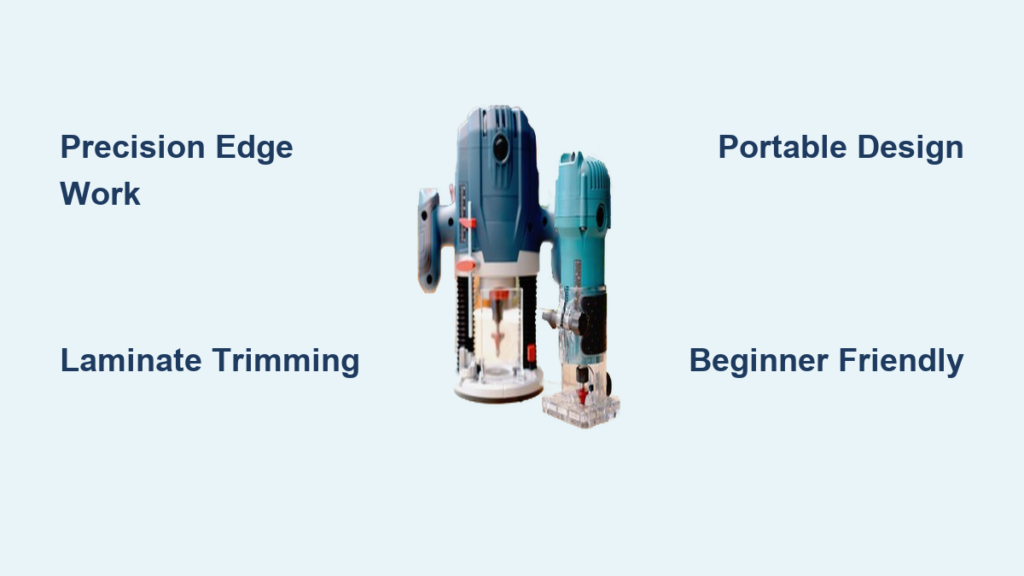
Router
Versatile for edge profiles, dados, rabbets, and joinery.
- Fixed-base: Consistent depth for edge work
- Plunge-base: Start cuts mid-panel (e.g., hinge mortises)
- Collet sizes: 1/4″ (light duty), 1/2″ (heavy duty)
- Variable speed: Slower for large bits, faster for small
Use in a router table with fence and featherboard for safer, more accurate results.
Recommended: Triton TRA001 (3.25 HP), Bosch 1617EVSP
Pocket Hole Jig (Kreg)
Fast, strong hidden joints. Even budget models save hours on cabinet builds.
- Use with #8 coarse-thread pocket screws
- Clamp workpieces tightly to avoid misalignment
Domino Joiner (Festool DF 700)
Floating tenons with speed and precision. Expensive but unmatched for joinery efficiency.
Workshop Essentials, Safety, and Smart Buying
Workbench & Support
- Workbench: Height: 36″ standard, or knuckle-height for hand-tool users
- Sawhorses: Rated for 500 lbs each; use with a top board for flat work surface
- Crosscut Sled: Build with runners that fit miter slots for accurate table saw cuts
Dust Collection & Air Quality
- Shop Vacuum: Portable, wet/dry capable
- Dust Collector (1 HP): Central system for stationary tools
- Dust Separator: Captures 90%+ of debris before it hits the filter
Safety Equipment (PPE)
- Eye Protection: Safety glasses or goggles
- Hearing Protection: Earplugs or earmuffs (85+ dB)
- Respirator: Half-face with P100 filters for fine dust
- Push Sticks & Guards: Never remove riving knife or blade guard
- First Aid Kit: Stocked with gauze, antiseptic, bandages, tweezers
Tool Buying Strategy
- Start with Basics: Square, tape measure, chisels, marking knife, block plane, saw
- Buy Used When Possible: Craigslist, Facebook Marketplace, Habitat ReStore
- Project-Driven Purchases: Only buy a tool when a project demands it
- Invest in Quality: Spend more on frequently used items—sanders, routers, clamps
Must-Have Tools by Project Type
| Project Type | Essential Tools |
|---|---|
| Dimensional Lumber | Miter saw, speed square, clamps, sawhorses, impact driver |
| Plywood Projects | Track saw + straightedge, Kreg jig, orbital sander, pipe clamps |
| Joinery & Precision | Chisels, marking gauge, combo square, router, drill press |
| Hand Tool Focus | Jack/smoothing/jointer planes, tenon/dovetail saws, mallet, marking tools |
| Furniture Making | Table saw, planer, jointer, router, clamps, sander |
Final Note: This list of tools for woodworking covers everything from foundational hand tools to advanced power equipment and safety must-haves. Whether you’re setting up your first garage shop or refining a professional studio, prioritize quality, safety, and purpose. Start small, build skills, and let your projects guide your purchases. With the right tools in hand, there’s no limit to what you can create.