Every successful project starts with the right tools. Whether you’re assembling furniture, building a deck, or repairing a pipe, having a clear hand tools and power tools list is essential for efficiency, safety, and precision. This comprehensive guide breaks down every major tool type—what it does, where it’s used, and how to choose the best one for your needs.
From basic wrenches to high-powered saws, we’ll explore the full range of hand and power tools used across construction, woodworking, automotive repair, and home improvement. You’ll learn key differences, top applications, safety practices, and maintenance tips to extend tool life. By the end, you’ll know exactly which tools to add to your kit—whether you’re a weekend DIYer or a professional tradesperson.
Hand Tools: The Foundation of Every Toolkit
Hand tools are essential for precision, control, and reliability. They require no power source, making them ideal for quick fixes, tight spaces, and detailed work.
Wrenches for Fasteners
Wrenches provide the mechanical advantage needed to tighten or loosen nuts, bolts, and fittings.
- Adjustable Wrench – A go-to for multiple fastener sizes. The sliding jaw makes it versatile, though it shouldn’t replace precision-fixed wrenches for critical tasks.
- Pipe Wrench – Designed with serrated jaws that grip round pipes securely. Common in plumbing and HVAC systems.
- Basin Wrench – Features a long handle and pivoting head to reach confined areas under sinks and faucets.
- Socket Wrench with Ratchet – Allows continuous turning without repositioning. Use with extension bars and universal joints for deep or angled access.
Pro Tip: Always pull the wrench toward you for better control and reduced risk of slipping.
Pliers for Grip and Cut
Pliers deliver leverage for gripping, bending, cutting, or crimping materials like wire and tubing.
- Slip-Joint Pliers – Adjustable pivot lets you switch between gripping small and large objects.
- Needle-Nose Pliers – Long, tapered tips are perfect for electrical wiring, jewelry work, or retrieving dropped screws.
- Channel-Lock Pliers – Multi-position grips make them ideal for plumbing pipes and large fasteners.
- Wire Cutters – Hardened blades cleanly slice through copper, steel, and other conductors.
Visual Cue: Look for flush-cutting edges on wire cutters to avoid leaving sharp burrs behind.
Essential Measuring Tools
Accuracy begins with proper measurement. These tools ensure your cuts are straight, surfaces level, and joints square.
- Tape Measure – A retractable steel tape (16–25 ft) with a locking mechanism. Choose one with bold markings and a sturdy hook for durability.
- Spirit Level – Uses liquid-filled vials to show when a surface is perfectly horizontal (level) or vertical (plumb).
- Combination Square – A sliding ruler with 90° and 45° heads for marking and checking angles.
- Marking Knife – Scores wood or metal for clean, precise cuts—more accurate than a pencil.
Expert Note: While laser levels speed up layout on large jobs, a traditional spirit level remains a must-have for accuracy.
Manual Cutting Tools
When noise and power aren’t an option, manual cutting tools offer quiet, controlled performance.
- Hacksaw – Holds a fine-toothed blade under tension, ideal for cutting metal, PVC, or conduit. Replace blades when dull or broken.
- Utility Knife – Retractable blade for slicing drywall, carpet, insulation, and packaging. Swap blades frequently to maintain sharpness and safety.
- Hand Saw – Woodworkers use crosscut or rip saws depending on grain direction. Keep teeth clean and sharp for smooth operation.
- Tubing Cutter – Rotates around copper or plastic pipe for clean, burr-free cuts—far superior to using a hacksaw.
Avoid This Mistake: Don’t force a hand saw. Let the tool do the work with steady, even strokes.
Hammers and Striking Tools
One of the oldest tools still in universal use, the hammer drives, shapes, or breaks materials.
- Claw Hammer – The most common type, used for driving nails and removing them with the curved claw.
- Ball-Peen Hammer – Rounded end shapes metal; widely used in auto body and machining.
- Sledgehammer – A two-handed striking tool for demolition or driving stakes into the ground.
- Dead Blow Hammer – Filled with sand or shot to minimize rebound—perfect for delicate surfaces.
Did You Know? The claw hammer is among the most frequently used tools in construction due to its versatility.
Screwdrivers and Drivers
Even with power tools, manual screwdrivers remain vital for precision and tight spaces.
- Flathead (Slotted) – Single-slot drive. Never use an oversized version that can slip and damage the screw.
- Phillips (Cross-Tip) – Most common in household fixtures and electronics.
- Torx (Star-Shaped) – Increasingly used in automotive and appliances for a secure fit.
- Multi-Bit Screwdriver – Stores multiple tips in the handle—compact and travel-friendly.
Safety Reminder: Never use a screwdriver as a chisel or pry bar—it can shatter and cause injury.
Files and Chisels for Shaping
These tools remove small amounts of material for shaping, smoothing, or fitting parts.
- Metal File – Available in coarse, medium, or fine grits for deburring, smoothing, or contouring.
- Wood Chisel – Beveled edge shapes joints or removes waste material. Keep sharp with regular honing.
- Cold Chisel – Designed for cutting cold metal or breaking masonry. Always use with a hammer.
- Reamer – Enlarges or smooths holes in pipes after cutting—critical in plumbing.
Maintenance Tip: Store chisels in a roll or rack to protect their cutting edges.
Power Tools: Boosting Efficiency and Speed

Power tools save time and effort, especially on repetitive or heavy-duty tasks. Available in corded, cordless, pneumatic, and gas-powered models, they’re essential for modern construction and repair.
Drilling and Fastening Tools
These tools form the backbone of any power tool collection.
Cordless Drill/Driver
The most versatile power tool for drilling holes and driving screws.
- Key Features: Variable speed trigger, reversible rotation, keyless chuck
- Battery Voltage: 12V (light duty), 18V/20V Max (pro-grade), 40V+ (heavy outdoor)
- Use Cases: Hanging shelves, assembling furniture, installing outlets
Pro Tip: Use the clutch setting to prevent overdriving screws into drywall or wood.
Hammer Drill
Delivers rapid hammering action along with rotation—perfect for masonry.
- Best For: Drilling into brick, concrete, or stone
- Not For: Wood or metal (use regular drill mode)
- Accessories: Masonry bits with carbide tips
Warning: Always wear eye protection—concrete dust is hazardous.
Rotary Hammer
More powerful than a hammer drill, using a piston-driven mechanism.
- Applications: Large anchor holes, chiseling concrete, breaking up slabs
- Modes: Drill, hammer drill, and chisel (demo mode)
- Sizes: SDS-Plus (light), SDS-Max (heavy)
When to Upgrade: Choose a rotary hammer for frequent concrete work.
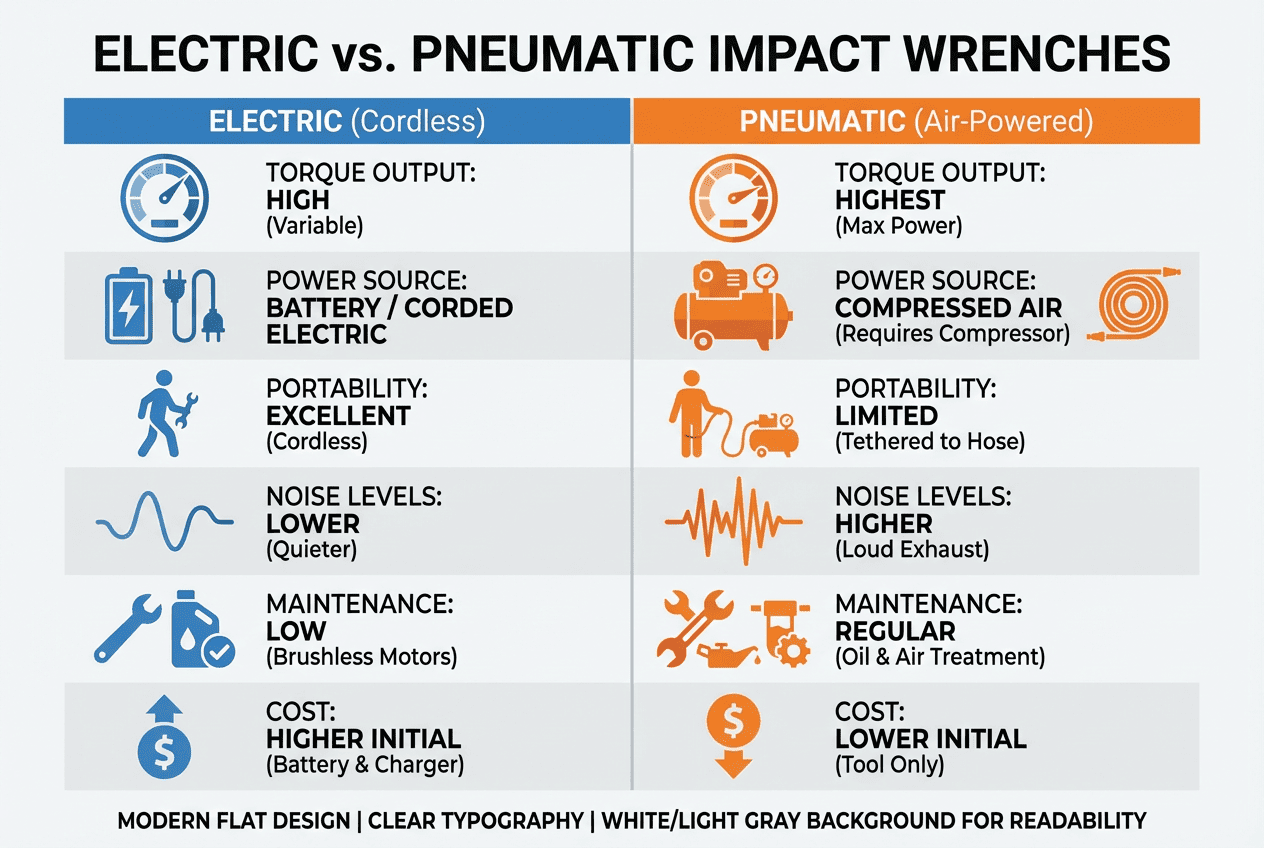
Impact Driver vs Impact Wrench
Both deliver high torque, but serve different purposes.
- Impact Driver – Compact, lightweight, hex-shank bit holder. Ideal for long screws and decking.
- Impact Wrench – High-torque tool for loosening lug nuts and bolts. Common in auto shops.
- Types: Pneumatic (most powerful), cordless (portable), corded (continuous use)
Fact: Modern cordless impact wrenches now rival pneumatic models in torque output.
Sawing Tools for Precision Cuts
Saws cut wood, metal, plastic, and masonry—each designed for specific tasks.
Circular Saw
A handheld powerhouse for straight cuts in framing, decking, and sheet goods.
- Blade Size: Typically 7¼ inches
- Adjustments: Depth and bevel angle
- Safety Feature: Electric brake stops blade quickly after release
Cutting Tip: Use a guide rail or straight edge for flawless rip cuts.
Reciprocating Saw (Sawzall®)
Aggressive back-and-forth blade motion for demolition and pruning.
- Uses: Cutting pipes, nails, studs, tree limbs
- Blades: Choose based on material—metal, wood, or bi-metal
- Orbital Action: Increases cutting speed in wood
Ideal For: Remodeling and emergency rescue work.
Jigsaw
Maneuverable blade for curved and intricate cuts.
- Applications: Sink cutouts, scrollwork, beveled edges
- Shoe Plate: Adjustable for angle cuts
- Variable Speed: Match speed to material thickness
Avoid Splintering: Use a down-cut blade for clean top surfaces.
Miter Saw
Stationary saw for accurate angled and crosscuts.
- Types:
- Standard Miter Saw: Cuts left and right angles
- Compound Miter Saw: Adds bevel capability
- Dual-Bevel Miter Saw: Bevels both directions—great for crown molding
Pro Upgrade: Laser or LED guide systems improve cut accuracy.
Table Saw
The backbone of any woodshop—used for ripping, crosscutting, and joinery.
- Safety Musts: Blade guard, riving knife, anti-kickback pawls
- Types: Benchtop (portable), contractor, cabinet (pro-grade)
- Fence System: Ensures straight, repeatable cuts
Never Leave Unattended: Always unplug when changing blades.
Sanding and Finishing Tools
Smooth surfaces start with the right sander.
Random Orbital Sander
Random motion prevents swirl marks—ideal for final finishes.
- Pad Size: 5″ or 6″ common
- Dust Extraction: Use with shop vac for cleaner workspace
- Backing Pads: Hook-and-loop for quick disc changes
Pro Tip: Start with 120-grit, finish with 220-grit for smooth paint prep.
Belt Sander
Aggressive material removal for leveling or shaping.
- Best For: Deck refinishing, removing old finishes, shaping edges
- Grit Range: 60–100 for coarse, 150+ for fine
- Weight: Heavier than orbitals—use two hands
Caution: Can gouge wood if not handled carefully.
Detail Sander
Triangular nose reaches corners and tight spots.
- Uses: Window frames, moldings, furniture joints
- Attachments: Various sanding foams and strips
- Low Vibration: Comfortable for extended use
Perfect For: Touch-ups and finish work.
Tool Selection: How to Choose the Right One
Picking the right tool saves money, time, and frustration.
Power Source Comparison
| Type | Best For | Pros | Cons |
|---|---|---|---|
| Corded | Continuous heavy use | Unlimited runtime, full power | Limited mobility |
| Cordless | Jobsite flexibility | Portable, no tripping hazard | Battery cost, limited runtime |
| Pneumatic | High-torque tasks | Lightweight, durable, consistent power | Needs air compressor |
| Gas-Powered | Remote/outdoor use | High power, independent of electricity | Noisy, emissions, maintenance |
Trend Alert: Lithium-ion cordless tools now match corded performance in many cases.
Brushed vs Brushless Motors
- Brushed Motors: Affordable but less efficient, with shorter lifespan due to brush wear.
- Brushless Motors: More efficient (up to 30% longer runtime), less heat, smarter load adjustment, preferred in pro-grade tools.
Investment Advice: Pay more for brushless tools—they last longer and perform better.
Safety: Prevent Injuries and Damage
Over 400,000 ER visits yearly stem from tool misuse (CPSC). Stay safe with these protocols.
Hand Tool Safety
- Inspect Before Use: Check for cracks, bends, or worn edges
- Keep Sharp: Dull tools require more force and slip easily
- Right Tool, Right Job: Don’t use pliers as a hammer
- Store Properly: Hang or box tools to avoid damage and tripping hazards
Power Tool Safety
- Wear PPE: Safety glasses, hearing protection, gloves, dust mask
- Unplug Before Changing Bits: Prevent accidental start-up
- Secure Workpiece: Clamp materials—never hold by hand
- Use GFCI Outlets: Essential for outdoor/wet environments
- Avoid Loose Clothing: Can get caught in moving parts
Top Injury Sources: Circular saws and drills due to high speed and exposed blades.
Maintain Tools for Long Life
Proper care doubles or triples tool lifespan.
Daily Maintenance
- Wipe down after use
- Remove dust and debris from vents
- Let tools cool before storage
Monthly Checks
- Inspect cords and plugs
- Clean battery contacts
- Test switches and triggers
- Replace worn blades, bits, or brushes
Storage Tips
- Store in dry, climate-controlled area
- Use labeled cases or wall-mounted racks
- Keep batteries at 40–60% charge if unused for months
Lifespan Expectancy: With care, pro tools last 5–10+ years.
Final Recommendations
Pro Power Tool Kit
- Brushless Cordless Drill (20V)
- Impact Driver
- Rotary Hammer
- Circular Saw
- Reciprocating Saw
- Miter Saw
- Angle Grinder
- Oscillating Multi-Tool
- Framing Nailer
- Shop Vacuum
Beginner DIY Kit
- Drill/Driver Combo (12V or 20V)
- Circular Saw
- Orbital Sander
- Jigsaw
- LED Work Light
- Safety Gear (goggles, ear muffs, gloves)
Smart Strategy: Start with a brand ecosystem—add tools over time without buying new batteries.
Whether you’re tightening a bolt by hand or cutting a beam with a saw, the right hand tools and power tools list empowers you to work smarter, safer, and faster. Build your kit gradually, prioritize quality, and always respect the tools you use. With this guide, you’re ready to tackle any project with confidence.