If you’re searching for a hand tool for shaping wood, you’re stepping into a timeless craft where precision, control, and finesse define the final result. Whether you’re refining a gently curved chair leg, carving a wooden spoon, or smoothing a complex joint, hand tools offer a level of detail and finish that power tools often can’t match. Unlike machines that demand setup, dust collection, and electrical access, hand tools are ready to use the moment you pick them up—ideal for one-off projects, quiet workshops, and artisan-level woodworking.
This guide breaks down every essential hand tool for shaping wood, from aggressive stock removers to delicate finishing instruments. You’ll learn which tools excel at specific tasks, how to use them safely and effectively, and what to look for when building your toolkit. Based on expert insights, user reviews, and real-world performance data, this is your roadmap to mastering wood shaping by hand.
Match the Right Tool to Your Shaping Task
Not all wood shaping tools are created equal. Each is designed for a specific purpose—whether it’s removing bulk material, refining curves, or adding fine detail. Choosing the right hand tool for shaping wood saves time, reduces effort, and prevents frustration.
Use the Right Tool for the Job
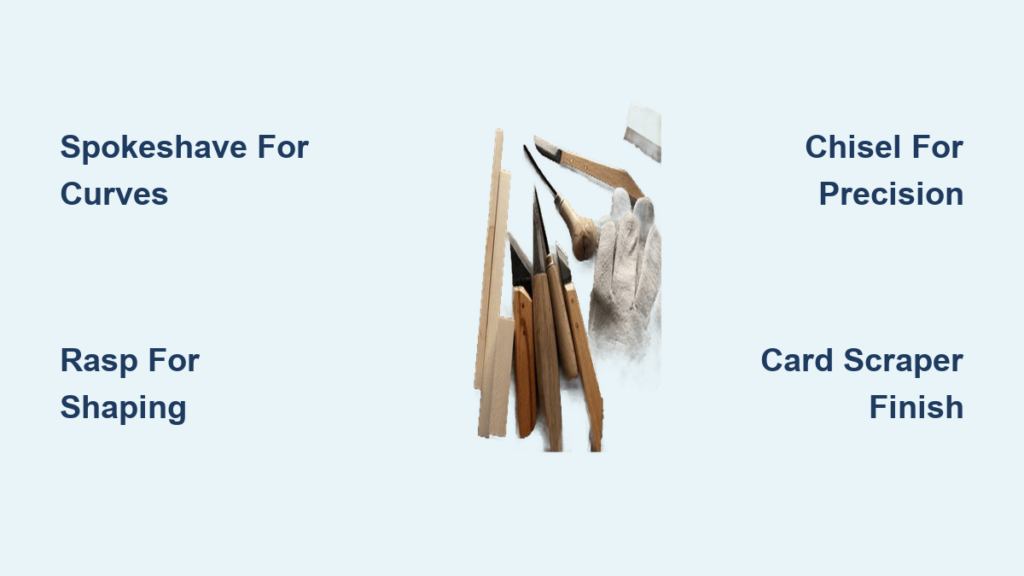
For smooth, flowing curves like cabriole legs or armrests, a spokeshave is unmatched. It glides over contours with precision, leaving behind clean shavings. When removing large amounts of wood from green blanks or rough-cut pieces, a drawknife delivers speed and efficiency. Need to sculpt or blend irregular shapes? Reach for a rasp or file—they tackle areas where planes can’t go. For final smoothing without sanding, a card scraper produces a glass-like surface, especially on figured woods like curly maple. And for intricate carvings, scrollwork, or relief patterns, carving knives and gouges provide the ultimate control.
Beginners should start with a simple, versatile toolkit: a spokeshave, a medium rasp, a chisel set, and a card scraper. These cover 80% of common shaping tasks and allow you to explore different techniques before investing in specialized tools.
Understand Wood Grain Direction
Even the sharpest tool will tear out if used against the grain. Always test your cutting direction on a scrap piece first. For best results:
– Cut across the grain when removing bulk (e.g., with a scrub plane or spokeshave)
– Finish with the grain for a clean, smooth surface
– Avoid end grain with most shaping tools—use a block plane instead
Stick to forgiving woods like basswood, butternut, or pine when learning. They’re soft, uniform, and less likely to split or tear out.
Spokeshaves: Precision for Curved Woodwork

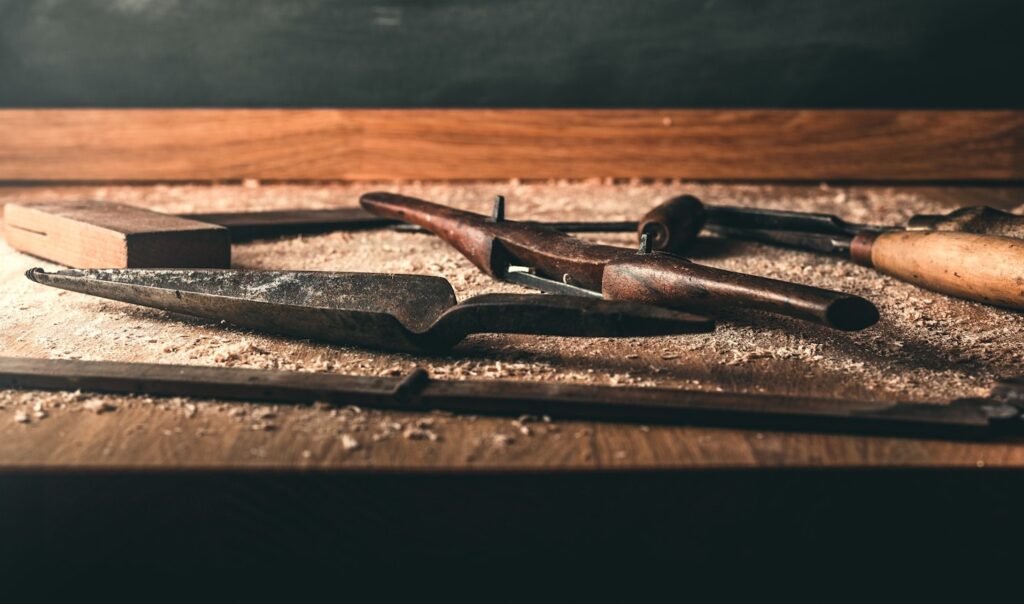
Spokeshaves are specialized planes built for shaping curved and contoured surfaces. Their compact size and low-angle blades make them ideal for chair legs, crest rails, and other sinuous forms.
Metal vs. Wooden Spokeshaves
Metal spokeshaves feature an adjustable frog that lets you fine-tune the blade angle. This allows for smoother cuts and reduced tearout—perfect for finished work. The sole limits cutting depth, preventing accidental gouges.
Wooden spokeshaves have a fixed, low-angle blade. They cut aggressively but can wedge into the grain, increasing the risk of splits. Best suited for rough shaping or green wood.
Flat vs. Rounded Soles
- Flat-bottomed soles work on straight edges and gentle curves
- Rounded soles glide over tight concave and convex shapes
For maximum versatility, own both. A flat-bottom model handles most tasks, while a rounded sole tackles complex contours.
Pro Tip: Tune your spokeshave by flattening the sole on sandpaper and sharpening the blade to a mirror edge. A well-tuned spokeshave produces paper-thin shavings with minimal effort.
Rasps and Files: Fast, Aggressive Shaping
When you need to remove wood quickly—especially on irregular or sculptural shapes—rasps and files are indispensable.
Choose the Right Rasp
- Firer Rasp: Double-cut teeth for rapid stock removal. Use it first on thick blanks.
- Half-Round Rasp: Flat on one side, concave on the other. Perfect for hollowing spoon bowls or blending curves.
- Modeler’s Rasp (Hand-Stitched #13): Finely punched teeth for smooth intermediate shaping. Expensive but worth it for precision.
- Roughing File: Deep-cutting grooves for hardwoods. Ideal for initial shaping before refining.
Use Proper Rasp Technique
- Hold the rasp with both hands and apply even pressure
- Use long, smooth strokes to avoid gouging
- Work from high spots to low, checking progress frequently
- Clean teeth with a file card to prevent clogging
Progress from coarse to fine rasps. Finish with a surform tool or fine file for a surface ready for scraping or sanding.
Warning: Never use a rasp on a spinning surface. Always secure the workpiece in a vise or with bench dogs.
Chisels: Precision Shaping and Cleanup
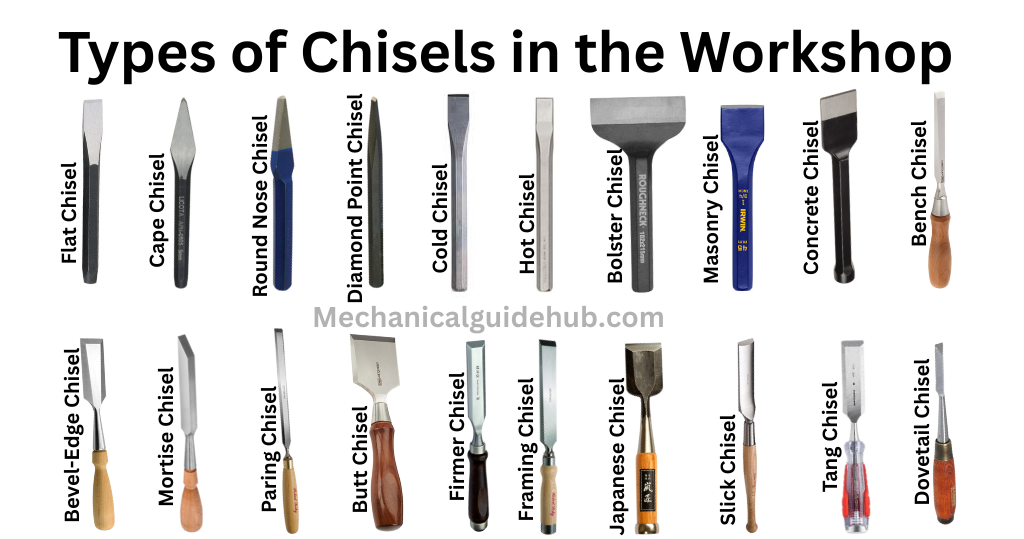
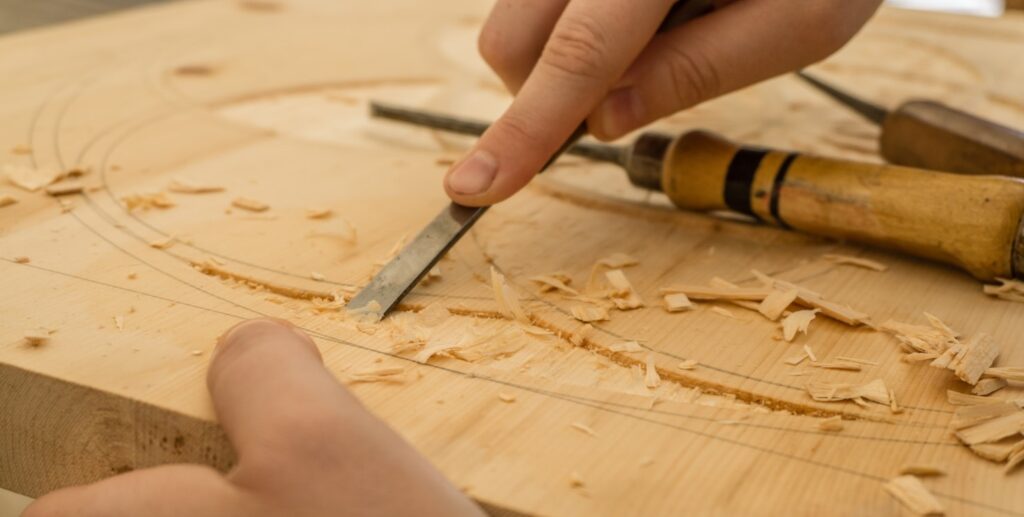
Bench chisels aren’t just for joinery—they’re powerful tools for shaping and refining wood when used correctly.
Pick the Right Chisel
- Firmer Chisel: Thick blade for heavy chopping and prying. Use with a mallet.
- Bevel-Edge Chisel: Fits into tight corners. Great for cleaning curved joints.
- Mortise Chisel: Extra-thick blade for hammering square holes. Withstands repeated impact.
- Slicks / Framing Chisels: Large, long-handled chisels for serious material removal.
Avoid Japanese chisels for mallet work—they chip easily under heavy blows.
Shape Wood with Control
Use chisels to:
– Hollow out mortises
– Clean up curved dados
– Refine the inside of carved bowls
– Trim tenon cheeks and shoulders
Technique:
– Always cut away from your body
– Support the workpiece fully
– Strike the handle’s center to prevent blade drift
– Keep edges razor-sharp—dull chisels crush fibers and slip
The HURRICANE 4-piece chisel set (1/4″, 1/2″, 3/4″, 1″) offers excellent value at $13.99. Rated 4.7 stars with over 6,600 reviews, it’s sharp out of the box and durable for regular use.
Drawknives: Rapid Stock Removal from Blanks
For shaping tool handles, chair legs, or spoons from green wood, the drawknife is unmatched in speed and efficiency.
How to Use a Drawknife Safely
- Sit on a bench with legs spread; place the workpiece between your feet or in a shaving horse
- Pull the tool toward you using both handles
- Keep fingers behind the blade at all times
- Use light, controlled strokes—don’t force it
Secure long blanks with bench dogs to prevent kickback.
Top Models and Features
- BeaverCraft DK1: 4.3″ straight blade; $22.99
- BeaverCraft DK2s: Includes leather sheath; $26.99; 4.5/5 stars
Both are popular for bushcraft and spoon carving. The DK2s offers better protection during storage.
Best For:
– Roughing out blanks
– Flattening curved surfaces
– Peeling bark or removing sapwood
Pro Tip: Strop the edge regularly to maintain a clean cut. A dull drawknife requires more force and increases the risk of slipping.
Card Scrapers: The Secret to Sanding-Free Finishes
A card scraper is the hidden gem of fine woodworkers. It produces a glass-smooth surface without dust or tearout.
How a Card Scraper Works
- Made of high-carbon steel (typically 3″x2″)
- Edge is burnished to create a micro-curl that lifts fine shavings
- Used by hand—no power required
Prepare and Use the Scraper
- Deburr the edge with sandpaper
- Burnish with a hardened rod at a 15–20° angle
- Flex the card slightly in your hands
- Push or pull across the surface with downward pressure
It excels on figured maple, curly walnut, or bird’s-eye woods where planes tear out.
Why It Matters:
A well-used scraper eliminates the need for sanding. This preserves fine details and avoids rounding over sharp edges.
Alfred Sharp (Fine Woodworking) notes: “Scrapers leave a surface ready for finish—no dust, no clogging, no static.”
Hand Planes: Flattening and Smoothing

Planes are essential for shaping flat or gently curved surfaces with precision.
Use the Right Plane
- Scrub Plane: Aggressive stock removal. Curved blade scoops wood quickly. Use across the grain.
- Jack Plane: General-purpose shaping. Longer sole for flattening.
- Smoothing Plane: Final pass. Produces a silky surface.
- Block Plane: Small and nimble. Ideal for end grain, chamfers, and trimming.
The JORGENSEN No.101 Mini Hand Planer ($16.98) is a top seller—4.6 stars, over 1,600 ratings. Its ductile iron body and adjustable depth make it reliable for beginners.
Blade Geometry Matters
- Curved blade (scrub plane): Breaks cutting edge into multiple points, reducing tearout
- Straight blade (smoothing plane): Cuts cleanly with the grain
- Wide mouth: Prevents clogging during heavy cuts
Pro Tip: Flatten the sole on a granite surface or sandpaper. A warped sole will leave ridges.
Carving Knives and Gouges: Detail and Artistry
When shaping small, intricate features, carving knives and gouges offer unmatched control.
Best Knives for Beginners
- Wood Carving Kit (32 pcs): $29.99; includes 11 knives, 4 templates, storage bag; 4.7/5 stars
- 26-in-1 Starter Kit: $16.99; 4.3/5 stars
Both are Amazon bestsellers with hundreds of monthly sales.
Top Brands and Quality
- Flexcut: Over 360 SKUs; durable tool steel
- Pfeil (Swiss-made): 503 models; legendary for precision and longevity
- Two Cherries: 49 models; hand-forged, ergonomic handles
- Mary May Carving Tools: U.S.-made; excellent for relief carving
Handles are typically walnut, ash, or synthetic for grip and comfort.
Carve Safely and Effectively
- Always cut away from your body
- Support the knife with your non-dominant hand (use a push pad if needed)
- Keep the edge sharp—dull knives slip and cause injuries
- Use basswood for practice—soft, uniform, minimal tearout
Expert Note: Carving is as much about control as it is about the tool. Practice basic cuts—stop cuts, paring, and v-parting—before tackling complex shapes.
Final Note: Master the Craft, One Tool at a Time
The hand tool for shaping wood isn’t a single device—it’s a system. From the spokeshave that refines a curve to the scraper that polishes it, each tool plays a role in transforming raw wood into art.
Start simple: a spokeshave, rasp, chisel, and scraper cover 80% of shaping tasks. Add carving tools as your skills grow. Focus on technique, sharpen often, and respect the grain.
Whether you’re a beginner or a seasoned maker, hand shaping connects you to the material in a way power tools never can. It’s slower, yes—but the result is quieter, cleaner, and more satisfying. And as Alfred Sharp reminds us: “Even with power tools available, hand tools are often quicker for shaping one or two complex parts.”
Now grab your tools, secure your blank, and start shaping.