Imagine building a house with mismatched lumber, calibrating a car engine by guesswork, or programming a robot without precise dimensions. Chaos. That’s what work looks like without accurate measurement. Whether you’re a mechanic tightening bolts to exact torque, a carpenter aligning rafters at perfect angles, or a scientist analyzing microscopic structures, different types of measuring tools are the silent guardians of precision. These instruments ensure that every cut, fit, alignment, and reading meets exact standards—turning guesswork into reliability.
From the humble tape measure to high-tech laser scanners, each tool serves a unique purpose across industries like construction, manufacturing, automotive repair, and medicine. This guide breaks down every major category of measuring tools, explains how they work, where they’re used, and what to consider when choosing one. By the end, you’ll know not just what to measure—but how to measure it right.
Linear Measurement Tools for Distance, Length, and Depth
Accurate linear measurement is the foundation of any technical task. Whether you’re marking a wall or inspecting a machined part, tools that measure length, width, height, or depth are indispensable.
Tape Measures: Portable and Practical
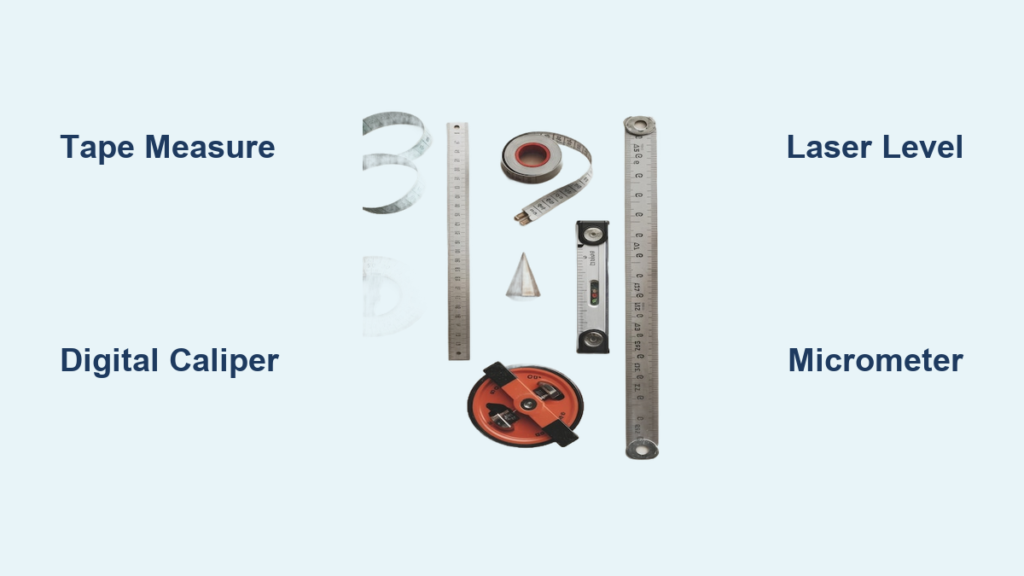
The tape measure is the most recognizable tool in any toolbox. With a retractable steel blade and a hooked end, it allows quick, portable measurements from inches to 100 feet. Common in construction, carpentry, and home projects, it’s ideal for rough or mid-level precision work. However, long spans can sag, so always keep it taut for accuracy. For curved surfaces or soft materials, fabric tapes offer flexibility but less durability.
Steel Rules and Rulers for High Accuracy
When precision matters more than portability, a steel rule takes over. Hardened steel resists wear and stretching, making it perfect for machine shops and drafting tables. Available in 6″, 12″, or 1-meter lengths, it’s often used alongside calipers or micrometers. Specialized versions include architect’s scales (triangular, multi-scale rulers) for blueprints and clear grid rulers for cutting mats in crafting.
Calipers: Measuring Internal, External, and Depth Dimensions
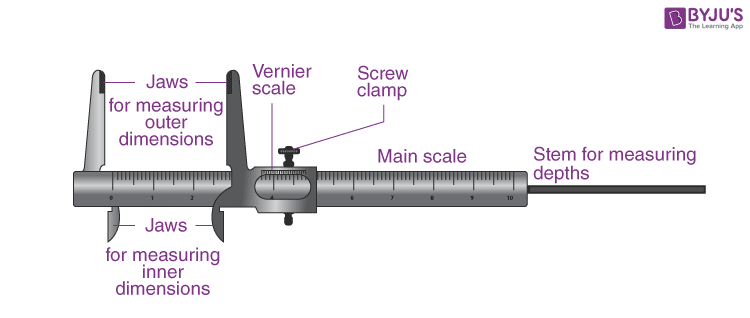
For precision beyond a ruler, calipers deliver. Three main types dominate:
- Vernier caliper: Uses a dual-scale system for readings down to 0.02 mm. Durable and battery-free, but requires practice to read.
- Dial caliper: A circular dial simplifies reading and speeds up inspection—ideal for workshops.
- Digital caliper: Instant LCD readouts, unit switching (mm/inch), and data output make it a favorite in fast-paced environments. Just keep it clean—dust and moisture can damage electronics.
Most calipers measure up to 6″ (150 mm), with larger models reaching 20″.
Micrometers: Ultimate Precision for Small Dimensions
When tolerances are measured in thousandths of a millimeter, use a micrometer. Using a finely threaded screw mechanism, it measures thickness, diameter, and depth with accuracy up to ±0.01 mm. Types include:
– Outside micrometer – for shafts and wires
– Inside micrometer – for bore diameters
– Depth micrometer – for recessed holes
Also called a screw gauge, it’s essential in engine rebuilding, aerospace, and toolmaking.
Height and Depth Gauges for Vertical Measurements
A height gauge measures vertical distance from a flat reference surface (like a surface plate). Used in layout and inspection, it helps scribe lines or verify part heights. Manual versions use vernier scales; digital models offer data logging. Similarly, depth gauges—available in rule, micrometer, and digital forms—ensure precise hole depth in automotive and machining work.
Measuring Wheels and Laser Distance Meters for Long Distances
For long spans—like fencing a yard or measuring a warehouse floor—use a measuring wheel (or surveyor’s wheel). It rolls a calibrated wheel along the ground, counting rotations to estimate distance. Accuracy is around ±0.5%, best on flat surfaces.
For faster, more accurate results, laser distance meters use time-of-flight or phase-shift technology to measure up to 100+ meters with ±1–3 mm accuracy. They calculate area, volume, and even correct for slopes—making them ideal for real estate, construction, and interior design.
Angular Measurement Tools for Precision Angles
Angles affect fit, alignment, and performance. These tools ensure components meet exact angular specifications.
Protractors and Bevel Protractors for Manual Angle Reading
A protractor measures angles from 0° to 180° and is common in education and drafting. For more versatility, the bevel protractor features an adjustable blade and vernier scale, allowing readings down to 5 arcminutes—perfect for metalworking and machining.
Digital Angle Finders for Instant Readings
Digital angle locators use electronic sensors to display angles instantly, often with magnetic bases and auto-zero functions. With accuracy up to ±0.1° and full 360° range, they’re used in carpentry, solar panel installation, and fabrication. Backlit displays improve visibility in dim lighting.
Theodolites and Total Stations for Surveying
For high-precision angle measurement in construction or land surveying, theodolites use telescopic optics to measure horizontal and vertical angles. A total station combines this with electronic distance measurement (EDM), enabling coordinate calculation and data logging—making it the gold standard in civil engineering and archaeology.
Leveling and Alignment Tools for True Vertical and Horizontal
Misaligned surfaces lead to structural flaws. These tools ensure everything is level, plumb, or square.
Spirit Levels: The Classic Alignment Tool
Also called bubble levels, these use liquid-filled vials to show when a surface is level (horizontal) or plumb (vertical). Types include:
– Standard levels (24″–48″) for walls
– Torpedo levels (6″–12″) for tight spaces
– Carpenter’s levels with magnetic edges for steel framing
Used in construction, plumbing, and cabinetry.
Laser Levels: Precision Alignment at a Distance
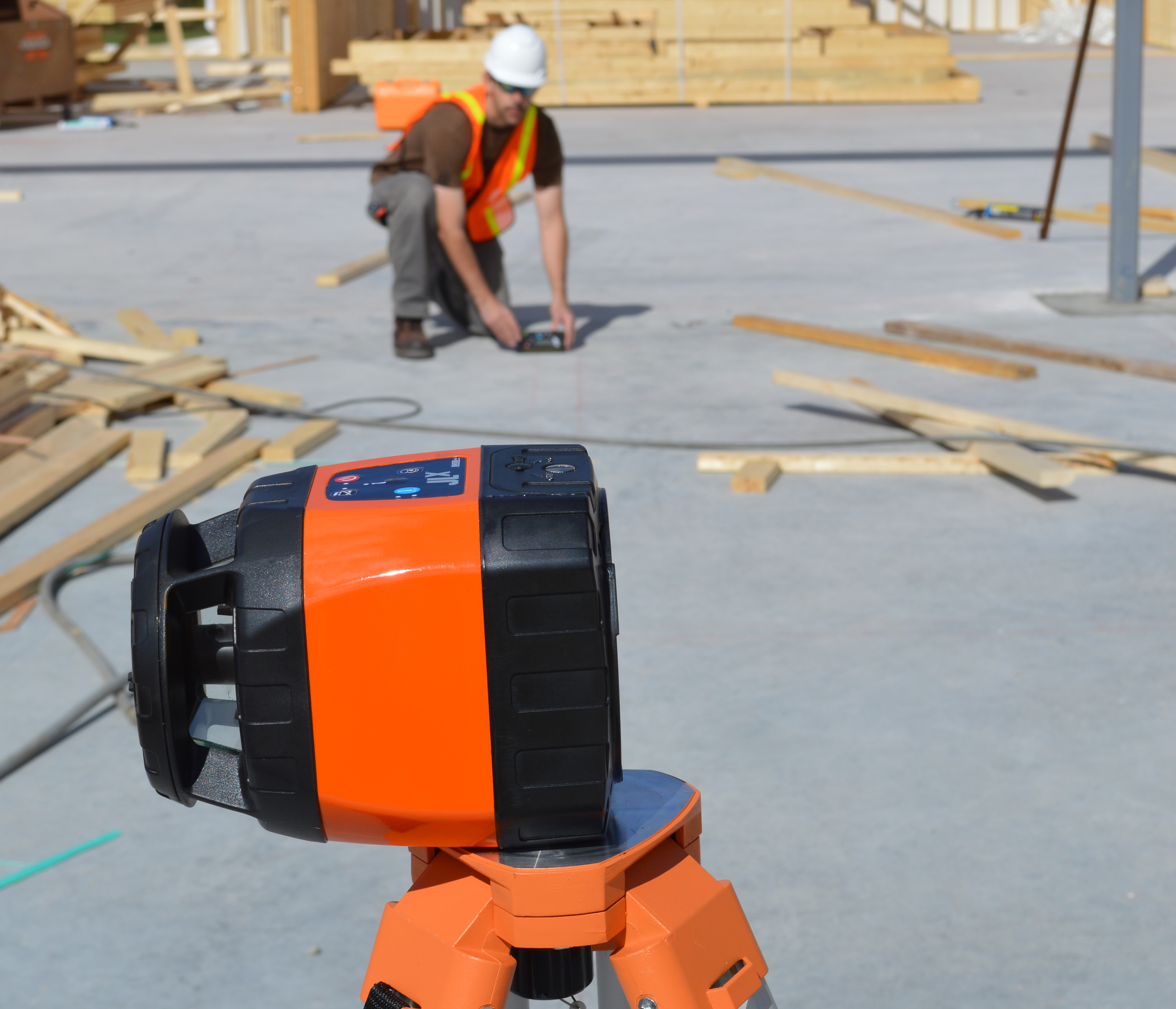
Laser levels project visible lines for fast, accurate alignment. Rotary laser levels spin to create a 360° plane, ideal for drop ceilings or foundation work. Line laser levels project straight beams for tile or shelf installation. Many feature self-leveling and pulse modes for long-range use with detectors. Green lasers offer better visibility than red.
Plumb Bobs and Dumpy Levels for True Vertical Reference
A plumb bob uses gravity to establish a true vertical line—immune to magnetic interference. Suspended from a string, it’s used in masonry and surveying. The dumpy level, a telescope on a tripod, measures elevation differences in surveying, while machinist precision levels check machine bed flatness with sensitivity as fine as 0.01 mm/m.
Gap, Clearance, and Thread Measurement Devices
Tiny gaps determine performance in engines and machinery.
Feeler Gauges for Measuring Small Gaps
Feeler gauges are thin metal blades of known thickness (e.g., 0.05–1.00 mm) used to measure spark plug gaps, valve clearances, and alignment spaces. Also called gap gauges, they’re essential in automotive maintenance.
Thread Pitch Gauges for Identifying Screw Threads
To match bolts or taps, thread pitch gauges have notched leaves that fit standard thread profiles (UNC, UNF, metric). Available in inch and metric versions, they help machinists select the correct fasteners.
Bore Gauges for Internal Diameter Measurement
For engine cylinders or bearing housings, bore gauges come in:
– Telescoping gauge (used with a micrometer)
– Dial bore gauge (direct reading)
– Electronic bore gauge (digital display)
They ensure precise internal fit in high-tolerance applications.
Mass, Weight, Flow, and Density Measurement Tools
These tools quantify how much material is present, moving, or how dense it is.
Weighing Scales and Load Cells
From kitchen scales to industrial floor models, weighing scales determine mass. Digital scales use load cells—transducers that convert force into electrical signals—used in labs, warehouses, and weighbridges.
Flow and Gas Meters
Flow meters track fluid movement in pipes (turbine, ultrasonic, Coriolis types), vital in water treatment and oil/gas. Gas meters measure natural gas volume for utility billing.
Hydrometers and Specialty Meters
A hydrometer measures liquid density (specific gravity), used in battery testing and brewing. Related tools include:
– Lactometer – milk purity
– Saccharometer – sugar content
– Alcoholmeter – alcohol strength
All rely on buoyancy for accurate readings.
Temperature, Pressure, and Force Measurement Instruments
Monitoring heat, pressure, and force ensures safety and performance.
Thermometers and Thermal Imaging
Types include:
– Digital thermometers – for HVAC and medical use
– Infrared thermometers – non-contact surface readings
– Thermal imaging cameras – create heat maps for electrical faults or insulation leaks
Pressure and Vacuum Gauges
Bourdon tube gauges measure gas or liquid pressure in psi or bar—common in tires and boilers. Digital versions offer higher accuracy. Vacuum gauges measure sub-atmospheric pressure in refrigeration systems.
Torque Wrenches and Dynamometers
A torque wrench applies and measures rotational force (N·m or ft-lb), essential in automotive and aerospace assembly. Dynamometers measure engine power or muscle strength in fitness equipment.
Electrical Measuring Instruments
Electricians rely on these for safe diagnostics.
Multimeters and Clamp Meters
A multimeter measures voltage, current, and resistance. Digital models offer continuity testing and diode checks. Clamp meters measure current without breaking the circuit—ideal for live systems.
Insulation and Ground Testers
Megohmmeters (Meggers) test insulation resistance to prevent shocks. Ground resistance testers ensure earthing systems are safe—critical for compliance.
Surface and Material Property Tools
These assess texture, hardness, and expansion.
- Profilometers measure surface roughness
- Durometers test rubber or plastic hardness
- Viscometers measure fluid viscosity
- Dilatometers track thermal expansion
Specialized and Industry-Specific Tools
Automotive
- Calipers, micrometers, torque wrenches, compression testers
Carpentry
- Tape measures, squares, laser levels, chalk lines
Construction
- Measuring wheels, total stations, laser levels
Machine Shops
- CMMs, gauge blocks, surface plates, dial indicators
Electrical and Plumbing
- Multimeters, pipe gauges, pressure testers
Aerospace
- High-precision tools with NIST traceability
Analog vs. Digital: Which Should You Choose?

| Feature | Analog | Digital |
|---|---|---|
| Power | None | Battery |
| Readability | Requires interpretation | Instant numbers |
| Durability | Resists dust/moisture | Sensitive to elements |
| Unit Conversion | Manual | Automatic |
| Data Output | None | USB/Bluetooth |
Analog tools last longer in harsh conditions; digital ones speed up workflow.
Final Takeaways
From the tape measure in your toolbox to the coordinate measuring machine in a lab, different types of measuring tools form the backbone of precision across industries. Each serves a distinct role—measuring length, angle, pressure, temperature, or electrical properties—with varying degrees of accuracy and complexity. Whether you’re a DIYer hanging shelves or an engineer testing jet components, choosing the right tool means understanding its function, limitations, and proper care. Remember: the best measurement isn’t just accurate—it’s repeatable, traceable, and reliable. Invest in quality, calibrate regularly, and treat your tools with respect. Because in every field, measurement isn’t just data—it’s trust.