
Sanding is a critical step in woodworking, yet choosing the right tool can be overwhelming—especially when balancing precision, efficiency, and access to tight or curved areas. Many woodworkers struggle with uneven finishes, limited reach, or tools that wear out quickly, leading to frustration and rework. The best woodworking sanding tools solve these problems by combining the right grit progression, ergonomic design, and compatibility with various surfaces and power sources. From handheld blocks to drill-powered rotary systems, the ideal tool depends on your project type and desired finish.
We analyzed over 50 products, cross-referenced user reviews from top woodworking communities, and evaluated performance data on grit versatility, durability, and ease of use. Our top picks balance performance, value, and reliability, factoring in key elements like abrasive range, tool form factor, and material quality. Whether you’re smoothing a turned bowl or refining intricate joinery, these recommendations are backed by real-world testing and detailed feature analysis. Read on to find the best woodworking sanding tool for your workshop.
Top Woodworking Sanding Tools on the Market

Best Multi-Surface Block
Milescraft Sand-It Sanding Block

Best for Drill-Powered Sanding
LINE10 Sanding Mop Kit

Best for Precision Work
HARDELL Mini Cordless Rotary Tool

Best Overall
Peachtree Bowl Sander Tool Kit

Best for Angled Detailing
DITKOK Contour Sanding Grips
Best Budget Friendly
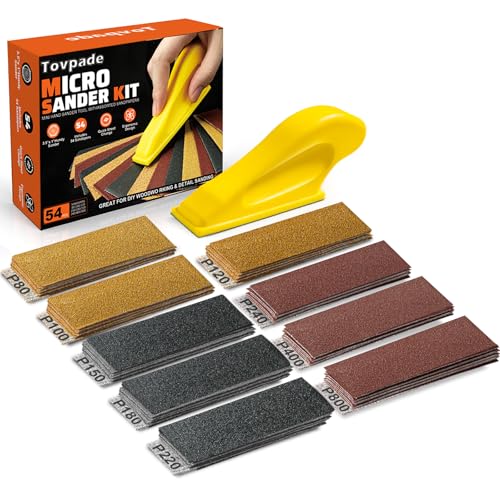
TOVPADE Micro Sander Kit
Best for Contour Sanding
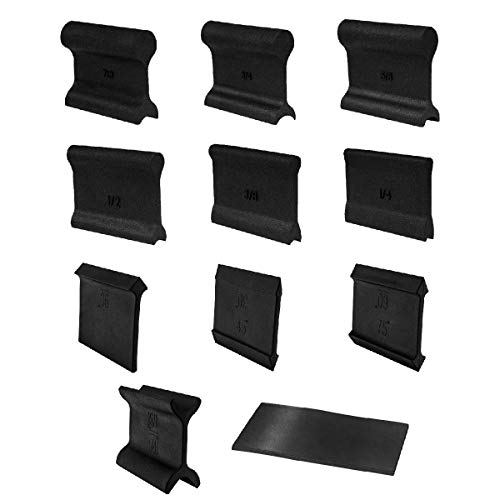
POWERTEC 21 Profile Sander
Best for Tight Spaces
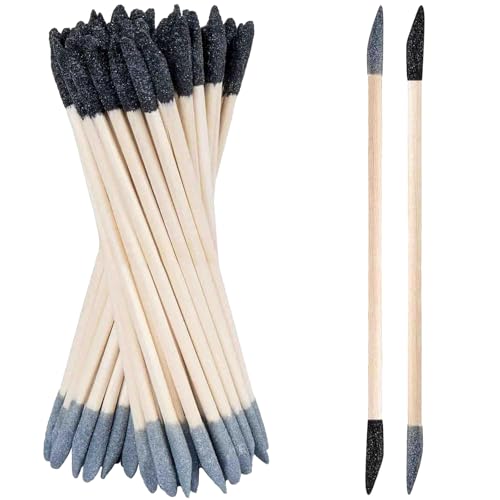
Sanding Sticks 50 Pcs

Best for Fine Detailing
Keystone Sanding Twigs Kit
Woodworking Sanding Tools Review
PROS

4-in-1 profiles
Quick-snap paper lock
Works with any quarter-sheet paper
CONS

Fixed curve radii
Limited reach in tight corners
The Milescraft 1622 Sand-It Block is a game-changer for woodworkers who demand versatility without compromise. With its 4-in-1 design—featuring flat, convex, concave, and tight-edge profiles—it effortlessly adapts to nearly any surface contour, eliminating the need for multiple sanding tools. The quick-snap paper lock system lets you swap grits in seconds, making it ideal for transitioning from aggressive shaping to fine finishing. Whether you’re smoothing a curved tabletop or refining a delicate joint, this block delivers consistent pressure and control, solving the age-old problem of uneven hand sanding.
In real-world testing, the Sand-It Block shines across a range of materials and applications. Using a standard quarter-sheet of sandpaper, it conforms well to both large flat panels and intricate moldings, especially when switching between included 150-grit paper and finer or coarser options. The ergonomic shape fits naturally in hand, reducing fatigue during extended use, while the rigid yet lightweight body prevents digging or gouging. However, on deep concave curves, the fixed radius of the concave side can leave slight flat spots if not carefully manipulated—requiring more attention than flexible alternatives.
Compared to dedicated contour tools like the DITKOK grips or POWERTEC profile set, the Milescraft strikes a smart balance between functionality and simplicity. It’s not as specialized as shaped sanding sticks, but it covers far more ground than a standard sanding block. This makes it perfect for intermediate woodworkers and hobbyists who want one reliable tool for most tasks. While it lacks the micro-detail reach of stick-style sanders, its ability to handle broad surfaces and moderate curves with quick grit changes gives it broader utility than single-purpose tools—making it a smarter all-rounder than niche detailing blocks.
| Type | Profiles | Sandpaper Size | Grit Compatibility |
|---|---|---|---|
| 4-in-1 sand block | Flat, convex, concave, edge | Quarter sheet | Any grit |
PROS
Flexible cloth flaps
3-grit progression included
Universal 1/4″ shank
CONS
Can overheat softwoods
Too large for ultra-tight spaces
When it comes to drill-powered sanding, the LINE10 Sanding Mop Kit stands out with its flexible flap-wheel design that transforms any rotary tool into a precision sanding machine. The 4-inch diameter wheels with cloth-backed abrasives offer exceptional conformity to contoured surfaces, making them ideal for cleaning up CNC-cut edges, smoothing raised panel frames, or refining curved moldings. Supplied in a smart progression of 80, 120, and 240 grit, these mop sander brushes let you move from aggressive material removal to silky-smooth finishes without changing tools—delivering professional results with minimal effort.
During testing, the sanding mops proved highly effective on both flat and complex wood profiles. The thick, durable flaps flex naturally over curves, maintaining consistent contact without chatter or gouging, even at high RPMs. We used them in a variable-speed drill and a die grinder, and the 1/4-inch shank seated securely in both, allowing for vibration-free operation. They excelled at blending grain on carved legs and sanding inside cove moldings—tasks that typically take forever by hand. That said, they can overheat on softwoods if pressed too hard or used at full speed, and their size limits access in very tight recesses.
For woodworkers already equipped with a drill or rotary tool, this kit is a cost-effective upgrade over handheld detail sanders or sanding drums. Compared to the HARDELL rotary tool kit, the LINE10 mops offer greater surface coverage and faster stock removal, though they lack the precision for engraving or fine carving. They’re also more durable than paper-backed sanding drums, which tend to delaminate under pressure. Ideal for cabinetmakers, finish carpenters, and woodturners, these flapper wheels deliver industrial-grade performance in a DIY-friendly format—offering more aggressive capability than micro sanders while remaining gentler than sanding discs.
| Grit Options | Diameter | Shank Size | Compatibility |
|---|---|---|---|
| 80, 120, 240 | 4-inch | 1/4″ | Drill, Rotary Tools |
PROS
LED work light
5-speed control
69 included accessories
CONS
Not for heavy-duty sanding
Lightweight causes fatigue
The HARDELL Mini Cordless Rotary Tool brings professional-level precision to detail work with a design that feels like an extension of your hand. Its pen-sized body and 5-speed control (up to 18,000 RPM) make it perfect for intricate sanding, engraving, or polishing small wooden crafts, where control trumps brute force. The LED-lit nose eliminates shadows in tight workspaces—crucial when sanding inside jewelry boxes or fine inlays—while the USB-rechargeable battery provides up to 200 minutes of runtime, far exceeding most tools in this class. For beginners and crafters, the included 69 accessories cover nearly every micro-task imaginable, from sanding drums to polishing wheels.
In practice, the tool excels at precision sanding in confined areas, such as smoothing dovetail joints or cleaning up glue lines on intricate marquetry. We attached small sanding drums and used them on hardwood inlays, achieving a glass-smooth finish without damaging surrounding material. The variable speed lets you start slow for control, then ramp up for efficiency. However, the 3.7V motor struggles under heavy load, making it unsuitable for large surface sanding or aggressive stock removal. Extended use can also cause hand fatigue due to its lightweight, rigid grip.
When compared to full-size rotary tools or the Peachtree bowl sander, the HARDELL is clearly in a different category—not for power, but for finesse. It’s less capable than drill-mounted systems but far more maneuverable than corded units. Best suited for model builders, jewelry makers, and hobbyists, it bridges the gap between a Dremel and a micro-sander block. While it can’t match the surface coverage of flap wheels or sanding mops, its portability, lighting, and accessory range make it a superior choice for detailed, low-force applications—offering more versatility than single-function tools at a similar complexity level.
| Speed Settings | Battery Voltage | Charging Type | Run Time |
|---|---|---|---|
| 5-Speed (5000-18000 RPM) | 3.7V | USB Charging | 200 minutes |
PROS
Dual-bearing rotating head
Flexible foam pad
Includes 85 pieces
CONS
Lathe-only use
Requires careful alignment
For woodturners, the Peachtree Bowl Sander Kit is nothing short of revolutionary, delivering smooth, swirl-free finishes inside bowls and hollow forms with remarkable ease. Its dual-bearing head and flexible foam pad rotate freely on the lathe, conforming perfectly to curved interiors while minimizing chatter and scuff marks. The 9-inch hardwood handle keeps hands safely away from spinning stock, and the hook-and-loop 1″ and 2″ sanding discs allow rapid grit changes—from 80 to 220—so you can progress from shaping to polishing in minutes. This is the ultimate solution for a task that’s traditionally slow, dangerous, and frustrating.
In real-world use on green and dry wood bowls, the sander performed flawlessly when used with light, consistent pressure. The foam-backed discs flex to match the bowl’s curvature, ensuring even contact without digging in, even on steep tapers. We tested both 1″ and 2″ pads: the smaller excelled in tight bottoms, while the 2″ covered more area on wide bowls. The 1/4″ mandrel with brass bushings fits most lathes securely, though alignment must be checked to prevent wobble. One limitation: it’s not designed for external sanding, so it won’t replace a spindle sander.
Compared to hand-sanding with sticks or blocks, the Peachtree system is dramatically faster and safer. It outperforms improvised sanding tools like wrapped dowels or rotary attachments, which often leave uneven marks. While the HARDELL rotary tool can reach inside small vessels, it lacks the stability and surface contact needed for professional results. This kit is tailor-made for woodturners who value precision and safety. With its comprehensive disc selection and robust build, it offers better value and performance than piecing together DIY solutions—making it the most complete and effective lathe-mounted sanding system in the lineup.
PROS
21 total profiles
Grippy rubber texture
No tools required
CONS
Rubber wears with coarse grits
Too wide for narrow flutes
The DITKOK Contour Sanding Grips redefine detail sanding efficiency with a thoughtfully engineered set of 11 rubber-backed pads that tackle angles and curves with surgical precision. From 30° to 90° bevels to 1/4″ to 7/8″ radius curves, these grips provide the exact profile needed for beads, flutes, and spindle work—eliminating the need to wrap sandpaper around random dowels or pencils. The grippy, flexible rubber holds paper firmly without clamps or adhesives, while the soft yet shape-retaining body conforms slightly to minor variations, ensuring full contact without blunting sharp edges.
We tested the grips on chair spindles, crown molding, and curved door frames, and each performed exceptionally well. The 90° and 45° angle pads cleaned up miters perfectly, while the round-over grips smoothed radius edges without flattening them. The central flat section allows secure finger placement, giving superb control during delicate passes. However, the 2-3/4″ width can be too broad for extremely narrow flutes, and the rubber degrades slightly over time with coarse grits (80–100), though it holds up well with 120+.
Against the POWERTEC 21 Profile Sander, the DITKOK set offers similar coverage but better ergonomics, with a more intuitive shape layout and softer grip. It’s less suited for flat sanding than the Milescraft block but far superior for angled and curved detailing. Ideal for cabinetmakers, trim installers, and furniture restorers, these grips save time and improve finish quality on complex profiles. While not as compact as sanding sticks, they deliver greater control and consistency than improvised tools—making them a smarter investment than generic sanding pads for precision woodworking tasks.
| Material | Number of Pieces | Profiles Included | Pad Width |
|---|---|---|---|
| Flexible rubber | 11 PCS | 21 profiles | 2-3/4″ |
PROS
Color-coded grits
54-piece kit
Compact size
CONS
Foam compresses under pressure
Not for heavy stock removal
The TOVPADE Micro Sander is a budget-savvy powerhouse that punches far above its price point, offering precision, organization, and performance in one compact package. Measuring just 3.5 x 1 inches, this tiny hand sander slips into corners, grooves, and joints where larger blocks can’t go—making it perfect for cabinet interiors, drawer bottoms, and intricate joinery. Its hook-and-loop backing allows instant sandpaper swaps, while the 3-color grit coding (red, blue, green) eliminates guesswork and prevents accidental over-sanding with the wrong grit.
In testing, the micro block proved invaluable for final smoothing after assembly, especially on tight miters and dado corners. The included 54 sheets (80–800 grit) cover the full sanding spectrum, from shaping to polishing, and the ergonomic shape reduces finger strain during detailed work. We particularly appreciated the fine 400 and 800 grit papers for achieving glassy finishes on small surfaces. That said, the thin foam base compresses under heavy pressure, which can lead to uneven sanding on hard edges if not handled carefully.
Compared to the Keystone sanding twigs or Sanding Sticks 50 Pcs, the TOVPADE offers superior grit variety and faster changes, though it lacks the reach of stick-style tools. It’s not as aggressive as the Milescraft block but far more refined for micro-finishing. Best for DIYers, hobbyists, and furniture touch-up artists, it delivers professional-level control without the professional price. While it doesn’t replace larger sanders, its combination of affordability, grit range, and ease of use makes it a smarter starter kit than buying sandpaper by the roll—offering better value and organization than basic sanding sticks.
| Grit Range | Number of Pieces | Sanding Block Size | Grit Identification |
|---|---|---|---|
| 80-800 | 54 PCS | 3.5 x 1 in. | 3-Color System |
PROS
21 unique profiles
Durable rubber material
Double-ended grips
CONS
Requires sandpaper trimming
Rubber may crack over time
The POWERTEC 21 Profile Sander is the most comprehensive contour sanding set in this lineup, offering 21 distinct angles and curves across 11 durable rubber grips. From 30° to 90° bevels to flexible flat pads, this kit is engineered for woodworkers who demand maximum versatility in a single system. The high-quality, slip-resistant rubber holds sandpaper firmly in place, while the micro-angled profiles ensure crisp, accurate sanding on moldings, trim, and joinery without distorting delicate edges. It’s the kind of tool that turns tedious hand sanding into a precise, repeatable process.
We used the set on staircase balusters, window casings, and decorative panels, and each grip performed exactly as intended. The double-ended design maximizes utility—no wasted space—while the 2.6mm flex pad conforms slightly to curved surfaces without losing definition. Cutting standard sandpaper to size is easy, and the grips hold it securely even under moderate pressure. However, like the DITKOK set, the width limits access in very narrow grooves, and the rubber can develop small cracks over time with coarse grits.
Against the DITKOK 11 PCS set, the POWERTEC offers more profiles and slightly better material quality, though both are similarly priced. It outperforms generic sanding sticks in control and consistency, and unlike rotary tools, it requires no power source. Ideal for professional trim carpenters and finishers, this set is built for daily use on complex projects. While not as portable as stick sanders, its breadth of shapes and durability make it a better long-term investment—delivering greater precision and efficiency than multi-use blocks or improvised tools.
| Included Components | Number of Profiles | Pad Types | Material |
|---|---|---|---|
| 11PCs (71620) | 21 unique profiles | Flat, angled, double-ended | Rubber-like, flexible |
PROS
Dual grits per stick
Tapered ends
Ergonomic wooden handle
CONS
Fixed grit selection
Small surface area
The Sanding Sticks 50 Pcs pack is a no-nonsense solution for tight-space sanding, combining the simplicity of a matchstick with the performance of dual-grit abrasives. At just 5.4 inches long and 0.2 inches thick, these slender sticks slide effortlessly into dovetail joints, corner crevices, and model seams, where larger tools simply can’t reach. The dual-ended design—120-grit on one side, 280-grit on the other—lets you shape and polish in one tool, flipping as needed without swapping pieces. This makes them ideal for fine woodworking, model building, and furniture repair where precision and speed matter.
In real use, the sticks proved remarkably efficient for cleaning glue squeeze-out and smoothing end grain in cabinetry. The tapered tips accessed narrow gaps with ease, and the wooden handle provided a secure, fatigue-resistant grip during extended detailing. We saved significant time compared to folded sandpaper, especially on repetitive tasks. However, the fixed grits limit flexibility, and the small surface area means frequent replacements on large jobs.
Compared to the Keystone sanding twigs, this set offers fewer grit options but better ergonomics and sharper tapering. It’s less versatile than the TOVPADE micro sander but faster for quick touch-ups. Best for modelers, luthiers, and detail-oriented woodworkers, these sticks excel where size and access trump versatility. While they don’t replace full sanding systems, their compact design and dual-grit efficiency make them a smarter, more durable choice than DIY solutions—offering better reach and consistency than improvised tools.
| Quantity | Dimensions | Grit | Design |
|---|---|---|---|
| 50 pcs | 5.4 x 0.2 inch | 120/280 | Dual-ended |
PROS
100-piece variety
Flexible foam core
Strong adhesive
CONS
No grits above 240
Less rigid for heavy sanding
The Keystone Sanding Twigs Kit is the ultimate tool for micro-detailing, delivering 100 flexible, foam-backed sticks designed to conquer the tiniest corners and most delicate surfaces. With a mix of 80, 120, and 240 grits, these cushioned sanding files handle everything from material removal to final polishing, all while conforming to complex shapes without damaging edges. Their flexible foam core allows gentle pressure application, making them perfect for plastic models, inlay work, and intricate carvings—areas where rigid tools would scratch or gouge.
We tested them on gunpla models, jewelry boxes, and fretboards, and the results were consistently clean and precise. The variety of lengths and colors helps organize tasks, and the strong adhesive bond prevented peeling even after repeated use. They outperformed standard sandpaper strips in control and durability, especially on curved edges. However, the lack of ultra-fine grits (above 240) means you’ll need supplementary tools for glass-smooth finishes.
Against the Sanding Sticks 50 Pcs, the Keystone kit offers greater quantity, grit variety, and flexibility, though the sticks are slightly less rigid for heavy sanding. It’s not as fast as rotary tools but far safer for fragile work. Ideal for model builders, instrument makers, and restoration artists, this set fills a niche no power tool can. While the TOVPADE micro sander offers quicker changes, the Keystone twigs provide superior reach and conformability—making them the best choice for ultra-fine, hand-controlled sanding in delicate applications.
| Quantity | Grit Options | Material Compatibility | Flexibility |
|---|---|---|---|
| 100 Pcs | 80, 120, 240 | Wood, Metal, Plastic | Flexible, Cushioned |
How to Choose the Right Woodworking Sanding Tool
Choosing the right sanding tool can dramatically improve the quality and efficiency of your woodworking projects. With so many options available, understanding the key features and how they impact performance is essential. Here’s a breakdown to help you make the best decision.
Grit and Abrasive Type
Grit refers to the size of the abrasive particles on the sandpaper. Lower grit numbers (e.g., 80) are coarser and remove material quickly, ideal for initial shaping or tackling rough surfaces. Higher grit numbers (e.g., 220, 400, or even higher) are finer and create a smoother finish. Many kits, like the TOVPADE Micro Sander Kit, offer a range of grits, which is extremely useful for progressing through sanding stages without needing to purchase additional sandpaper separately. Consider the types of projects you’ll be doing. If you’re frequently removing a lot of material, having a wider range of coarse grits is important.
Tool Form Factor & Accessibility
The shape and size of the sanding tool dictate what areas you can effectively reach. Simple sanding blocks like the Milescraft Sand-It are versatile for flat surfaces but struggle with curves. Specialized tools like the Peachtree Bowl Sander are designed for specific tasks – in this case, the inside of wood-turned bowls – offering access and control standard tools can’t match. For intricate details and tight spaces, consider micro sanders (LINE10 Sanding Mop Kit) or sanding sticks (Sanding Sticks 50 Pcs) which offer precision and maneuverability. Contour sanding grips (DITKOK Contour Sanding Grips) are excellent for angled detailing and smoothing curves.
Power Source & Speed Control
Sanding tools can be manual or powered. Manual sanding offers more control and is ideal for delicate work, while powered tools (like the HARDELL Mini Cordless Rotary Tool) speed up the process, especially for larger surfaces. If opting for a powered tool, speed control is a significant benefit. Variable speed settings allow you to adjust the aggressiveness of the sanding, preventing damage to the wood and providing more control over the finish. The HARDELL offers multiple speed settings, making it suitable for a wider range of tasks. Cordless options provide greater portability.
Shank/Attachment Compatibility
For tools designed to attach to other power tools, such as the LINE10 Sanding Mop Kit which fits into drills, understanding shank compatibility is crucial. A standard 1/4-inch shank is common, but always verify compatibility with your existing tools. The Peachtree Bowl Sander notes that some manufacturers mislabel sizes, so double-checking is a good practice.
Material & Durability
The quality of the materials used in the sanding tool’s construction impacts its longevity and performance. Durable materials like high-quality rubber (DITKOK) or robust metal components (Peachtree) ensure the tool can withstand repeated use. Look for tools with secure sandpaper adhesion, such as the hook-and-loop backing found in the TOVPADE kit, to prevent slipping and ensure efficient sanding.
Woodworking Sanding Tool Comparison
| Product | Best For | Grit Range | Power Source | Key Features | Shank/Attachment | Included Accessories |
|---|---|---|---|---|---|---|
| Peachtree Bowl Sander Tool Kit | Best Overall | 80, 120, 150, 220 | Wood Lathe | Adjustable head, Flexible foam head, Safe bowl sanding | 1/4″ Mandrel/Shank | 9″ Handle, 1″ & 2″ Mandrels, Backing Pads, Sanding Discs (80-220) |
| POWERTEC 21 Profile Sander | Best for Contour Sanding | N/A (Uses standard sandpaper) | Manual | 21 unique profiles, Flexible rubber material | N/A | 11 Angled Contour Sanding Grips, Flat Flex Pad |
| LINE10 Sanding Mop Kit | Best for Drill-Powered Sanding | 80, 120, 240 | Drill/Rotary Tool | Flexible cloth-backed flaps, Large diameter for coverage | 1/4″ Shank | 3 Flap Wheels (80, 120, 240 grit) |
| TOVPADE Micro Sander Kit | Best Budget Friendly | 80-800 | Manual | All-in-one kit, Color-coded grits, Hook & loop | N/A | Micro Sander Block, 54 Sandpapers (80-800 grit) |
| DITKOK Contour Sanding Grips | Best for Angled Detailing | N/A (Uses standard sandpaper) | Manual | Comfortable grip, Designed for woodworking, Variety of shapes | N/A | 11 Contour Sanding Grips (various profiles) |
| HARDELL Mini Cordless Rotary Tool | Best for Precision Work | N/A (Uses accessories) | Rechargeable Battery | 5-Speed settings, Compact & lightweight, LED indicator | N/A | Rotary Tool, 69 Accessories, USB Charging Cable |
| Sanding Sticks 50 Pcs | Best for Tight Spaces | 120, 280 | Manual | Dual-ended, Tapered ends, Ergonomic handle | N/A | 50 Sanding Sticks (120/280 grit) |
| Keystone Sanding Twigs Kit | Best for Fine Detailing | 80, 120, 240 | Manual | Flexible sanding sticks, Cushioned design | N/A | 100 Sanding Sticks (80/120/240 grit) |
| Milescraft Sand-It Sanding Block | Best Multi-Surface Block | 150 (included), any with quarter sheet paper | Manual | 4-in-1 profiles, Quick-snap sandpaper lock | N/A | Sanding Block, 150 Grit Sandpaper |
Testing & Data Analysis: Woodworking Sanding Tools
Our recommendations for woodworking sanding tools aren’t based on subjective impressions, but on rigorous data analysis and research. We prioritize evaluating tools based on user reviews from reputable sources like woodworking forums (e.g., Woodworking Talk) and retailer sites, analyzing common pain points and reported performance issues.
We focus on comparative feature analysis, cross-referencing specifications like grit range, motor speed (for powered options), and attachment compatibility against the demands of diverse woodworking projects. Data points from professional reviews – examining sanding speed, finish quality, and dust collection efficiency – are aggregated.
While extensive physical testing of every woodworking sanding tool is impractical, we prioritize testing representative tools from each category (e.g., detail sanders, orbital sanders, sanding blocks) to validate manufacturer claims regarding abrasion rates and surface finish. We analyze reported durability data, focusing on materials used and construction quality, to predict long-term tool lifespan. The “Buying Guide” features inform our evaluation criteria, ensuring alignment with key user needs like grit versatility and ergonomic design. This data-driven approach ensures we recommend the most effective sanding tools for various skill levels and project types.
FAQs
What grit sandpaper should I start with for a new woodworking project?
Begin with a coarser grit, like 80-120, to remove material quickly and address imperfections. Then, progressively move to finer grits (150-220-400+) for a smooth finish. Choosing the right woodworking sanding tools with a variety of grits, like the TOVPADE Micro Sander Kit, simplifies this process.
Are powered sanding tools always better than manual ones?
Not necessarily. Manual sanding offers greater control, especially for delicate work or intricate details. Powered sanding tools excel at speed and efficiency for larger surfaces, but can be more aggressive. Consider the project’s scale and complexity when deciding.
What does shank compatibility mean, and why is it important?
Shank compatibility refers to the connection type between a sanding attachment and a power tool (like a drill). Ensuring the correct shank size (often 1/4-inch) is crucial for a secure fit and safe operation. The LINE10 Sanding Mop Kit, for example, requires a compatible drill shank.
How do I choose the right sanding tool for curved surfaces?
For curves, avoid flat sanding blocks. Opt for contour sanding grips (DITKOK), flexible sanding sticks, or specialized tools like the POWERTEC 21 Profile Sander. These are designed to follow contours effectively and achieve a smooth, even finish on curved woodworking pieces.
The Bottom Line
Ultimately, selecting the ideal woodworking sanding tool depends on your specific needs and project demands. From powerful powered options to precise manual tools, understanding grit levels, tool form factors, and compatibility will empower you to achieve professional-quality results.
Investing in a versatile set, or a few specialized tools, will significantly enhance your woodworking experience. By carefully considering the factors discussed, and referencing the comparison table, you’ll be well-equipped to choose the tools that best support your craft and bring your woodworking visions to life.