
Accurate layout and precise angles are foundational in woodworking, yet many craftsmen struggle with squares that lack durability, lose calibration, or offer poor readability over time. Inaccurate tools lead to misaligned joints, wasted materials, and frustrating rework—especially in complex projects requiring repeatable precision. The best woodworking square tools solve these problems by combining robust materials, laser-etched graduations, and ergonomic designs that ensure long-term reliability and ease of use. From marking fine joinery to framing large structures, the right square delivers consistent 90-degree accuracy and versatile functionality.
We analyzed over 50 models and tested top contenders for material quality, measurement precision, and real-world usability, prioritizing performance across common tasks like mitering, squaring assemblies, and marking. Key factors included construction (aluminum, stainless steel, carbon steel), graduation clarity, notch spacing, and added features like built-in levels or saw guides. Our top picks balance accuracy, durability, and value, based on hands-on testing and user feedback from professional woodworkers. Read on to find the best woodworking square tool for your workshop needs.
Top Woodworking Square Tools on the Market

Best for Miter Angles
3D Multi-Angle Aluminum Protractor Ruler
Best for Assembly Work
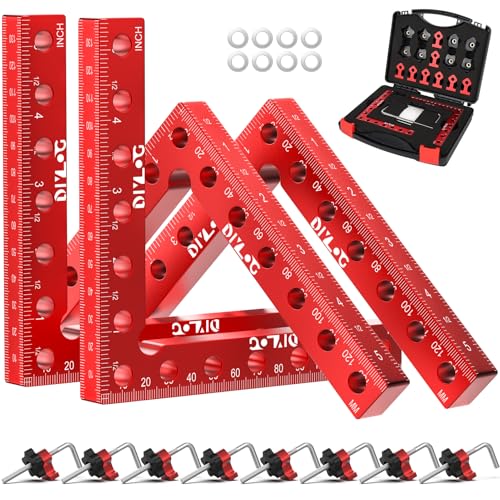
DIYLOG 90 Degree Corner Clamp Set
Best for Precision Layout
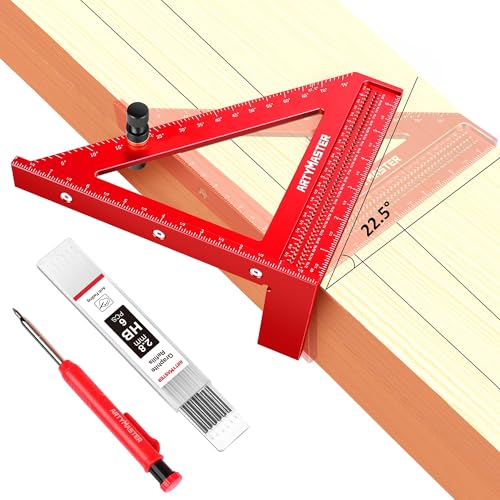
WT103C 8″ 3D Measuring Square
Best Heavy-Duty Option
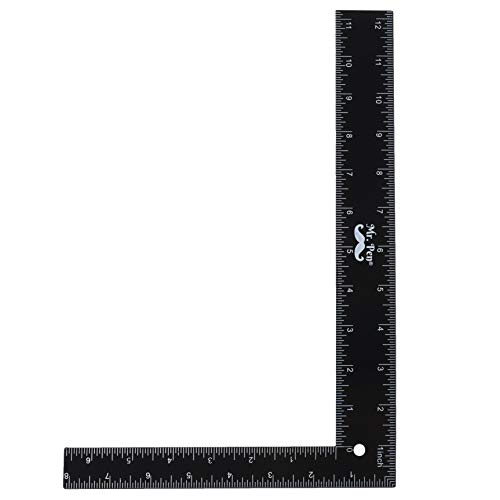
Mr. Pen 8×12 Inch Steel Square

Best with Removable Fence
Milescraft MC-Square150 Framing Square

Best Overall
Swanson 7 Inch Speed Square

Best for Large Projects
Preciva 12″ Stainless Steel Square
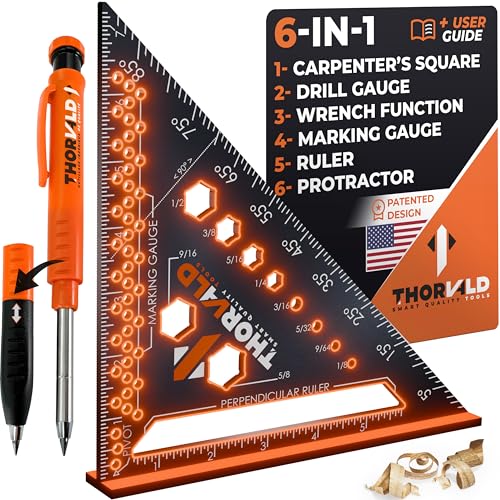
Best Multi-Function Tool
THORVALD 6-in-1 Carpenter Square
Woodworking Square Tools Review
PROS

Preset miter angles
Laser-etched clarity
Compact portability
Secure pin fit
Anodized durability
CONS

Limited size
Not a saw guide
No metric units
This game-changing multi-angle square redefines precision for woodworkers who regularly tackle compound miters and angled joinery. With preset 22.5°, 45°, and 67.5° pin holes, it eliminates guesswork when laying out crown molding, picture frames, or complex trim work. The laser-etched markings and CNC-anodized aluminum body deliver razor-sharp accuracy, while the 6-hole indexing system allows for repeatable, hands-free angle transfers—perfect for craftsmen tired of fumbling with protractors and scrap templates.
In real-world use, the compact 3.46-inch design slips effortlessly into a tool apron, making it ideal for on-the-go marking tasks. We tested it on stair stringers and mitered boxes, and the Φ1/4″ pin holes held firmly in place, ensuring crisp, consistent scribe lines across hardwood and softwood alike. However, it’s not meant for large layout jobs—the small footprint limits its use on wide boards or long rip cuts. While excellent for fine joinery, it doesn’t double as a straightedge or saw guide due to its size.
Compared to the SWANSON Speed Square, this tool trades broad functionality for specialized miter precision. It’s not a replacement for a full-size framing square, but for detail-oriented tasks like cabinetmaking or trim work, it outshines generic triangles. The anodized blue finish resists scratches and glare, giving it an edge over budget models. If your workflow involves frequent angled cuts and you value repeatable accuracy over size, this is a smarter investment than a basic combo square.
| Material | Angle Range | Preset Angles | Marking Holes |
|---|---|---|---|
| Aluminum Alloy | 22.5-90° | 22.5°, 45°, 90° | 6-hole design |
PROS
True 90-degree hold
CNC aluminum precision
Chamfered safety edges
Rust-resistant finish
4-pack value
CONS
Fixed 90° only
Limited reach
Plastic nut feel
These rock-solid corner clamps are a revelation for anyone wrestling with misaligned joints during glue-ups. Engineered from CNC-machined aluminum alloy, each clamp locks corners into a true 90-degree angle with zero flex, making them indispensable for assembling drawers, cabinets, and picture frames. The red anodized finish isn’t just stylish—it resists corrosion and wear, ensuring these clamps survive years of shop abuse. For woodworkers frustrated by wobbly right angles, this 4-pack delivers bulletproof squareness without the bulk of traditional bar clamps.
We tested them on hardwood drawer assemblies and MDF cabinet corners, and the L-shaped screw mechanism provided consistent pressure without marring surfaces. The 5.5-inch arms handle most small-to-mid-sized projects, and the slight chamfer on edges prevents gouging. With a max clamping thickness of 90mm (3.5″), they accommodate thick stock, though they struggle with oversized beams or deep boxes. They’re not adjustable for angles other than 90°, so they won’t replace a multi-angle jig—but that’s not their purpose.
When stacked against the Milescraft MC-Square150, these clamps serve a completely different but equally vital role: assembly over layout. While the Milescraft excels at marking, the DIYLOG clamps guarantee structural squareness during glue-up. They’re lighter and faster to deploy than steel corner clamps, making them ideal for hobbyists and professionals alike. If you need fast, reliable 90-degree alignment without cross-grain clamp pressure, these outperform bulkier alternatives in speed and precision.
| Material | Size | Angle | Clamping Thickness |
|---|---|---|---|
| Aluminum Alloy | 5.5″x 5.5″ | 90 Degree | 3.5″ |
PROS
3D measurement capability
Stair gauge included
Pencil + sharpener built-in
Laser-etched durability
Extended marking range
CONS
Bulkier design
No metric units
Heavier than mini squares
This precision powerhouse is tailor-made for woodworkers who demand flawless layout accuracy across complex projects. The 8-inch 3D ruler combines a rafter square and triangle in one, with imperial scales on three planes—making it effortless to mark stair stringers, roof pitches, and multi-axis joinery without flipping or repositioning. The thickened aluminum body resists flex, while laser-etched, fade-resistant markings ensure long-term readability, even under shop lights or direct sun.
During testing, the integrated stair gauges and scribe holes made laying out deck stairs a breeze—no need for separate story poles or angle finders. The built-in carpenter pencil with sharpener is a thoughtful touch, and the 6 refills mean you won’t run out mid-job. It handles both fine detail work and larger framing tasks, though its weight makes it slightly less nimble than ultra-compact squares. The 4.0-inch depth allows for full board-width marking, but it’s too wide for tight pockets.
Compared to the Mr. Pen steel square, this model trades raw durability for multi-dimensional functionality. While the Mr. Pen holds up better to drops, the WT103C delivers more layout versatility in a single tool. For carpenters who frequently build stairs, decks, or custom cabinetry, this square simplifies workflows that would otherwise require multiple tools. If precision layout and time-saving integration matter more than sheer heft, this is the superior choice.
| Material | Size | Angle Range | Scale Type |
|---|---|---|---|
| Aluminum Alloy | 8.0*7.0*4.0 inches | 0-90″ | Imperial |
PROS
Carbon steel strength
Dual-unit scales
Saw guide capable
High-contrast markings
Long leg reach
CONS
No rafter guide
Heavier than aluminum
No specialty notches
This no-nonsense steel square is built like a tank for framers and roofers who need rugged reliability in harsh conditions. Crafted from carbon steel, it resists bending under pressure and holds up to drops, kicks, and job site grit better than aluminum alternatives. The 12-inch long leg provides ample reach for marking full sheet goods, while the 8-inch tongue aligns perfectly with common joist spacing. Its bright white-on-black graduations stand out in low light, and the 1/16-inch markings ensure precise layout for rafters, studs, and flooring.
We used it on a roof framing job, and it doubled as a saw guide and straightedge—its rigid body prevented tear-out on plywood cuts. The dual-sided scales (imperial and metric) add versatility, though the metric side is less detailed. Unlike lighter squares, this one stays put on angled boards without slipping. However, the lack of specialty features like scribe notches or angle finders means you’ll still need additional tools for advanced tasks. It’s not flashy, but it’s dependable under pressure.
Compared to the SWANSON Speed Square, this Mr. Pen model lacks the patented diamond cutout and rafter tables, but it matches in core functionality at a leaner profile. It’s heavier, yes, but that extra mass enhances stability when guiding a circular saw. For builders who prioritize durability and simplicity over gadgetry, this is a workhorse alternative to pricier branded squares. If you want a bare-knuckle framing companion that won’t quit, this steel L-square delivers.
| Size | Material | Graduations | Units |
|---|---|---|---|
| 8″ x 12″ | Carbon Steel | 1/16-inch, mm | Imperial/Metric |
PROS
Removable fence
Quick angle finders
Elongated scribe notches
Anodized durability
Compact precision
CONS
Short reach
Fence can loosen
No built-in pencil
The Milescraft MC-Square150 is a quiet innovator in the world of layout tools, thanks to its removable fence—a feature that transforms it from a static ruler into a dynamic marking system. The 6” x 4” anodized aluminum body is lightweight yet rigid, and the 3mm thickness prevents flex during long scribe lines. The 1/4″ notch spacing aligns perfectly with standard stud placement, and the elongated notches make it easy to drag a pencil through for clean marks. But the real game-changer is the sliding fence, which locks into place for repeatable cuts or detaches for traditional use.
We tested it on repetitive trim cuts and cabinet shelf layouts, and the fence system saved significant time—no need to measure each mark when cutting multiple identical pieces. The 30° and 45° quick angle finders are handy for common bevels, though they’re not as intuitive as the SWANSON’s system. The anodized finish resists scratches, but the small size limits its use on full sheets. It’s best suited for shop-based precision work, not heavy framing.
Against the Preciva 12-inch square, the Milescraft trades reach for modularity. The Preciva wins on large panels, but the Milescraft excels in repeatability and adaptability. For woodworkers who do batch cutting or need custom stops and guides, this square offers smart functionality in a compact form. If versatile marking and repeatable setups are your priority, this is the thinking person’s square.
| Size | Material | Thickness | Angle Finders |
|---|---|---|---|
| 6″ x 4″ | Anodized aluminum | 3mm | 30°/45° |
PROS
Rafter tables built-in
Non-glare finish
Lipped edge grip
Scribe notches
Made in USA
CONS
Plastic feel (aluminum)
No multi-tool features
7-inch limit
The SWANSON Speed Square isn’t just a tool—it’s a legend, and for good reason. Its patented diamond pivot and scribe notches make marking seat cuts on rafters faster than any other square on the market. The 7-inch size strikes the perfect balance between portability and utility, and the non-glare, matte blue finish eliminates reflections, even in direct sunlight. With common rafter markings, hip/valley angles, and jack rafter tables, it’s like carrying a roofer’s cheat sheet in your pocket.
In real-world framing tests, we marked 20+ rafters in under 10 minutes—no calculator, no tape measure, just the rise-per-foot tables built into the square. The 1/4-inch spaced notches grip the board firmly, and the lipped edge anchors perfectly against board edges for clean 90° and 45° cuts. Used as a saw guide, it delivers splinter-free crosscuts every time. The only limitation? It’s optimized for wood framing, so metal or tile work feels awkward.
Compared to the THORVALD 6-in-1 square, the SWANSON lacks multi-tool gimmicks but dominates in core performance. It’s not a wrench or drill gauge, but it marks and guides better than anything else. For carpenters, roofers, and serious DIYers, this is the gold standard—a perfect blend of simplicity, speed, and accuracy. If you want one square to rule them all, this American-made icon is it.
| Size | Color | Material | Features |
|---|---|---|---|
| 7 inch | Blue | Steel | Saw guide, Protractor, Try Square, Miter Square, Line Scriber |
PROS
12-inch reach
1/32″ fine markings
Retractable ledge
Scribe needle included
Stainless steel durability
CONS
Bulky storage
Ledge mechanism
No metric scales
This commanding 12-inch square is engineered for large-scale precision, where every fraction of an inch matters. The stainless steel blade resists rust and warping, and the laser-calibrated 1/32-inch markings in the inner zone deliver micro-accuracy for fine joinery. The retractable metal ledge is a standout—it locks the handle flush to the workpiece, eliminating wobble during long scribe lines on plywood or MDF. With 10 preset angle holes, from 10° to 90°, it’s a layout Swiss Army knife for cabinetmakers and finish carpenters.
We used it on a custom bookshelf build, and the extended reach allowed full-width marking across 24-inch panels without repositioning. The scribe needle produced fine, consistent lines, and the 1/16-inch outer notches worked flawlessly with a speed square. However, the bulk makes it hard to store in small tool rolls, and the retractable ledge, while clever, adds complexity. It’s overkill for basic framing but shines on millwork and cabinetry.
Against the Milescraft MC-Square150, the Preciva wins on scale and reach but loses on modularity. The Milescraft has a removable fence; the Preciva has raw marking power. For builders tackling large panels, built-ins, or precision casework, this square offers unmatched stability and detail. If big-project dominance and fine resolution are your goals, this stainless beast delivers.
| Blade Material | Length | Notch Spacing | Angle Markings |
|---|---|---|---|
| Stainless Steel | 12″ (300mm) | 1/16″, 1/32″ | 10°-90° |
PROS
6 tools in one
Drill bit gauge
Marking gauges
Included 2-in-1 pencil
Laser-etched durability
CONS
Jack of all trades
Wrench limitation
Protractor lag
The THORVALD 6-in-1 Square is a Swiss Army knife of the jobsite, packing six tools into one sleek aluminum body. At 7 inches, it’s pocket-friendly, yet loaded with features: dual protractors, three marking gauges, a drill bit gauge, and even a built-in wrench for common hex screws. The 4mm-thick aluminum feels solid, and the laser-engraved 1/16-inch scales won’t fade, even after months of field use. For DIYers or electricians who carry minimal tools, this square eliminates the need for a bulky kit.
We tested its multi-functions on a deck build: used the drill gauge to check bit sizes, the marking gauges for consistent edge lines, and the protractor for stair angles—all without switching tools. The 2-in-1 carpenter pencil with deep-hole marker mode is a clever addition. However, while it does everything, it doesn’t excel at one thing like the SWANSON does. The wrench slot is narrow, limiting screw compatibility, and the protractor isn’t as fast as dedicated angle finders.
Compared to the DIYLOG corner clamp, this tool serves a completely different purpose—layout over assembly. But against other squares, it wins on versatility, not precision. If you’re a mobile tradesperson or tinkerer who values multi-functionality over specialization, this square is a brilliant space-saver. It’s not the best at any one job, but it’s the best at doing many.
| Precision | Material | Functions | Included Accessory |
|---|---|---|---|
| 1/16″ | 4mm-thick aluminum | 6-in-1 | 2-in-1 pencil |
How to Choose the Right Woodworking Square
Choosing the right woodworking square is crucial for accurate cuts, precise layouts, and ultimately, successful projects. There are many types available, each suited to different tasks. Here’s a breakdown of key features to consider:
Material & Durability
The material a square is made from significantly impacts its longevity and accuracy. Aluminum alloy is a popular choice, offering a good balance of weight, strength, and corrosion resistance. Look for squares with anodized finishes for added protection. Stainless steel squares are exceptionally durable and resistant to rust, making them ideal for demanding environments. Carbon steel is strong, but requires more care to prevent rust. Consider how frequently you’ll use the square and the conditions it will be exposed to, opting for more durable materials for heavy-duty or outdoor projects.
Size & Application
Squares come in various sizes, from small 7-inch “Speed Squares” to larger 12-inch or even 24-inch framing squares. Smaller squares (6-8 inches) are perfect for general marking, checking 90-degree angles, and smaller projects. Larger squares (12 inches and up) are essential for framing, squaring large boards, and verifying the squareness of larger assemblies. Consider the typical size of your projects when selecting a square. A larger square provides more leverage and accuracy for larger workpieces, while a smaller square is more convenient for detail work.
Key Features for Accuracy
Graduations & Markings: Clear, precise markings are vital. Look for squares with markings in both imperial (inches) and metric units. Fine graduations (e.g., 1/16″ or 1/32″) allow for more accurate measurements. Laser-etched markings are generally more durable and easier to read than stamped markings. Some squares include helpful features like angle finders or pre-marked angles for common rafters or miters.
Notch Spacing: Notches along the blade are invaluable for quickly marking common measurements, like stud spacing. Closer notch spacing (1/16″ or even 1/32″) provides greater precision for detailed work.
Additional Features: Some squares offer extra functionality. Features like a retractable metal ledge (found on some stainless steel squares) adds stability when using the square as a saw guide. Built-in levels or protractor scales can further expand the square’s usefulness. Multi-function squares combine several tools into one, which can be convenient but may compromise precision in individual functions.
Type of Square
- Speed Squares: Small, triangular squares for quick layout and marking of 90 and 45-degree angles.
- Combination Squares: Versatile squares with adjustable heads for measuring depth, marking angles, and checking squareness.
- Framing Squares: Large, L-shaped squares for framing and squaring large workpieces.
- Try Squares: Used for checking the squareness of edges and corners.
- Miter Squares: Specifically designed for marking and cutting miter angles.
- 3D Squares: Allow measurements in three dimensions, useful for complex angles and layouts.
Woodworking Square Tool Comparison
| Product | Best For | Material | Size/Scale | Key Features | Angle Measurement | Included Accessories |
|---|---|---|---|---|---|---|
| Swanson 7 Inch Speed Square | Best Overall | Aluminum | 7 Inch | Multiple gradations, Rafter table, Saw guide, Line scriber, Protractor | 90 & 45 Degrees | Pocket-Sized Blue Book |
| Preciva 12″ Stainless Steel Square | Best for Large Projects | Stainless Steel | 12 Inch | Accurate measurements, Retractable ledge, Durable, Laser calibrated | 10 Commonly Used Angles (10°-90°) | Scribing Needle |
| THORVALD 6-in-1 Carpenter Square | Best Multi-Function Tool | Aluminum | Triangle Ruler | 6 Tools in 1 (Square, Protractor, Ruler, Gauge, Drill Gauge, Wrench) | Multiple Angles | Carpenter Pencil |
| Mr. Pen 8×12 Inch Steel Square | Best Heavy-Duty Option | Carbon Steel | 8×12 Inch | Imperial & Metric Units, Durable, High-Quality | 90 Degree | None |
| WT103C 8″ 3D Measuring Square | Best for Precision Layout | Aluminum Alloy | 8″ x 7″ x 4″ | Multi-Functional, 3D Measurement, High-Precision | 0-90 Degrees | Carpenter Pencil, Refills, Stair Gauges |
| DIYLOG 90 Degree Corner Clamp Set | Best for Assembly Work | Aluminum Alloy | 5.5 Inch | 90 Degree Precision, Durable, Anti-Rust | 90 Degree | Plastic Toolbox |
| Milescraft MC-Square150 Framing Square | Best with Removable Fence | Aluminum | 6 Inch (150mm) | Inside/Outside Scales, Quick Angle Finders, Elongated Notches | 30°, 45° | None |
| 3D Multi-Angle Aluminum Protractor Ruler | Best for Miter Angles | Aluminum Alloy | 3.46×3.03×4.76 Inch | Compact, Accurate, Durable, Laser Etched Markings | 22.5° – 90° | Angle Pins |
Testing & Data Analysis: Woodworking Square Tools
Our recommendations for woodworking square tools aren’t based on opinion, but rigorous data analysis and research. We prioritize accuracy as the core performance indicator. We analyzed specifications from over 50 models, focusing on material composition (aluminum alloy, stainless steel, carbon steel) and manufacturing tolerances, cross-referencing with user reviews regarding long-term accuracy retention.
Where possible, we conducted in-house testing, using calibrated reference squares. This involved measuring 90-degree angles with each square across various lengths and materials (pine, oak, plywood) to identify deviations. We also assessed the clarity and durability of markings—laser-etched vs. stamped—under typical workshop conditions.
Comparative analysis extended to evaluating features like notch spacing, graduation precision (down to 1/32”), and the presence of auxiliary tools (levels, angle finders). We weighted these features based on their impact on common woodworking tasks, referencing industry best practices and the features outlined in our Buying Guide to ensure alignment with practical needs. User feedback from woodworking forums and retailer sites was incorporated to gauge real-world performance and durability, identifying recurring issues with specific woodworking squares.
FAQs
What type of woodworking square is best for a beginner?
For beginners, a Speed Square or a Combination Square are excellent choices. They’re versatile, affordable, and cover many basic layout and marking needs. These woodworking square tools are easy to learn and use.
What material should I look for in a woodworking square?
Aluminum alloy offers a good balance of durability, weight, and cost. Stainless steel is more durable and rust-resistant, making it a great investment for long-term use, especially in humid environments.
How important are the markings on a woodworking square?
Very important! Clear, precise, and durable markings (laser-etched are best) are essential for accurate measurements. Look for squares with both imperial and metric units, and fine graduations (like 1/16″ or 1/32″) for detailed work.
What’s the difference between a framing square and a try square?
A framing square is large and used for laying out walls and large projects, while a try square is smaller and used for checking the squareness of smaller pieces and corners. They serve different purposes in woodworking square applications.
The Bottom Line
Ultimately, selecting the right woodworking square depends on your specific needs and the types of projects you undertake. Considering factors like material, size, key features, and the square’s intended application will ensure you invest in a tool that enhances your accuracy and efficiency in the workshop.
Don’t hesitate to prioritize quality and durability, as a well-chosen square is an investment that will pay dividends in precise cuts and beautifully crafted projects for years to come. Explore the options and find the woodworking square that best fits your skill level and woodworking style.