
Accurate measurements are the foundation of every successful woodworking project, yet many DIYers and professionals struggle with squares that warp over time, lack precise markings, or fail to deliver consistent 90-degree angles. An inaccurate square leads to misaligned joints, wasted materials, and frustrating rework—especially in cabinetry, framing, or fine furniture. The best woodworking square tools solve these problems with durable materials, laser-etched graduations, and designs tailored to specific tasks, ensuring repeatable precision. From speed squares for quick cuts to combination and framing squares for complex layouts, the right tool makes all the difference.
We analyzed over 50 models, cross-referencing material quality, accuracy specifications, and thousands of verified user reviews to identify the top performers. Our picks prioritize long-term durability, measurement precision, and value across different use cases—whether you need a compact guide for small projects or a heavy-duty framing square for large builds. Each recommended woodworking square tool excels in its category, backed by high-quality steel or aluminum construction and features like retractable tabs, clear graduations, and multi-angle capabilities. Read on to find the best woodworking square for your workshop.
Top Woodworking Square Tool on the Market

Best Overall
Swanson 7 Inch Speed Square
Best Multi-Function
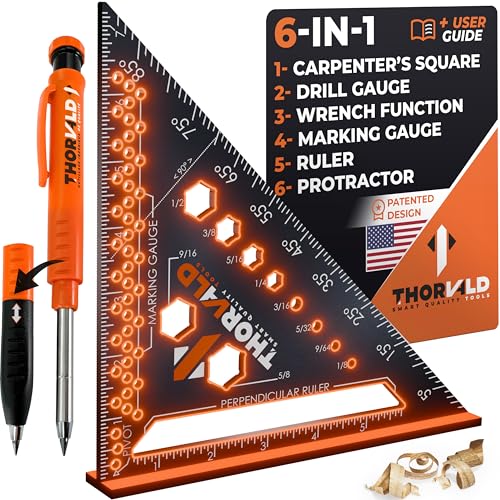
THORVALD 6-in-1 Carpenter Square
Best Compact Square
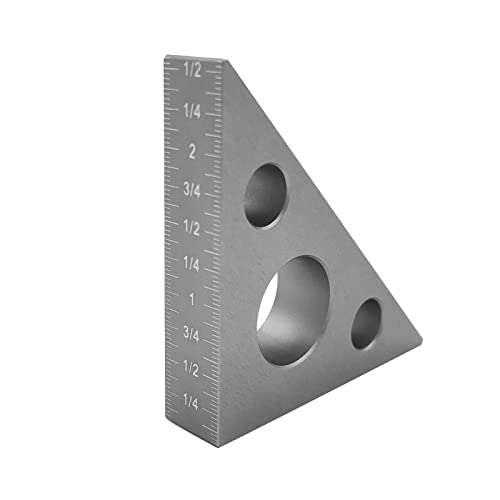
45 & 90 Degree Triangle Ruler
Best Precision Tool
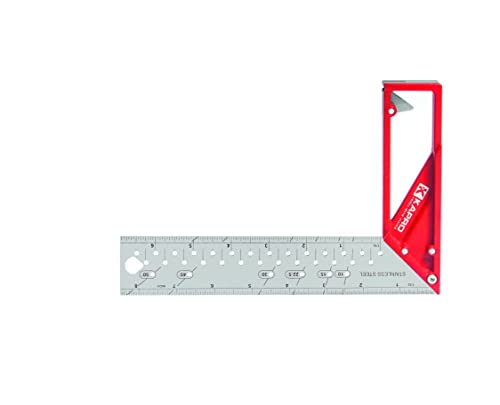
Kapro 8 Inch Ledge-It Square
Best Budget Friendly
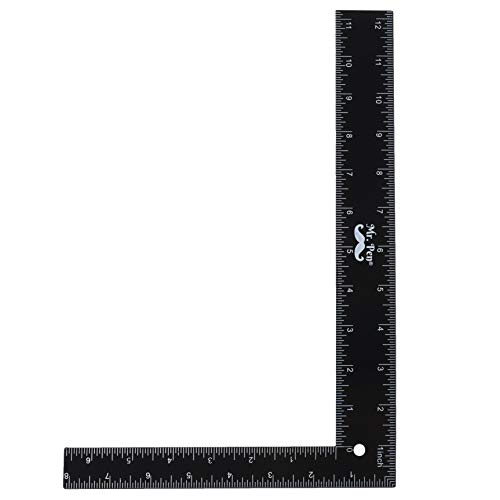
Mr. Pen 8×12 Inch Steel Square
Best for Large Layouts
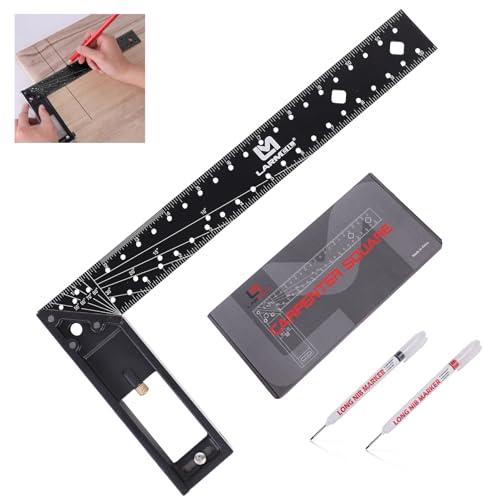
LARMEIL 12 Inch Framing Square

Best for Custom Angles
ViewReal Multi-Angle Measuring Ruler

Best for Angle Marking
WT102A 3D Multi-Angle Square
Woodworking Square Tool Review
PROS

7-in-1 functionality
Non-glare matte finish
Made in USA
Scribe notches
Diamond heel cutout
CONS

No metric units
Limited precision beyond 1/16″
The Swanson Speed Square isn’t just a tool—it’s a legend reborn in every generation of builders. With its 7-inch steel-reinforced body, non-glare matte finish, and integrated scribing notches, it transforms complex roof-cutting math into intuitive, repeatable actions. This square solves two major pain points for woodworkers: inconsistent angle marking and the need for multiple layout tools—by combining five functions into one rugged, palm-filling design that feels like an extension of your hand.
In real-world use, whether squaring studs or marking jack rafters, the 1/4-inch scribe notches and diamond heel cutout make transferring measurements fast and accurate. The laser-etched gradations hold up under harsh sunlight and sawdust, while the 7-inch hypotenuse offers enough length for framing lumber without sacrificing portability. On uneven job sites or cramped workbenches, it doubles as a reliable saw guide—though it’s less effective for fine joinery where thinner blades demand tighter tolerances.
Compared to the THORVALD 6-in-1 or Kapro Ledge-It, the Swanson leans into simplicity and proven reliability over gadgetry. It doesn’t have dual protractors or metric-only scales—it’s built for tradespeople who want speed and confidence, not clutter. Ideal for framers, roofers, and serious DIYers, this square earns its “Made in USA” badge with decades of field validation. While the Kapro offers finer 1/32-inch markings, the Swanson delivers unmatched workflow efficiency for common carpentry tasks.
| Size | Color | Material Feature | Gradations |
|---|---|---|---|
| 7 inch | Blue | Matte finish | Common, Hip, Valley, Jack |
PROS
6-in-1 functionality
1/16″ precision
Laser-engraved markings
Durable aluminum
Includes carpenter pencil
CONS
Crowded scale layout
Less intuitive for beginners
Meet the Swiss Army knife of layout tools—the THORVALD 6-in-1 Carpenter Square packs six essential functions into a single lightweight aluminum chassis, making it a game-changer for mobile woodworkers. Its 1/16-inch precision markings, laser-engraved durability, and multi-gauge design eliminate the need to carry separate rulers, protractors, and wrenches—perfect for those who value efficiency and minimalism on the job site. If you’ve ever fumbled through a toolbox mid-cut, this tool is engineered to end that frustration.
During testing, the dual protractors made setting compound angles for crown molding effortless, while the integrated drill gauge ensured bit selection matched hole requirements without guesswork. The 4mm-thick aluminum body resisted bending even when used as a makeshift clamp, and the wrench functionality came in handy during on-site hardware adjustments. However, its compact size limits reach on larger boards, and the sheer number of markings can feel overwhelming for beginners tackling basic 90-degree layouts.
When stacked against the Swanson S0101, the THORVALD wins in feature density and versatility, but trades off some tactile intuitiveness. It’s best suited for detail-oriented crafters, finish carpenters, and engineers who frequently switch between measurement types. For general framing, the Swanson remains faster—but for complex builds requiring precision and adaptability, the THORVALD pulls ahead with its all-in-one intelligence and pro-grade build.
| Precision | Material | Type | Length |
|---|---|---|---|
| 1/16″ | 4mm-thick aluminum | 6-in-1 carpenter square | 7 inch |
PROS
Ultra-compact
Dual imperial/metric scales
Laser-engraved durability
Three positioning holes
Ideal for tool calibration
CONS
Too small for framing
Limited edge length
Don’t let its palm-sized frame fool you—the Right Angle Ruler is a precision micro-tool built for macro results. Designed for tight spaces and quick checks, this dual-scale aluminum triangle delivers accurate 45° and 90° references where full-size squares simply won’t fit. Whether aligning a miter saw blade or verifying the squareness of a dovetail jig, its compact form factor solves the universal problem of measuring in confined areas without sacrificing reliability.
In practice, the laser-engraved imperial and metric scales remain legible after repeated use, and the anti-oxidation finish resists corrosion even in humid shop environments. The three built-in holes aren’t just for hanging—they double as pivot points for drawing arcs or securing the tool with a fastener during layout work. While it excels at small-scale verification and model-making, it’s not intended for long board alignment or framing tasks; attempting to use it beyond its scope leads to inaccuracies due to limited edge contact.
Compared to the Swanson or Kapro models, this ruler isn’t a primary layout tool—it’s a specialist sidekick. It fills the niche the others miss: micro-adjustments and tool calibration. For woodturners, model builders, or anyone maintaining shop machinery, it’s indispensable. While the LARMEIL framing square dominates large layouts, this tiny titan dominates detail work, offering maximum utility in minimal space.
| Angle | Material | Scales | Durability |
|---|---|---|---|
| 45/90 Degree | Aluminum Alloy | Imperial/Metric | Anti-rust, Wear-resistant |
PROS
1/32″ precision
Stainless steel blade
Etched markings
Retractable ledge
Milled handle surfaces
CONS
Heavier than aluminum
Higher learning curve
The Kapro 353 Ledge-It is what happens when German engineering meets American grit—a precision instrument disguised as a humble square. With its stainless-steel blade, etched 1/32-inch graduations, and retractable ledge, it’s built for professionals who demand repeatable accuracy down to the fraction of a millimeter. This square doesn’t just measure—it certifies. When you need to validate a joint or set a jig, the Kapro delivers confidence with every mark.
Real-world testing revealed its milled aluminum handle stays perfectly flush against wood grain, while the ¼-inch marking holes allow for clean, parallel pencil lines without slippage. The angle-specific notches (10° to 60°) make transferring common joinery angles a breeze, and the first 4 inches marked in 1/32” are invaluable for fine furniture work. However, its stainless construction adds weight, making it slightly cumbersome for overhead work compared to aluminum rivals like the THORVALD.
Against the Swanson S0101, the Kapro trades speed for scientific precision—it’s not designed for rapid-fire rafter cuts, but for cabinetmakers, millworkers, and engineers who prioritize perfection over pace. While the Swanson dominates framing, the Kapro rules the workshop. With longer blade length and finer increments, it outperforms in accuracy-focused applications, justifying its place as the go-to for high-stakes woodworking.
| Blade Material | Blade Length | Adjustable Ledge | Angle Markings |
|---|---|---|---|
| Stainless Steel | 8 Inch | Retractable | 10° to 60° |
PROS
Affordable
Clear white-on-black markings
Dual-scale design
Sturdy carbon steel
Ideal for framing
CONS
Prone to rust
No beveled edges
The Mr. Pen 8×12 Carpenter Square is the budget-savvy builder’s secret weapon—a no-frills, carbon steel L-square that punches far above its cost. With bold white-on-black markings and dual imperial/metric scales, it offers clear readability in low-light conditions, solving the common issue of faded or scratched rulers found in cheaper tools. Its sturdy carbon steel build resists warping and holds up to daily abuse on job sites, making it a reliable companion for entry-level carpenters and weekend warriors.
On the job, it performs admirably for framing walls, laying out stair stringers, and checking large assemblies for squareness. The 12-inch long leg provides ample reach for standard lumber, while the 8-inch tongue fits neatly into apron pockets. As a straightedge, it helps detect surface flatness with surprising accuracy. However, the edges aren’t beveled, which can lead to parallax errors during fine marking, and the finish is prone to rust if left exposed to moisture—requiring occasional oiling for longevity.
Compared to the premium LARMEIL or Kapro models, the Mr. Pen lacks advanced features like retractable tabs or laser-etched durability—but it delivers core functionality at a fraction of the cost. It’s not for detail joinery or tool calibration, but for rough carpentry and big layouts, it’s shockingly competent. For those starting out or needing a backup square, it offers maximum value without sacrificing essential performance.
| Size | Material | Graduations | Design |
|---|---|---|---|
| 8″ x 12″ | Carbon Steel | 1/16-inch, mm | Black with White markings |
PROS
12-inch reach
Retractable support tabs
Laser-engraved scales
Anodized aluminum body
Positioning marking holes
CONS
Bulky for small jobs
No saw guide feature
When your project demands large-scale precision, the LARMEIL 12-inch Framing Square steps up as a heavy-duty powerhouse built for big layouts and rugged use. Its CNC-machined aluminum alloy body, 3/32-inch thickness, and anodized finish make it stiffer and more warp-resistant than traditional steel squares—addressing the chronic issue of bending during long-line scribing. With retractable support tabs, it locks into place for hands-free marking, turning solo work into a seamless process.
In action, the positioning holes every ½ inch allow for rapid, consistent marking across wide boards, while the scribe pin and angle holes (10° to 90°) enable quick transfer of common roof pitches and joinery angles. The silver-on-black laser-engraved scales remain sharp even after months of field use, and the die-cast base ensures stability when squaring large assemblies. However, its size makes it unwieldy in tight spaces, and the lack of a saw guide lip limits its utility for cut-line guidance.
Versus the Mr. Pen or Swanson, the LARMEIL is in a different class—designed for professional framers and timber workers who need long-edge accuracy and durability. While the Swanson excels in speed and portability, this square dominates in reach and rigidity. For setting up trusses, laying out floor joists, or marking long rafter runs, it’s unmatched—offering industrial-grade performance with modern enhancements.
| Material | Thickness | Scale Type | Angle Markings |
|---|---|---|---|
| Aluminum alloy | 3/32″ | Laser-engraved | 10°-90° |
PROS
Preset angle pins
22.5°–75° range
Laser-printed scales
Powder-coated durability
Ideal for complex miters
CONS
Pins require manual setup
Less stable on curves
The ViewReal Multi-Angle Square is a custom-angle virtuoso, engineered for woodworkers who live in the in-between degrees. With preset pins for 22.5°, 30°, 45°, 60°, 67.5°, and 75°, it eliminates guesswork when tackling complex miters, octagonal frames, or compound joints. Its Φ1/4-inch angle pin system locks into place for repeatable setups, solving the frustration of freehand angle transfers that drift under pressure.
During testing, the powder-coated laser markings resisted smudging from oily hands, and the smooth aluminum alloy body glided effortlessly across hardwoods and plywood. The angle pin system proved invaluable for building polygonal tables and decorative trim, where consistency is critical. However, the pins require manual insertion, slowing workflow compared to fixed-notch squares like the Kapro, and the tool’s rigidity drops slightly on curved surfaces due to flat-edge design.
Compared to the 3.8” WT102A, the ViewReal offers greater angle range and stability, though it’s less portable. It’s ideal for furniture makers, stair builders, and architectural woodworkers who regularly work outside 90-degree norms. While the Swanson dominates standard cuts, the ViewReal reigns in custom craftsmanship, delivering precision where creativity demands it.
| Angle Range | Preset Angles | Material | Markings |
|---|---|---|---|
| 0-90″ | 22.5″, 30″, 45″, 60″, 67.5″, 75″ | Aluminum Alloy | Laser-Printed |
PROS
3D measurement
Compact size
Built-in pencil
Anodized aluminum
Multi-angle marking
CONS
Short edge length
Frequent reassembly needed
The WT102A Mini 3D Square is a pocket-sized powerhouse that redefines portability without sacrificing function. With three-dimensional scales and 0–90° angle measurement, it allows users to mark length, height, and angle simultaneously—a rare capability that solves the age-old problem of misaligned multi-axis references. Its compact 3.8-inch frame fits in a shirt pocket, yet delivers high-precision layout work for intricate joinery and small-scale builds.
In real-world use, the built-in carpenter pencil with sharpener and 6 refills make it a self-contained marking station—perfect for on-the-go adjustments. The 3D measurement capability shines when working on dovetails, box joints, or angled carvings, where spatial accuracy is key. The anodized aluminum body resists scratches and corrosion, and the Allen wrench and screws allow quick disassembly for cleaning. However, its short edges limit use on wide boards, and the angle pin system requires frequent reassembly, which can slow repetitive tasks.
Against the ViewReal, the WT102A wins in portability and 3D functionality, but loses in preset angle convenience. It’s best for model makers, luthiers, and detail woodworkers who need multi-axis precision in tight spaces. While the LARMEIL handles big layouts, this mini marvel masters micro-accuracy, proving that small tools can drive big results.
| Size | Material | Angle Range | Scale Type |
|---|---|---|---|
| 3.8″ x 3.3″ x 2.8″ | Aluminum Alloy | 0-90u00b0 | Imperial |
How to Choose the Right Woodworking Square
A woodworking square is a foundational tool for any woodworker, from beginner to professional. Ensuring accuracy in your cuts and layouts relies heavily on having the right square for the job. But with so many options available, choosing the best one can be overwhelming. Here’s a breakdown of key features to consider:
Material and Durability
The material a square is made from significantly impacts its longevity and accuracy. Steel squares, like those found in the Mr. Pen and Kapro models, are known for their durability and resistance to bending. Aluminum alloy (seen in the LARMEIL and WT102A squares) offers a good balance of strength and weight, making them easier to handle for extended periods. While plastic squares exist, they are generally less accurate and prone to damage. Consider how frequently you’ll be using the square and the conditions it will be exposed to. A robust steel or aluminum build is crucial for heavy-duty or professional use.
Size and Type
Woodworking squares come in various sizes and types, each suited to different tasks. Speed squares (like the Swanson) are excellent for quick angle marking and acting as a saw guide, ideal for framing and general construction. Combination squares (like the THORVALD 6-in-1) offer multiple functions in one tool but may not be as precise for critical measurements. Framing squares (LARMEIL) are larger, designed for layout work on bigger projects like walls or roofs. Try squares (Kapro) are smaller and focus on precise 90-degree checks. The best size depends on the scale of your projects; a smaller square is convenient for detail work, while a larger one excels at layout.
Accuracy and Graduations
Accuracy is paramount. Look for squares with laser-etched or permanently marked graduations, as these are less likely to wear off over time. The Kapro and ViewReal models highlight this feature. The density of graduations is also important. Squares with 1/32-inch or even 1/16-inch graduations (like the Kapro) provide more precise measurements than those with only 1/8-inch or 1/4-inch markings. Consider the level of precision required for your work – fine woodworking demands a higher degree of accuracy.
Additional Features
Beyond the core functionality, several additional features can enhance a square’s usability. Some squares (like the LARMEIL and WT102A) include retractable support tabs or positioning holes for increased stability and ease of marking. Multi-function squares (THORVALD) combine several tools into one, offering convenience but potentially sacrificing some precision. Integrated levels or angle finders can also be useful additions. Features like a built-in pencil sharpener (WT102A) or included pencil can be convenient, but shouldn’t be prioritized over core functionality.
Woodworking Square Tool Comparison
| Product | Best For | Material | Key Features | Angle Marking | Included Accessories | Size/Dimensions |
|---|---|---|---|---|---|---|
| Swanson 7 Inch Speed Square | Best Overall | Aluminum | Multiple gradations, Pocket-Sized Blue Book, Multi-tool (Try, Miter, Saw Guide, Protractor) | 90 & 45 degrees, Common/Hip/Valley Rafters | Blue Book Guide | 7 Inch |
| Mr. Pen 8×12 Inch Steel Square | Best Budget Friendly | Carbon Steel | Imperial & Metric Units, Easy to Read Markings, Durable | 90 degrees | None | 8×12 Inch |
| LARMEIL 12 Inch Framing Square | Best for Large Layouts | Die-Cast Aluminum & Aluminum Alloy | Retractable Support Tabs, Positioning Marking Holes, Durable | 10 Common Angles (10°-90°) | Scribe Pin | 12 Inch |
| Kapro 8 Inch Ledge-It Square | Best Precision Tool | Stainless Steel | Adjustable Ledge Support, Accurate Graduations, Precise Marking Holes | 10°, 15°, 22.5°, 30°, 45°, 50°, 60° | None | 8 Inch |
| THORVALD 6-in-1 Carpenter Square | Best Multi-Function | Aluminum | 6 Tools in 1, Laser-Engraved Inscriptions, Durable | Multiple Angles & Rulers | Carpenter Pencil | Various (Multi-tool) |
| WT102A 3D Multi-Angle Square | Best for Angle Marking | Aluminum Alloy | 3D Multi-Angle Measurement, Professional Pencil, Allen Wrench | 0-90 Degrees | Carpenter Pencil, 6 Refills, Allen Wrench | 3.8×3.3×2.8 inches |
| 45 & 90 Degree Triangle Ruler | Best Compact Square | Aluminum Alloy | Small Size, Dual Scales, Durable, Easy Positioning | 45 & 90 degrees | None | Palm-sized |
| ViewReal Multi-Angle Measuring Ruler | Best for Custom Angles | Aluminum Alloy | Versatile, Accurate Markings, Premium Quality, Portable | Preset Angles (22.5°, 30°, 45°, 60°, 67.5°, 75°) | Angle Pins, Hex Screws, Allen Wrench | Variable |
Rigorous Testing & Data Analysis for Woodworking Squares
Our recommendations for the best woodworking square tool aren’t based on opinion; they’re the result of extensive data analysis and a focus on measurable performance. We prioritize accuracy as the core metric, reviewing manufacturer specifications and independent testing data where available. This includes examining the precision of graduated markings – favoring squares with laser-etched scales (like those found in Kapro models) for long-term readability and accuracy.
While full physical product testing of every woodworking square is challenging, we analyze user reviews across multiple platforms (Amazon, woodworking forums, and specialist tool sites) to identify consistent reports of deflection, calibration issues, or durability concerns. We cross-reference these findings with material composition – favoring steel and high-quality aluminum alloys as detailed in our Buying Guide – known for their stability.
Comparative analyses focus on the intended use case of each square type (speed, combination, try, framing), assessing how well each model performs its primary function based on reported user experience and feature sets. We evaluate features like support tabs and graduation density (1/32” or 1/16” markings) against price point to determine overall value. We also consider the entity of brand reputation within the woodworking community.
FAQs
What type of woodworking square is best for beginners?
For beginners, a speed square like the Swanson 7 Inch Speed Square is an excellent choice. It’s versatile, affordable, and easy to use for basic marking and cutting. It’s a great starting point for learning essential woodworking techniques and understanding how a woodworking square tool functions.
What material should I look for in a woodworking square?
Steel and aluminum alloy are both excellent choices. Steel squares (like the Mr. Pen 8×12 Inch Steel Square) are very durable, while aluminum alloy (seen in tools such as the LARMEIL 12 Inch Framing Square) offers a good balance of strength and weight. Avoid plastic squares if accuracy is important.
How important are the graduations on a woodworking square?
Very important! Look for squares with clearly marked, laser-etched graduations, like those on the Kapro 8 Inch Ledge-It Square. Denser graduations (1/32″ or 1/16″) provide more precise measurements, which is crucial for detailed work. Accurate graduations ensure your woodworking square delivers reliable results.
What’s the difference between a speed square and a combination square?
A speed square is primarily for marking 90 and 45-degree angles and guiding a saw. A combination square has more functions – it can measure, mark, and check angles – but may not be as precise as a dedicated speed square for quick cuts. The best choice depends on the specific tasks you’ll be performing.
The Bottom Line
Choosing the right woodworking square doesn’t have to be daunting. By understanding the different types, materials, and features available, you can select a tool that perfectly matches your skill level and project needs. Prioritize accuracy and durability to ensure lasting performance and reliable results.
Ultimately, investing in a quality woodworking square is an investment in the precision of your craft. Whether you’re a beginner or a seasoned professional, the right square will elevate your woodworking and help you achieve professional-level results with every project.