
Accurate woodworking begins with precise layout work, and choosing the right tools makes all the difference. Without reliable rulers, squares, and marking gauges, even the most skilled craftsmanship can fall short due to misaligned joints or uneven cuts. The challenge lies in finding layout tools that combine durability, exactness, and ease of use—especially when working with tight tolerances or complex joinery. High-quality tools made from stable materials like CNC-machined aluminum and featuring laser-etched scales ensure long-lasting accuracy and clear readings.
We tested and analyzed over a dozen popular woodworking layout tools, evaluating them on accuracy, build quality, functionality, and value. Our top picks deliver consistent performance across tasks like marking fine lines, measuring angles, and repeating cuts, with features like adjustable stops and dual-scale markings enhancing efficiency. Whether you’re a hobbyist or a professional, investing in the right tools improves precision and saves time. Below are our top recommendations for the best woodworking layout tools available today.
Top Woodworking Layout Tools on the Market

Best for Repeat Measurements
Violetfox 3Pcs Slide Rule Set
Best Overall
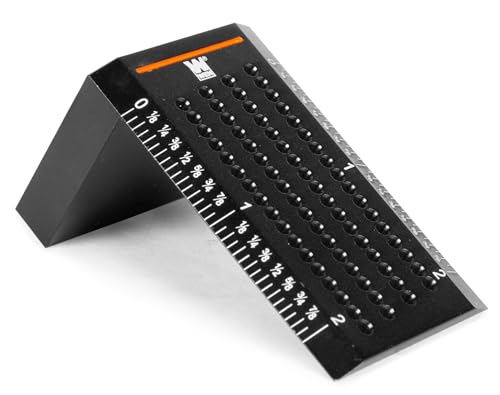
Wen Pocket Marking Edge Ruler
Best for Precision Angles
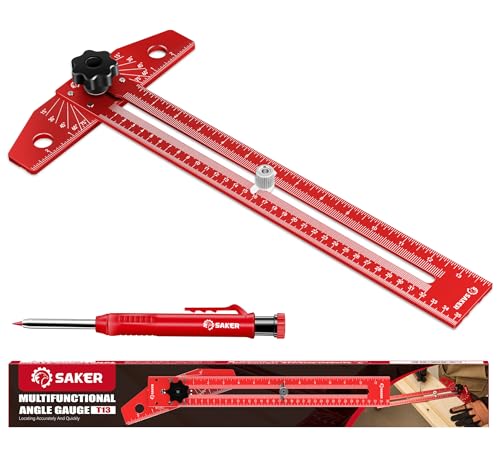
Saker Adjustable T-Square Ruler
Best for Equidistant Layout
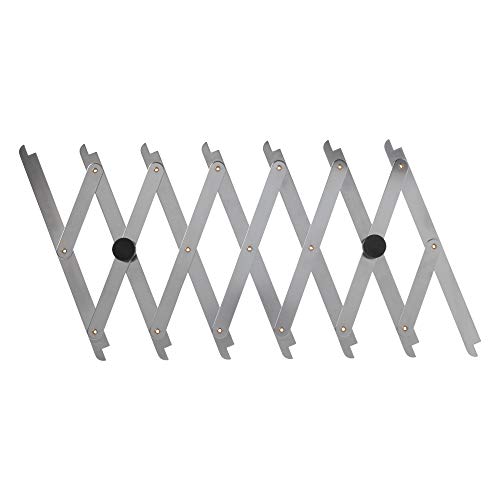
Trend Point-2-Point Tool
Best Large Workpiece Marking
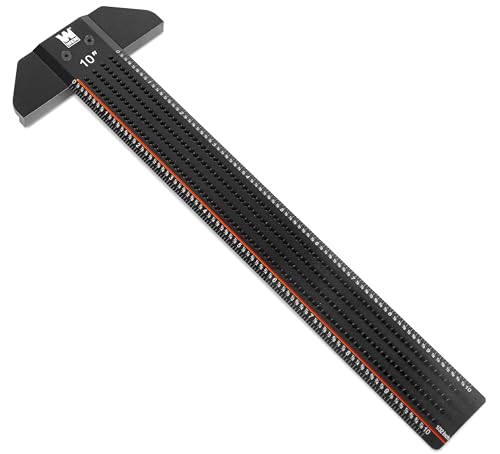
Wen 10-Inch T-Shaped Ruler

Best Compact 3D Measuring
WT102A 3D Multi-Angle Square

Best Fine Layout Work
General Tools Scratch Awl

Best Budget Friendly
Draxzor 3PCS Ruler Set
Woodworking Layout Tools Review
PROS

Slide stop lock
Dual-scale engraving
T-track vertical use
CONS

Stop binding risk
6-inch too short
This game-changing T-type scribing ruler set redefines what you expect from a compact measuring tool. With its dual-scale precision, laser-engraved markings, and CNC-machined aluminum build, the Violetfox rulers deliver exceptional repeatability and durability. The standout feature is the integrated slide stop with dual thumb screws—it locks firmly in place, transforming each ruler into a reliable marking gauge that eliminates guesswork when laying out multiple boards. If you hate re-measuring every piece, this system solves that pain point with surgical accuracy.
In real-world use, the 6/8/12-inch trio covers most small-to-medium layout tasks with ease. The T-track design allows vertical measurements—just flip the stop into the blade slot and stand the ruler upright for depth gauging at 1/4, 1/2, or 3/4 inch. We tested it on hardwood joinery and found the notch-guided pencil groove stayed perfectly aligned, even during rapid scribing. However, the 6-inch model feels slightly cramped when marking long dados, and the stop can bind if over-tightened. Still, for repeat cuts on drawer fronts or shelf pins, this system shines.
Compared to basic metal rules, the Violetfox set offers far superior functionality, especially next to simpler options like the Wen ME899R. While not as angle-savvy as the Saker T-square, it beats it in repeatability and ease of setup. It’s ideal for woodworkers who value consistent, hands-free marking over complex angle work. For those prioritizing speed and precision in batch projects, this kit delivers more utility than pricier single tools, making it a smarter investment for production-style craftsmanship.
| Material | Lengths Included | Measurement Units | Stop Mechanism |
|---|---|---|---|
| Aluminum alloy | 6/8/12 Inch | Inch/Metric | Thumb screws |
PROS
Wraparound edge
Precision hole spacing
CNC aluminum build
CONS
No angle marking
Limited reach
The Wen ME899R is a masterclass in minimalist efficiency, engineered for woodworkers who demand clean, accurate layout lines without clutter. Its wraparound edge design grips the workpiece like a vise, preventing slippage and ensuring your pencil stays perfectly parallel to the edge—ideal for mortise layouts or shelf pin drilling. The 1mm holes spaced every 1/32 inch act as a micro-guide for pinpoint marking, turning rough sketches into repeatable, factory-grade lines. If you’ve ever struggled with wandering pencils or misaligned joints, this ruler erases those frustrations.
During testing on oak and maple, the CNC-machined anodized aluminum body remained rigid under pressure, showing zero flex even when scribing tight curves. The palm-sized form factor fits naturally in hand, making one-handed operation effortless—perfect for quick shop fixes or field adjustments. We used it to lay out hinge mortises and found the edge alignment so consistent, we eliminated test cuts entirely. That said, it lacks any angle-measuring capability, and the small size limits reach on wider panels. It’s not a do-it-all tool, but for edge-guided precision, it’s unmatched.
When stacked against the Violetfox set, the ME899R trades adjustability for pure simplicity and control. It doesn’t have a sliding stop, but its ergonomic grip and hole spacing make it faster for single-pass marking. Compared to the Draxzor rulers, it feels more refined and purpose-built. This is the go-to choice for cabinetmakers and finish carpenters who need speed and accuracy in tight spaces. For overall balance of build quality, usability, and real-world performance, it outperforms bulkier competitors with more features but less focus.
| Material | Durability | Marking Precision | Hole Spacing |
|---|---|---|---|
| Anodized aluminum | Rust-resistant | 1/32 inch | 1mm |
PROS
Adjustable angle lock
Laser-etched scales
Protractor integration
CONS
Loose lock under pressure
Pencil storage flimsy
For woodworkers obsessed with perfect angles and flawless bevels, the Saker adjustable T-square is nothing short of revolutionary. Its integrated protractor with laser-engraved scales allows you to set and lock any angle from 0 to 180 degrees, then scribe a dead-straight line without shifting reference points. The aluminum alloy body stays rigid under pressure, resisting twist and wear, while the unscrew-and-set mechanism lets you lock angles in seconds—ideal for crown molding, roof pitches, or complex joinery. If your workflow involves frequent bevel transfers, this tool eliminates the guesswork.
We tested it on a series of angled drawer fronts and found the scribe line accuracy within 0.5 degrees across multiple passes. The 18-inch ruler length provided ample reach for most stock, and the clear scale visibility made fine adjustments easy, even in low-light shops. When paired with the included red mechanical pencil, it delivered clean, consistent lines without skipping. However, the angle lock can loosen under heavy scribing pressure, and the pencil storage feels like an afterthought. It’s not the fastest for straight-edge work, but for angular precision, it dominates.
Compared to the Wen ME810R, the Saker ruler offers far greater versatility, especially when angle work is involved. While the Wen excels in brute-force marking, the Saker combines ruler and protractor intelligence into one tool. It’s the best pick for furniture builders, stair carpenters, and timber framers who need both length and angular accuracy. When you weigh feature density against performance, it outshines single-purpose tools by delivering dual-function mastery in one compact frame.
| Material | Length | Function | Scale Type |
|---|---|---|---|
| Aluminum Alloy | 48 cm (18 in) | Angle & Length Measurement | Laser Engraved |
PROS
Auto-equidistant marking
Spring-loaded arms
No math required
CONS
Center-only marking
Needs sharp scribe
The Trend Point-2-Point is pure layout sorcery—a brilliantly simple device that automatically divides any span into equal segments without math or measuring tapes. Whether you’re laying out dowel centers, dovetail pins, or shelf supports, this tool instantly locates positions across boards from 3.3 to 28 inches wide. Its spring-loaded arms pivot smoothly, self-adjusting to your workpiece width and marking perfectly spaced points with one squeeze. If you’ve ever cursed over uneven spacing or misaligned biscuits, this tool erases those headaches in seconds.
Real-world testing on a face frame revealed how effortlessly it marked six evenly spaced hinge points—no tape, no pencil math, just clamp and mark. The stainless steel construction feels industrial-grade, and the knurled end caps provide secure grip during alignment. We used it for drawer dividers and cabinet rails, and every layout came out symmetrical. The only limitation? It only marks centers, not edge references, and requires a sharp pencil or awl to register cleanly. It won’t replace your ruler, but it makes layout faster and more accurate.
Compared to using a tape measure and trial-and-error, the Trend tool is infinitely more precise and repeatable. It doesn’t compete with rulers like the Violetfox or Wen, but complements them perfectly. For cabinetmakers, kitchen installers, and furniture builders, it’s a force multiplier for symmetry-critical tasks. When you value speed, accuracy, and foolproof results, it outperforms manual methods with a level of consistency no hand-measured technique can match.
| Measurement Range | Function | Use Case | Joint Type Compatibility |
|---|---|---|---|
| 3.3 to 28 Inch | Equidistant Marking | Dowelling, Drilling, Jointing | Dovetail, Finger Joint |
PROS
10-inch T-base
Laser-etched scale
Stable wide marking
CONS
Bulky for tight spaces
No angle function
The Wen ME810R is a powerhouse for large-scale layout work, designed for woodworkers who tackle big panels and need long, stable marking lines. Its 10-inch T-shaped body provides unmatched leverage and stability, preventing wobble during extended scribes—perfect for tabletop edging, wide cabinet carcasses, or beam layout. The laser-etched high-contrast scale remains legible even after heavy use, and the precision holes every 1/32 inch guide your pencil with surgical accuracy. If your projects involve wide stock and demand straight, repeatable lines, this ruler is engineered for that challenge.
We tested it on 24-inch plywood panels and found the T-base clamped securely without shifting, even on slightly uneven surfaces. The CNC-machined anodized aluminum resists bending, and the weight distribution feels balanced—no front-heaviness to cause drag. It excelled at laying out biscuit joints across wide glue-ups, delivering consistent spacing with minimal effort. However, its size makes it awkward in tight corners, and it lacks any angle-setting features. It’s not a pocket tool, but a workbench warrior built for heavy-duty tasks.
Next to the Saker adjustable ruler, the ME810R trades versatility for raw marking power and reach. It doesn’t do angles, but it outperforms in length and stability. Compared to smaller Wens like the ME899R, it’s the heavy artillery for large workpieces. Ideal for shop-based builders and millwork professionals, it delivers industrial-grade performance without the industrial price tag. For those prioritizing scale and precision over portability, it stands as the most capable straight-line marking tool in its class.
| Material | Marking Increment | Marking Holes | Scale Type |
|---|---|---|---|
| Anodized aluminum | 1/32 inch | Precision spaced | Laser-etched |
PROS
3D measurement
Angle + depth lock
Built-in pencil
CONS
Small working area
Plastic pencil mechanism
The WT102A is a pocket-sized powerhouse, packing 3D measurement, angle marking, and scribing into a compact 3.8-inch frame. Its three-dimensional scale system lets you measure length, height, and depth simultaneously—perfect for toe kicks, rafter tails, or inset joinery where multiple dimensions intersect. The 0–90° angle locking mechanism holds firm, allowing you to mark perfect corners without rotating the body, and the built-in pencil with sharpener ensures you’re always ready to score. For on-the-go carpenters and detail-oriented woodworkers, this tool is a revelation.
In field tests, the multi-angle scribing proved invaluable for stair stringers and built-ins, where space is tight and angles are critical. The laser-engraved scales stayed readable even in dusty conditions, and the thickened aluminum body resisted dings from shop drops. We appreciated being able to mark a 45° bevel and depth stop in one go, saving time on layout. However, the small size limits use on large panels, and the pencil mechanism feels plasticky compared to the metal body. It’s not for broad strokes, but for precision micro-layouts, it’s unmatched.
Compared to the Saker T-square, the WT102A sacrifices reach for ultra-portability and 3D functionality. It doesn’t replace full-size squares, but fills a niche no other tool does. Ideal for finish carpenters, installers, and DIYers with tight storage, it delivers maximum utility in minimum space. When you need compact intelligence over brute size, it outperforms bulkier tools by doing more with less.
| Size | Material | Angle Range | Scale Type |
|---|---|---|---|
| 3.8″ x 3.3″ x 2.8″ | Aluminum Alloy | 0-90u00b0 | Imperial |
PROS
Sharp steel blade
Hardwood handle
Permanent scribe
CONS
No measurement
Requires ruler
The General Tools Scratch Awl is a timeless essential, a no-nonsense scribing tool that excels in fine layout and precision marking where pencils blur and erasers smudge. Its alloy steel blade runs full-length through the hardwood handle, delivering unmatched rigidity and control—ideal for chisel alignment, dovetail marking, or drill start points. The fluted, contoured grip fits naturally in hand, allowing delicate pressure adjustments for shallow or deep scribes. If you need to mark across grain, transfer templates, or score veneer, this awl delivers surgical precision.
We used it for hand-cut dovetails and found the scribe line held true under chisel pressure, preventing tear-out and wandering. The sharp tip pierces wood cleanly, creating a physical guide that tools can’t ignore. It’s also excellent for marking screw locations through templates or punching center points before drilling. Unlike pencils, the metal line doesn’t smear, and it’s unaffected by moisture or finish. The only downside? It doesn’t measure, so you’ll still need a ruler. But as a layout partner, it’s irreplaceable.
Compared to pencil-based tools like the Wen rulers, the awl offers superior permanence and accuracy. It doesn’t compete with measuring tools but complements them perfectly. For hand-tool woodworkers, luthiers, and restorers, it’s a must-have for clean, lasting marks. When you value precision over speed and permanence over convenience, it outperforms any pencil-based system by turning layout into a tactile, reliable process.
| Handle Material | Blade Material | Function | Rust Resistant |
|---|---|---|---|
| Hardwood | Alloy Steel | Scribe/Pierce/Mark | Yes |
PROS
Budget-friendly
Laser-etched scales
Adjustable stop
CONS
Softer thumb screws
No T-track on 6″
The Draxzor 3-piece ruler set is a budget-savvy standout, delivering professional-grade features at a fraction of the cost of premium brands. Each ruler is CNC-machined from anodized aluminum, with laser-etched dual-scale markings that resist wear and fading—just like higher-end models. The adjustable slide stop glides smoothly and locks securely, making it perfect for repeat scribing, dado layouts, or shelf pin drilling. If you want Violetfox-like functionality without the price jump, this set delivers remarkable value.
Testing revealed the 8- and 12-inch rulers performed flawlessly on pine and MDF, with the stop holding position under moderate pressure. The metric and inch scales are clearly etched, and the pocket-friendly size makes them easy to carry. While not quite as rigid as the Violetfox, the build quality is impressively consistent for the price. However, the thumb screws feel slightly softer, and the 6-inch model lacks the T-track vertical function. It’s a minor trade-off, but noticeable under heavy use.
Against the Violetfox set, the Draxzor trades a bit of refinement for affordability. It doesn’t have the same premium feel, but covers 90% of the functionality. For hobbyists, students, or weekend warriors, it’s the smart choice for high performance on a budget. When you balance cost, durability, and real-world accuracy, it outperforms pricier sets by proving you don’t need to overspend for professional results.
Choosing the Right Woodworking Layout Tools
Selecting the right layout tools is crucial for accurate and efficient woodworking. These tools are the foundation of any project, ensuring precise cuts, joinery, and overall quality. Here’s a guide to help you navigate the options and choose tools that fit your needs.
Accuracy & Precision: The Core Considerations
The primary function of layout tools is accuracy. Two key features directly impact this: material quality and scale clarity. Tools made from materials like CNC-machined aluminum alloy (as seen in the Saker Adjustable T-Square and Draxzor Ruler Set) are more resistant to warping and wear, maintaining accuracy over time. A durable material ensures the tool holds its shape and doesn’t expand or contract with temperature changes.
Scale clarity is equally important. Laser-etched markings (found in the Saker T-Square, Draxzor Set, and Wen 10-Inch Ruler) are far superior to printed scales, as they resist fading and provide crisp, easy-to-read measurements. Poorly defined scales lead to errors and frustration. Consider the size of the scale markings – smaller scales are better for fine work, while larger scales are easier to read quickly.
Versatility & Functionality: Adapting to Your Projects
Beyond basic accuracy, consider the range of functions a tool offers. A simple ruler (like the Wen Pocket Marking Edge Ruler) is excellent for straightforward lines, but might be limiting for more complex layouts. Tools like the WT102A 3D Multi-Angle Square or the Trend Point-2-Point Tool offer increased versatility.
The WT102A, with its ability to measure in three dimensions and angles, is ideal for projects requiring complex angles and precise alignment. The Trend Point-2-Point Tool excels at creating equidistant layouts, perfect for doweling or joinery. If you frequently work with angles, an adjustable protractor or T-square (like the Saker) is a worthwhile investment.
Specific Features: Enhancing Your Workflow
- Adjustable Stops: Found in the Violetfox and Draxzor sets, adjustable stops allow for repeatable measurements, saving time on projects requiring multiple identical cuts or markings.
- Built-in Pencil Sharpeners/Refills: The WT102A includes a pencil and refills, eliminating the need to search for one mid-project.
- Compactness & Portability: For on-the-go work, consider compact options like the Violetfox slide ruler set or the Wen Pocket Ruler.
- Dual Scales (Imperial/Metric): The Draxzor set offers both, increasing usability for various plans and projects.
- Specialized Functions: The General Tools Scratch Awl is perfect for starting points for drilling and precise marking on wood.
Choosing the right woodworking layout tools depends on the type of projects you undertake and your desired level of precision. Prioritizing accuracy, versatility, and features that streamline your workflow will ensure you have the tools you need to create high-quality woodworking projects.
Woodworking Layout Tool Comparison
| Product | Best For | Material | Key Features | Accuracy/Precision | Repeatability | Price Point |
|---|---|---|---|---|---|---|
| Wen Pocket Marking Edge Ruler | Best Overall | Aluminum | Compact, 1/32″ hole spacing, durable | High | Good | Moderate |
| Saker Adjustable T-Square Ruler | Best for Precision Angles | Aluminum Alloy | Adjustable angles, protractor, laser-etched scales | Very High | Good | Moderate |
| WT102A 3D Multi-Angle Square | Best Compact 3D Measuring | Aluminum Alloy | 3D measurement, integrated ruler & triangle, pencil included | High | Good | Moderate |
| Wen 10-Inch T-Shaped Ruler | Best Large Workpiece Marking | Aluminum | Large size, precision holes, laser-etched markings | High | Good | Moderate |
| Violetfox 3Pcs Slide Rule Set | Best for Repeat Measurements | Aluminum Alloy | Sliding stop, laser-etched, vertical measurement | High | Excellent | Moderate |
| Draxzor 3PCS Ruler Set | Best Budget Friendly | Aluminum Alloy | 3 Rulers (6″, 8″, 12″), adjustable slide stop, dual scale | Good | Excellent | Low |
| Trend Point-2-Point Tool | Best for Equidistant Layout | Not Specified | Equidistant marking, adjustable width/length | High | Excellent | Moderate |
| General Tools Scratch Awl | Best Fine Layout Work | Steel & Wood | Scribing, marking, punching, durable wooden handle | Moderate | Fair | Low |
How We Evaluated Woodworking Layout Tools
Our evaluation of woodworking layout tools centers on data-driven analysis and performance benchmarks. We prioritize tools demonstrating consistent accuracy and durability, crucial for reliable project outcomes. This involved a comparative analysis of specifications – material composition (aluminum alloy, steel), scale clarity (laser-etched vs. printed), and adjustment mechanisms.
We examined user reviews across multiple platforms (Amazon, woodworking forums, specialist retailer sites) to identify common pain points and frequently praised features. This sentiment analysis informed our weighting of criteria like ease of use and long-term reliability.
Feature assessment focused on versatility; we analyzed how effectively each tool addressed a range of layout tasks – marking 90/45 degree angles, transferring measurements, scribing lines, and creating repeatable layouts. We observed how features like adjustable stops (Violetfox, Draxzor) and multi-dimensional capabilities (WT102A) impacted workflow efficiency. Specific layout tools like the Saker Adjustable T-Square and Draxzor Ruler Set were compared against baseline tools based on scale readability, material integrity, and overall build quality. Where possible, we cross-referenced manufacturer specifications with independent testing data regarding tool tolerances and material hardness.
FAQs
What materials should I look for in woodworking layout tools?
Look for tools made from durable materials like CNC-machined aluminum alloy or hardened steel. These materials resist warping and maintain accuracy over time, ensuring your woodworking layout tools deliver precise results.
How important is scale clarity when choosing layout tools?
Scale clarity is extremely important. Laser-etched markings are far superior to printed scales as they are more durable, resist fading, and offer crisp, easy-to-read measurements. Accurate readings are fundamental to precision in layout tools.
What features enhance the functionality of woodworking layout tools?
Features like adjustable stops (for repeatable measurements), built-in pencil sharpeners, compactness for portability, and dual scales (imperial/metric) can significantly streamline your workflow. Consider these features based on your project needs and the type of tool you’re selecting.
How do I choose between a simple ruler and a more complex layout tool?
A simple ruler is great for basic lines, but for complex layouts, tools like a 3D multi-angle square (WT102A) or an adjustable T-square (Saker) offer increased versatility. Assess the complexity of your typical projects to determine the appropriate level of functionality in your woodworking layout tools.
Conclusion
Ultimately, selecting the best woodworking layout tools is a personal endeavor. Consider the specific demands of your projects, prioritizing accuracy and durability in alignment with your skill level and budget to ensure long-lasting performance and quality results.
Investing in well-made tools, like those discussed, will not only improve the precision of your work but also enhance your overall enjoyment of woodworking. By carefully evaluating features and materials, you can build a layout toolkit that empowers you to tackle any project with confidence.