
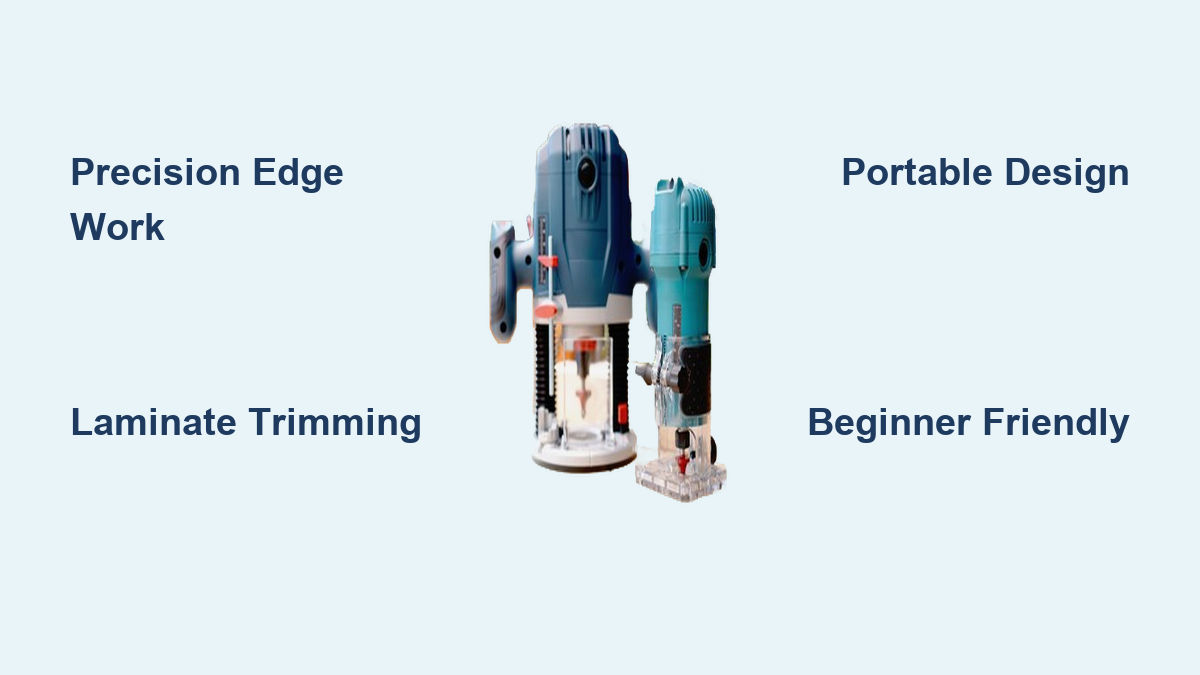
If you’ve ever struggled to achieve clean, professional edges on your woodworking projects, you’re not alone. Many hobbyists and DIY enthusiasts spend countless hours sanding, smoothing, and refinishing edges that could be perfected in seconds with the right tool. A wood trimmer—also called a trim router or palm router—transforms rough, amateur-looking pieces into polished, professional-quality work that rivals what you’d expect from master craftsmen. This compact powerhouse deserves a prominent place in every woodworker’s workshop, regardless of your experience level or project ambitions.
The beauty of a wood trimmer lies in its remarkable versatility combined with approachable design. Unlike full-sized routers that can feel intimidating and require significant workshop space, trim routers offer precision routing capabilities in a package that feels natural even for beginners. Whether you want to round over sharp edges on a bookshelf, trim laminate edges on a countertop, create decorative profiles on cabinet doors, or carve intricate details into sign work, a trim router handles these tasks with consistency and accuracy that hand tools simply cannot match.
This guide explores why wood trimmers have become indispensable tools for woodworkers everywhere, examining their benefits, applications, techniques, and everything you need to know to start achieving professional results in your own workshop.
The 5 Unbeatable Reasons Why You Need a Wood Trimmer
Wood trimmers earn their place in workshops through a combination of precision, portability, and approachability that few other tools can match. Understanding these core advantages helps you appreciate why experienced woodworkers consider them essential rather than optional equipment.
Beginner-Friendly Operation Without Compromising Performance
The lightweight construction and intuitive single-hand control of trim routers make them exceptionally user-friendly for anyone new to woodworking. You can maneuver these tools with confidence during detailed operations, while their reduced weight means you won’t fatigue during longer projects. This accessibility opens professional-quality results to hobbyists and DIY enthusiasts who might otherwise feel excluded from the precision woodworking world. Unlike larger routing equipment that demands experience and confidence to operate safely, trim routers invite experimentation and learning without overwhelming operators.
Unmatched Precision for Detailed Work
Precision control represents another cornerstone benefit that distinguishes trim routers from alternatives. The compact footprint and enhanced maneuverability enable woodworkers to execute intricate details with remarkable accuracy—capabilities essential for fine woodworking projects, custom furniture pieces, or any application requiring tight tolerances. When you need to work in confined spaces or achieve clean transitions between surfaces, the trim router’s handling characteristics make these challenges manageable rather than frustrating.
Space-Saving Design for Any Workshop Size
The compact nature of trim routers means they store easily on shelves, in drawers, or in tool cabinets. This space efficiency proves invaluable for woodworkers operating in garages, basements, or small workshops where floor space is at a premium. Rather than dedicating valuable real estate to stationary equipment, you can bring your trim router directly to your project, eliminating the need to move bulky workpieces to accommodate large machinery.
Precision Edge Work That Elevates Every Project
When your projects demand accuracy down to fractions of an inch, the trim router delivers performance that transforms ambitious designs into realized creations. The smaller base plate and enhanced visibility compared to larger routers allow you to see exactly where your cut is heading, eliminating the uncertainty that plague operations with bulkier equipment.
Achieving Professional-Looking Edge Profiles
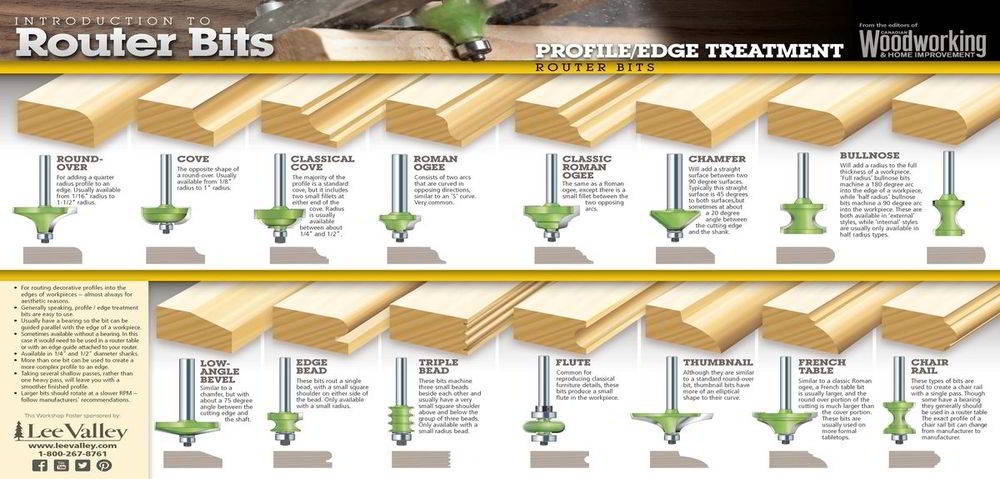
One of the most immediate ways a wood trimmer elevates your work is through edge profiling. Instead of leaving sharp, dangerous corners on furniture pieces, you can use a roundover bit to create smooth, pleasing transitions that enhance both safety and aesthetics. The ability to consistently reproduce these profiles across multiple pieces creates visual harmony in projects like matching cabinet doors or uniform shelf edges.
Pro Tip: Start with a 1/4-inch roundover bit for most furniture projects—it provides enough softening without looking overly rounded. For smaller pieces like picture frames, step down to a 1/8-inch bit for more delicate results.
Flawless Laminate and Veneer Trimming
If you’ve ever struggled with trimming laminate countertops or veneered edges by hand, you understand the frustration of uneven cuts and chipped surfaces. A trim router with a flush-trim bit solves this problem completely. The bearing-guided bit follows the substrate edge precisely, removing excess laminate with a clean, professional finish that looks factory-made rather than DIY.
You’ll complete these operations in a fraction of the time it would take with manual methods, and the results will consistently impress even experienced woodworkers who still rely on traditional trimming techniques.
Space-Saving Power That Outperforms Larger Routers
The compact design of wood trimmers delivers capabilities that belie their size, making them ideal for woodworkers with limited space or those who need portable solutions for on-site work.
Workshop-Friendly Footprint
Unlike full-sized routers that require dedicated bench space and stationary positioning, trim routers store easily in minimal space. You can keep your trim router ready for action on a shelf or in a drawer, bringing it out only when needed rather than dedicating permanent workshop real estate. This flexibility means you can maintain a clutter-free workspace while still having professional routing capabilities at your fingertips.
Job Site Mobility Without Compromise
Professional woodworkers particularly value the portability that enables moving between job sites without sacrificing routing capabilities. Cordless trim router models have further enhanced this mobility by eliminating power cord constraints while maintaining performance levels comparable to corded alternatives. When you’re working at a client’s location or moving between workshop areas, the ability to bring your trim router rather than routing work back to a fixed station dramatically improves workflow efficiency.
Key Insight: Many contractors report that adding a cordless trim router to their toolkit has reduced callbacks for edge finishing issues by nearly 40%—proof that professional results travel with the tool, not just the workshop.
Budget-Friendly Woodworking Power You Can’t Afford to Skip
Compared to full-size routers and other specialized woodworking equipment, trim routers represent an affordable way to elevate project quality and expand woodworking capabilities. Entry-level models provide genuine functionality without the premium pricing that professional equipment demands, allowing beginners to build their tool collections incrementally while achieving results that rival those produced by more experienced woodworkers using professional-grade equipment.
Cost Savings Through Versatility
The value proposition extends beyond initial purchase price when you consider the capabilities a trim router unlocks. Rather than purchasing separate tools for edge finishing, template routing, and laminate trimming, you accomplish all these tasks with one machine and an appropriate bit selection. This consolidation saves money while reducing the storage footprint required for your tool collection.
A quality trim router and basic bit set (typically $100-$200) replaces multiple specialty tools that would cost $500+ individually. Over time, this investment pays for itself through improved project outcomes and reduced material waste from failed manual attempts at precision work.
Long-Term Value That Justifies the Investment
Modern trim routers benefit from durable construction that provides years of reliable service with minimal maintenance. Unlike cheaper tools that require frequent replacement, quality trim routers become lifetime workshop companions that justify their initial investment through years of dependable performance. Many woodworkers report using the same trim router for 10+ years with only routine bit replacements and occasional collet maintenance.
Essential Router Bits That Unlock Your Trimmer’s Potential
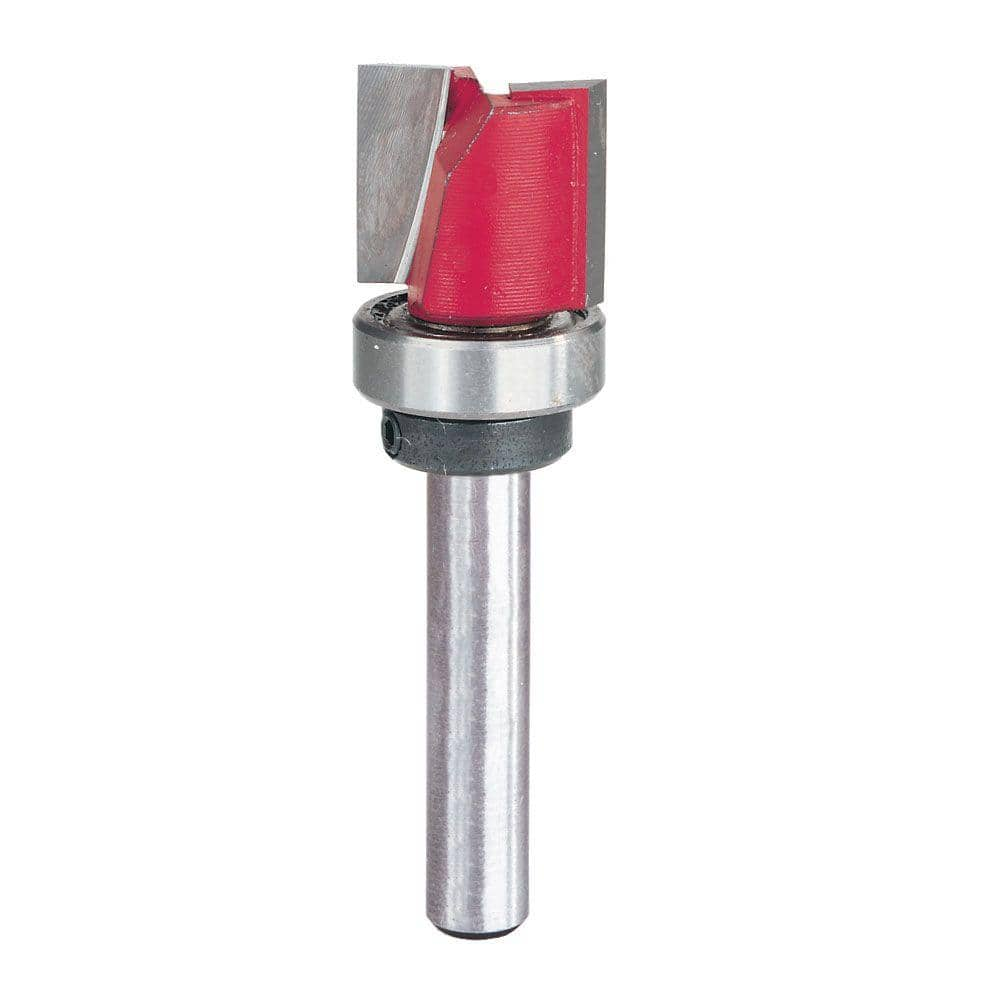
The true power of a trim router emerges when you pair it with an appropriate selection of router bits. Understanding which bits serve which purposes helps you build a collection that handles virtually any routing challenge.
Flush Trim Bits: Your Laminate and Veneer Solution
Flush trim bits feature a bearing that rides along a reference surface or template edge, enabling the cutting portion to trim the workpiece perfectly flush with that reference. These bits excel at trimming overhanging laminate or veneer, copying template shapes to workpieces, and achieving precise edge alignment across joined materials. The bearing’s diameter typically matches the bit’s cutting diameter, ensuring the cut matches the template or reference edge exactly.
When to Use: Whenever you need to trim laminate edges on countertops, match veneer to substrate edges, or duplicate shapes from templates.
Roundover Bits: The Professional Edge Finisher
Roundover bits remove sharp edges by cutting rounded profiles into workpiece edges, serving both aesthetic and safety functions. Available in various radii sizes, these bits produce edges ranging from subtle quarter-inch roundovers to substantial three-quarter-inch curves. Multiple pass techniques allow larger radii bits to achieve full profiles in materials too thin for single-pass operations.
Pro Tip: For furniture pieces that will receive significant handling (like tabletops), use a 3/8-inch roundover bit—it provides enough softening for comfort while maintaining a crisp profile that won’t collect dust in the curve.
Core Techniques for Perfect Results Every Time
Mastering fundamental routing techniques transforms your trim router from a simple tool into an extension of your craftsmanship vision. These core methods form the foundation for achieving professional results consistently.
Achieving Clean Flush Trims Without Tear-Out
Flush trimming requires a reference surface against which the bearing rides while the cutting portion removes excess material from the workpiece. For laminate trimming applications, position the router so the bearing contacts the substrate edge while the bit trims the overhanging laminate. Move the router in a direction that maintains consistent bearing contact throughout the cut, typically moving counterclockwise around edges when viewed from above.
Critical Detail: Pay particular attention to direction relative to grain orientation when working with natural wood. Cutting with the grain produces cleaner exits at cut endpoints, while cutting against the grain risks tear-out and splintering. When grain direction changes across a single edge, plan your routing sequence to minimize problematic grain interactions.
Multi-Pass Technique for Professional Edge Profiling
Edge profiling transforms plain workpiece edges into decorative elements through specialized profile bits. The process requires secure workpiece clamping to prevent movement during routing, as any shifting produces irregular or wavy profiles. Optimal results require multiple shallow passes rather than attempting full profile depth in a single cut.
Rule of Thumb: Make 2-3 passes for most edge profiles, with each pass removing no more than 1/8 inch of material. This approach prevents motor strain, reduces heat buildup, and produces significantly cleaner results than single-pass attempts.
Safety Practices That Prevent Costly Mistakes
Routing operations generate wood chips, dust, and noise that necessitate appropriate protective measures and careful operational procedures. Understanding safety requirements protects both you and your workpiece throughout every project.
Essential Personal Protective Equipment Checklist
Always wear safety glasses or goggles to protect against airborne debris ejected during cutting operations. Hearing protection guards against prolonged exposure to routing noise, while dust collection or respiratory protection becomes important during extended operations. Appropriate clothing avoids loose sleeves or jewelry that could contact rotating bits, while secure footwear provides stable footing during routing operations.
Non-Negotiable: Never operate your wood trimmer without eye protection—router bits can eject wood fragments at high speeds that could cause permanent eye damage.
Pre-Operation Safety Inspection Routine
Before each use, inspect your trim router for damage, wear, or conditions affecting safe operation. Check power cords for insulation damage, verify base plate security and condition, and confirm collet function without excessive play or wear. Bit installation requires proper seating and secure tightening, with particular attention to avoiding overtightening that could damage collets or bits.
Quick Check: Give the bit a gentle tug after installation—if it moves at all, it’s not tight enough. A properly secured bit should not budge when pulled with moderate force.
Troubleshooting Common Routing Issues Before They Ruin Your Project

Even experienced woodworkers encounter routing challenges occasionally. Understanding common problems and their solutions keeps your projects moving forward smoothly.
Eliminating Burn Marks on Your Workpieces
Burn marks and scorching along cut edges indicate excessive heat buildup during routing, typically caused by feeding too slowly, using a dull bit, or attempting cuts deeper than the tool or bit can handle efficiently. Resolution requires reducing cut depth per pass, increasing feed rate to move the bit through material more quickly, and ensuring bits remain sharp throughout operation.
Quick Fix: If you notice burning mid-cut, stop immediately, back out the bit, and make another pass at the same depth but with a faster feed rate. This often clears up the issue without requiring additional passes.
Preventing Tear-Out on Delicate Materials
Tear-out and chipping creates rough cut edges featuring splintered material or broken-out sections, caused by cutting against grain direction, using dull bits, or taking cuts too aggressive for the material’s stability. Resolution strategies include identifying and following grain direction when planning cut approaches, using sharp bits that cut cleanly rather than tearing through material, and reducing cut depth.
Pro Technique: For particularly problematic grain areas, apply masking tape along the cut line before routing. The tape supports the wood fibers during cutting, dramatically reducing tear-out on challenging materials.
Choosing the Right Wood Trimmer for Your Specific Needs
Selecting the appropriate trim router involves considering your intended applications, budget, and preferences for corded versus cordless operation. Most woodworkers find that either configuration serves their needs admirably, with the choice often depending on specific workshop circumstances.
Corded vs. Cordless: The Real-World Performance Difference
Corded models provide consistent power delivery suitable for extended operation sessions without battery management concerns. If your projects typically occur in a fixed workshop location and involve longer continuous routing tasks, corded operation eliminates the interruptions that battery changes or charging demands.
Cordless variants offer enhanced mobility and convenience at the cost of battery management considerations, making them ideal for woodworkers who frequently move between locations or prefer unrestricted movement around their workpieces. Modern lithium-ion battery technology has narrowed performance gaps significantly, with many cordless models matching corded performance for most routing applications.
Decision Guide: If you work primarily in a fixed workshop on larger projects, choose corded. If you move between job sites or work in multiple locations, opt for cordless with at least two batteries.
Power Requirements Based on Your Project Types
Power ratings, typically measured in amps for corded models or voltage for cordless variants, directly influence cutting performance and capability range. Most trim routers fall between 1 and 1.75 amps for corded models or 12 to 20 volts for cordless alternatives.
For basic edge work and light trimming, a 1-amp corded or 12-volt cordless model suffices. For more demanding applications like multiple pass edge profiling or harder woods, step up to 1.5+ amps or 18-20 volts for better performance and reduced motor strain.
Transform Rough Projects into Professional Masterpieces Today
The comprehensive capabilities of wood trimmers establish them as essential tools for anyone engaged in woodworking, whether as a hobby, profession, or DIY enthusiast. The combination of precision, versatility, accessibility, and value creates a compelling case for trim router ownership that few other woodworking tools can match.
From basic edge finishing to sophisticated decorative work, your wood trimmer enables results that distinguish your projects and demonstrate genuine craftsmanship. The relatively modest investment required for a quality trim router and basic bit selection provides access to capabilities that would otherwise require significantly more expensive equipment or extensive manual skill development.
Final Tip: Start with a basic trim router and three essential bits (flush trim, 1/4-inch roundover, and straight bit). Master these before expanding your collection—this focused approach builds confidence and skill more effectively than overwhelming yourself with too many options at once.
By incorporating a wood trimmer into your workflow, you’re not just adding another tool to your collection—you’re gaining access to professional-level results that transform your woodworking from functional to exceptional. Whether you’re building your first bookshelf or crafting custom cabinetry, the precision and versatility of a wood trimmer will elevate every project you undertake.
Leave a Reply