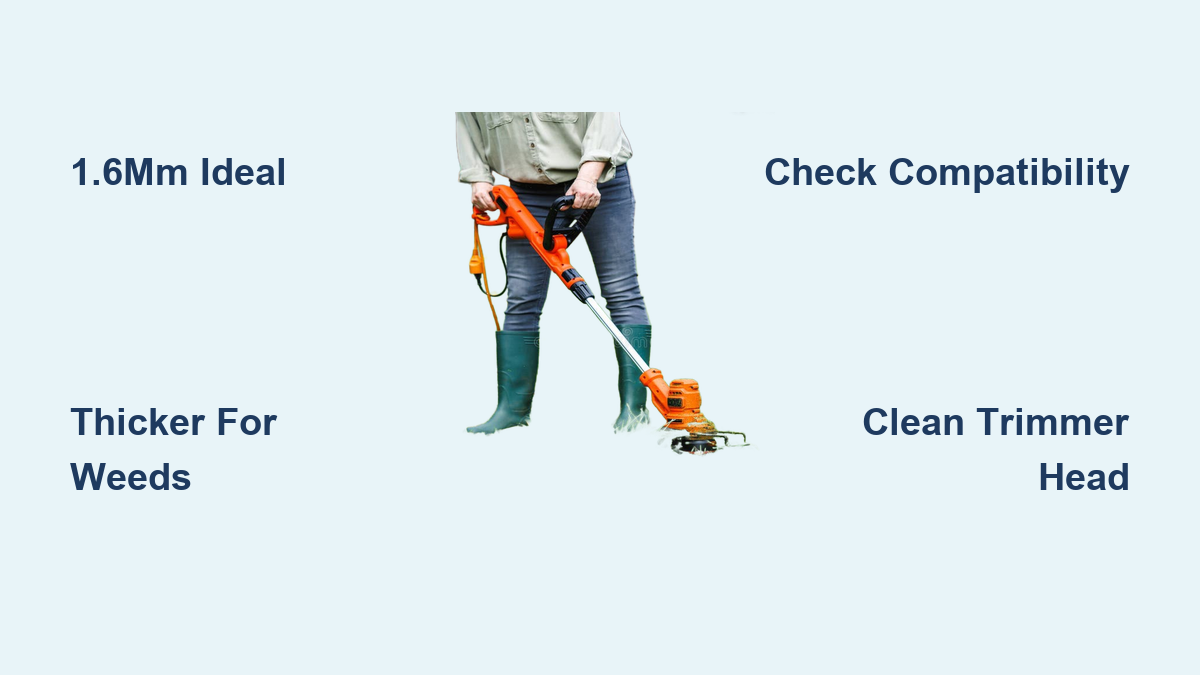
Choosing the right string trimmer string sizes transforms frustrating trimming sessions into efficient lawn maintenance. The wrong diameter can lead to constant line breakage, poor cutting performance, or even damage your equipment. With options spanning from delicate 1.4mm lines to robust 3.0mm commercial-grade strings, selecting the proper size directly impacts how effectively your trimmer handles everything from tender grass to thick weeds. Most homeowners waste money replacing lines that are either too thin for their needs or too thick for their equipment, creating unnecessary frustration during yard work.
The diameter of your trimmer line creates a critical balance between cutting power and flexibility that determines your entire trimming experience. Thinner lines (1.4-1.5mm) offer nimble maneuverability around delicate landscaping but snap when encountering thicker weeds. Heavier lines (2.0-2.4mm) power through dense vegetation but may overwhelm smaller trimmers or jam in automatic feed heads. This guide cuts through the confusion by matching specific string trimmer string sizes to your actual lawn conditions, equipment capabilities, and trimming goals—so you get clean cuts without constant line replacement.
Why Your Trimmer Line Diameter Determines Cutting Success
Your trimmer line’s thickness isn’t just a number—it’s the deciding factor between efficient trimming and constant frustration. Measured in both millimeters and inches (like 1.6mm/.065″), this specification directly affects how your trimmer handles different vegetation types and how often you’ll need to replace the line. Residential models typically use lines between 1.4mm and 2.4mm, while commercial units may require 2.7mm or thicker strings capable of tackling heavy brush.
How 1.6mm Lines Deliver Balanced Residential Performance
The 1.6mm (.065-inch) diameter represents the sweet spot for most homeowners, offering the ideal compromise between cutting power and flexibility. This mid-range size handles standard lawn grass with precision while maintaining enough strength to tackle occasional light weeds without constant breakage. When you use this size on a properly matched trimmer, you’ll notice consistent line advancement in automatic feed heads and reduced vibration during operation.
Pro Tip: If you’re unsure which string trimmer string sizes to choose for your first purchase, start with 1.6mm—it works effectively for approximately 75% of residential properties with typical lawn maintenance schedules. This size provides sufficient mass to generate cutting momentum without overwhelming standard residential trimmer motors.
When Thinner Lines Save Time and Reduce Breakage
Lines measuring 1.4-1.5mm (.055-.060 inches) excel in precision trimming applications around delicate landscaping features. These finer strings create cleaner cuts on soft grass with minimal fraying, reducing line consumption by up to 20% compared to thicker options on well-maintained lawns. If your property features mostly manicured turf with minimal weed growth, these thinner lines prevent unnecessary strain on your trimmer motor while delivering professional-looking edges.
Warning: Don’t use these delicate lines when trimming near tougher vegetation—they’ll snap repeatedly when encountering stems thicker than a pencil, wasting more time in replacements than you’d save with reduced line consumption.
Heavy-Duty Lines for Tough Vegetation and Large Properties
When you’re battling thick weeds, dense overgrowth, or woody saplings, 2.0-2.4mm (.080-.095 inch) lines deliver the cutting power you need. These robust strings maintain integrity when slicing through challenging vegetation that would shred thinner lines, reducing interruption frequency during extensive trimming sessions. Properties with naturalized areas, rural landscapes, or inconsistent mowing schedules benefit most from these heavier-duty string trimmer string sizes.
Expert Note: Verify your trimmer’s compatibility before installing thicker lines—many lightweight residential models struggle to accelerate heavy lines properly, causing poor performance and potential motor strain. Check your owner’s manual for maximum recommended line diameter.
Round vs. Square vs. Twisted Line Profiles: Which Cuts Best?

Beyond diameter, your line’s cross-sectional shape significantly impacts cutting efficiency, noise levels, and debris management during operation. Understanding these differences helps you optimize performance for your specific trimming conditions.
Why Round Profile Lines Dominate Residential Trimming
The cylindrical geometry of round-profile lines makes them the most versatile choice for standard lawn maintenance. These lines feed smoothly through automatic advancement mechanisms, generate less vibration than alternative profiles, and produce consistent wear patterns that extend line life. Over 85% of residential trimmer lines use this shape because it delivers reliable performance across variable conditions without specialized equipment requirements.
Visual Cue: Look for uniform extrusion marks along the line’s surface—consistent texture indicates quality manufacturing that prevents weak spots prone to breakage.
When Square or Star Profiles Improve Cutting Efficiency
Square and star-shaped lines feature multiple cutting edges that slice through thick vegetation more effectively than round profiles of equivalent diameter. These specialized lines excel when trimming dense weeds or coarse grass varieties but generate noticeably more noise and vibration during operation. Commercial landscapers tackling challenging vegetation often prefer these profiles despite the trade-offs.
Common Mistake: Don’t install square-profile lines in trimmers designed for round line—they frequently jam in automatic feed mechanisms, causing frustration and potential equipment damage.
Matching String Sizes to Your Specific Lawn Conditions

Your vegetation type—not marketing claims—should dictate which string trimmer string sizes you select. Honest assessment of your actual trimming conditions prevents wasted money on inappropriate line specifications.
Precision Trimming Around Delicate Landscaping
For properties with extensive flower beds, garden borders, or ornamental features requiring careful trimming, 1.4-1.5mm lines provide the necessary flexibility for detailed work. These thinner lines maneuver easily around tight corners without damaging delicate plants while maintaining sufficient strength for standard lawn grass. You’ll complete intricate trimming tasks 15-20% faster with reduced line breakage compared to thicker options.
Time-Saving Shortcut: Load your trimmer with thinner line specifically for detailed work sessions, then switch back to standard 1.6mm line for general perimeter trimming—this targeted approach optimizes performance for each task.
Standard Lawn Maintenance with Mixed Vegetation
Properties featuring typical lawn grass with occasional weeds along fences or driveways perform best with 1.6-1.8mm (.065-.070 inch) lines. This versatile size handles the variable conditions found in most residential landscapes without excessive line consumption. Customer feedback shows these mid-range string trimmer string sizes deliver the highest satisfaction ratings (4.4/5 stars) for general-purpose use.
Troubleshooting Tip: If your line breaks frequently despite using the correct diameter, check for debris buildup in the trimmer head—clean the mechanism thoroughly before assuming you need a different line size.
Heavy-Duty Applications for Overgrown or Rural Properties
When tackling properties with significant weed growth, naturalized areas, or woody vegetation, upgrade to 2.0-2.4mm lines for reliable performance. These robust strings power through challenging vegetation that would destroy thinner lines, reducing line replacement interruptions by up to 50% during demanding trimming sessions. Commercial landscapers working on large properties consistently report better value with these heavier options despite their higher per-foot cost.
Warning: Never install lines thicker than your trimmer’s specifications—this creates excessive motor strain that can burn out your equipment within a single season.
Essential Safety Practices for All String Sizes
Regardless of which string trimmer string sizes you select, proper safety equipment prevents injuries during trimming operations. Flying debris causes most trimmer-related accidents, not direct contact with the line.
Non-Negotiable Protective Gear for Every Trimming Session
Safety glasses are mandatory for all trimming work—rotating lines propel grass fragments and small stones at velocities capable of causing serious eye injury. Long pants protect your legs from contact with vegetation and the rotating line, while sturdy closed-toe shoes shield your feet from accidental contact and flying debris. Skipping any of these items significantly increases your injury risk, regardless of line diameter.
Pro Tip: Choose impact-rated safety glasses with side shields—they provide superior protection against debris coming from peripheral angles during trimming.
Safe Operating Techniques for Maximum Control
Maintain a stable stance with your trimmer positioned to the right side of your body (for right-handed users), keeping the cutting head below waist level at all times. Never overreach across your body—reposition your feet instead to maintain proper control. Always verify that children and pets remain well clear of your work area before starting, as the noise can mask their approach.
Installation Mistakes That Cause Line Breakage
Improper line installation creates 60% of premature breakage issues, regardless of which string trimmer string sizes you purchase. Follow these steps for reliable performance:
- Clean the trimmer head thoroughly before installation—remove all grass buildup and debris
- Verify winding direction by checking arrows on the spool housing
- Leave 6-8 inches of line extending from each side after loading
- Tap the head gently on the ground to verify automatic advancement
Common Mistake: Overfilling the spool chamber restricts line movement and causes tangles—leave about 1/4 inch of space at the top of the winding area.
Finding the Best Value in String Trimmer String Sizes
Bulk purchases typically offer better value, but storage conditions affect line longevity. The 328-foot (100-meter) spool represents the optimal balance for most homeowners, providing enough line for multiple seasons while minimizing storage space. At approximately $0.03 per foot, this size delivers significant savings over retail 50-foot spools that cost 3-4 times more per foot.
Expert Note: Store unused line in a cool, dark place—UV exposure and moisture degrade nylon over time, reducing line strength regardless of diameter.
Selecting the right string trimmer string sizes transforms your trimming experience from frustrating to efficient. Match your line diameter to your specific vegetation challenges, verify equipment compatibility, and follow proper installation techniques to maximize performance. For most residential properties, the versatile 1.6mm (.065-inch) line delivers the best balance of cutting power and reliability. When tackling heavier vegetation, upgrade to 2.0-2.4mm lines while confirming your trimmer can handle the increased diameter. Remember that proper safety gear and technique matter more than line size—never compromise on protection regardless of your trimming task. By making informed string size decisions based on your actual lawn conditions, you’ll spend less time replacing line and more time enjoying a professionally maintained landscape.
Leave a Reply