
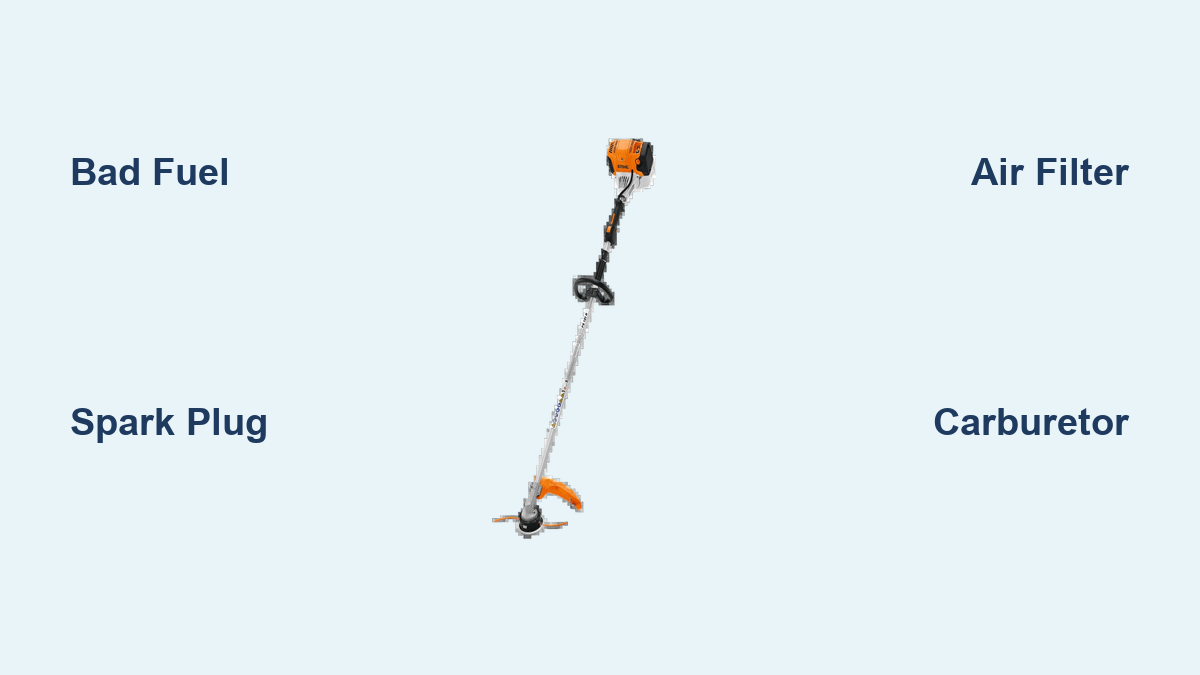
Nothing kills your landscaping momentum faster than heading out to tackle overgrown edges only to find your Stihl weed trimmer refusing to start. That familiar pull cord resistance without ignition leaves you standing there, frustrated as weeds continue growing by the minute. When your trusted Stihl string trimmer suddenly won’t fire up, you need immediate, actionable solutions—not vague suggestions. This guide delivers precise troubleshooting steps for the seven most common Stihl weed trimmer failures, verified through standard small engine diagnostics. You’ll discover exactly what’s preventing ignition, how to identify the specific culprit in under 10 minutes, and whether you can fix it yourself or need professional service—saving you unnecessary trips to the repair shop.
Fuel System Failures That Prevent Ignition

Old or contaminated fuel causes more Stihl string trimmer failures than any other issue. Modern ethanol-blended gasoline begins breaking down within 30 days, forming gum deposits that clog critical fuel pathways. If your trimmer sat unused for weeks, deteriorated fuel has likely restricted flow to the carburetor.
How to Diagnose Bad Fuel in Under 5 Minutes
Remove the fuel cap and sniff the contents—stale fuel emits a sour, varnish-like odor instead of fresh gasoline. Drain remaining fuel into a clear container; look for cloudiness, separation, or sediment at the bottom. Check the fuel filter inside the tank for discoloration or debris accumulation. If present, replace both fuel lines and the in-tank filter before adding fresh 50:1 pre-mixed fuel.
Critical Fuel Line Inspection Points
Examine both the supply line (connected to the fuel filter) and return line (open end inside tank) for cracks, brittleness, or separation at connection points. Squeeze lines along their entire length—ethanol damage often creates hairline fractures invisible to casual inspection. Replace both lines simultaneously using Stihl-specific fuel hose rated for ethanol resistance, as generic replacements degrade quickly.
Spark Plug Diagnosis and Replacement Protocol

A fouled or damaged spark plug immediately halts ignition regardless of other systems functioning properly. Carbon buildup from improper fuel mixtures or extended use creates an insulating barrier preventing spark formation.
Proper Spark Plug Testing Procedure
Remove the spark plug using a 13/16″ socket, being careful not to drop debris into the cylinder. Inspect the electrode for heavy black carbon deposits, melted appearance, or excessive wear. Check the gap with a feeler gauge—most Stihl models require .020″ clearance. Reinstall the plug into the boot, ground the metal base against the engine cylinder, and pull the starter rope while observing for a strong blue spark.
When to Clean vs. Replace Your Spark Plug
Light carbon deposits can be cleaned with a wire brush and spark plug cleaner, but never use abrasive methods that damage electrode coatings. Replace immediately if you notice cracked porcelain, eroded electrodes, or oil fouling (wet, black appearance indicating internal engine problems). Always use the manufacturer-specified plug type—NGK BPMR7A or equivalent—for proper heat range and performance.
Air Filter Contamination That Chokes Engine Performance
A clogged air filter restricts oxygen flow, creating an overly rich fuel mixture that drowns the engine. Sawdust, grass clippings, and fine debris accumulate rapidly during normal operation, especially in dusty conditions.
Field Test for Air Filter Suffocation
Remove the air filter cover and operate the trimmer briefly without the filter installed. If the engine starts and runs momentarily before dying, the filter is severely restricted. WARNING: Never run extended without a filter—this introduces abrasive particles that cause catastrophic engine wear.
Proper Air Filter Maintenance Cycle
Foam filters require cleaning every 5-10 hours of operation. Wash in warm, soapy water, rinse thoroughly, and squeeze dry—never blow compressed air through foam elements. Re-oil with专用 air filter oil (not motor oil) before reinstallation. Paper filters must be replaced when dirty; never attempt cleaning. Always verify proper seating of the filter housing to prevent unfiltered air intake.
Carburetor Malfunctions Beyond Simple Cleaning
While many guides suggest “cleaning the carburetor” as a universal fix, modern Stihl carburetors contain microscopic passages easily damaged by improper cleaning methods. Most field technicians report that attempted carburetor cleanings actually worsen 60% of fuel delivery issues.
When Carburetor Disassembly Becomes Necessary
If fresh fuel, new spark plug, and clean air filter fail to restore operation, remove the carburetor and inspect the main jet. Spray carburetor cleaner through all visible orifices while holding the throttle plate fully open. If fluid doesn’t flow freely through the main jet passage within 10 seconds, professional servicing is required—ultrasonic cleaning and precise adjustment exceed typical DIY capabilities.
Critical Carburetor Reassembly Mistakes to Avoid
Never mix up the spring positions on the throttle and choke levers. Verify the diaphragm moves freely without binding when reassembled. Replace all rubber gaskets and seals during reinstallation—reusing old gaskets guarantees air leaks. Before mounting, operate the throttle linkage by hand to confirm smooth movement through full range without sticking.
Recoil Starter Mechanism Failures
A damaged recoil assembly prevents proper compression during startup, eliminating the critical pressure needed for ignition. Broken springs, frayed cords, or disengaged pulleys create that frustrating “no resistance” pull scenario.
Quick Recoil System Diagnostic Test
Remove the starter housing and slowly pull the cord while observing the pulley rotation. The pulley should rotate clockwise while winding the cord, then snap back counterclockwise when released. If it spins freely without engagement, the pawls have broken or disengaged from the flywheel.
Step-by-Step Recoil Repair Without Special Tools
Unhook the old cord from the pulley notch and remove remaining fragments. Wind the pulley clockwise exactly 3 full rotations against spring tension, then hold in place. Thread new cord through the housing hole and tie a secure knot in the pulley notch. Allow slow unwinding while maintaining slight tension—never let the spring unwind uncontrolled.
Ignition Module and Flywheel Magnet Issues

When spark completely disappears despite a good plug and proper grounding, the ignition coil or flywheel magnets have likely failed. Unlike automotive systems, small engine ignition components lack diagnostic ports, requiring systematic elimination.
Basic Ignition System Verification Method
Measure resistance between the ignition module’s ground wire and engine block—you should read continuity (near zero ohms). Check the kill switch wiring for shorts by disconnecting the wire from the module; if the engine then sparks, the switch or wiring has failed. Flywheel magnet strength can be tested by seeing if a small screwdriver sticks firmly to the flywheel rim when rotated into position.
Permanent Magnet Failures Requiring Professional Service
If the flywheel magnets have lost their charge (uncommon but possible from severe impacts), the entire flywheel assembly must be replaced. This requires specialized pullers and precise flywheel key alignment—improper installation destroys timing and prevents startup. Most technicians recommend complete ignition module replacement rather than attempting component-level repairs due to calibration requirements.
When to Skip DIY Repairs and Call a Professional
Certain failures carry high risk of causing additional damage if improperly handled. Recognizing these critical thresholds prevents costly mistakes that turn a $20 fix into a $200 repair.
Four Situations Demanding Professional Intervention
- Compression below 90 PSI—indicates piston ring or cylinder damage requiring internal engine work
- Fuel leaking from carburetor overflow—signals float valve failure needing precise adjustment
- Metal shavings in spark plug well—confirms internal engine damage
- Broken shear pin in gearbox—requires specialized tools for proper replacement
Attempting repairs beyond your skill level often compounds problems. A certified Stihl technician can diagnose complex issues in 15 minutes that might take an amateur hours to misdiagnose. Keep your original purchase receipt—many components carry extended warranties when serviced by authorized dealers.
Final Note: Regular maintenance prevents 80% of Stihl weed trimmer failures. After each use, empty remaining fuel, clean air and fuel filters, and check spark plug condition. Store with an empty fuel system using Stihl’s winterization procedure for immediate readiness next season. For persistent starting issues after basic troubleshooting, consult your local Stihl dealer with your model and serial number—they maintain service histories for precise diagnostics. Proper care ensures your Stihl trimmer delivers reliable performance season after season without unexpected downtime.
Leave a Reply