
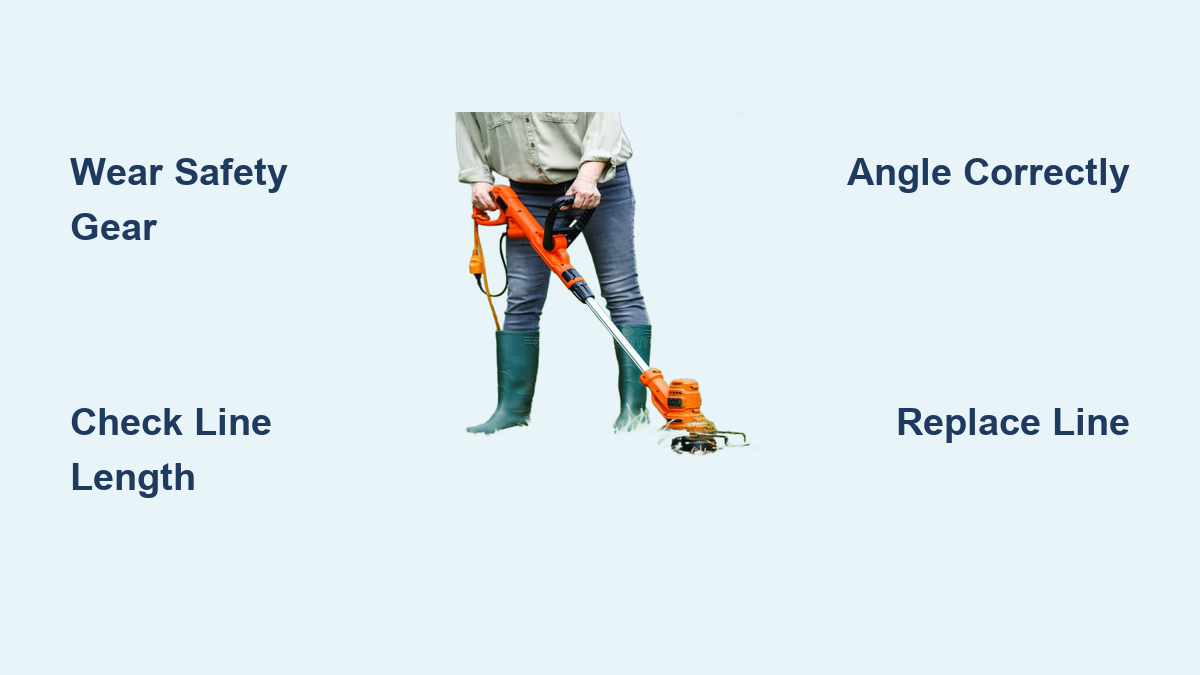
Your string trimmer sits ready in the garage, but without knowing how to use a string trimmer properly, you risk injury, equipment damage, and frustrating results. This versatile tool tackles grass and weeds in areas your lawn mower can’t reach—tight corners along fence lines, around trees and garden beds, near walls, and on uneven terrain. Mastering string trimmer operation transforms yard work from a chore into a satisfying task that elevates your entire property’s appearance. Whether you’re a first-time homeowner or looking to refine your technique, this guide provides everything you need to operate your trimmer safely and effectively.
Essential Safety Gear Before Powering Up
Skipping proper protection when learning how to use a string trimmer turns routine maintenance into a hazard. The spinning line accelerates to such high speeds that it transforms small rocks and sticks into dangerous projectiles capable of causing serious eye injuries. Safety glasses or goggles with side shields form your absolute minimum protection—standard prescription glasses won’t cut it.
Hearing protection matters especially with gas models that exceed 100 decibels. Consider these essential items:
– Safety-rated eye protection (goggles or wraparound glasses)
– Earplugs or earmuffs rated for 90+ decibels
– Long pants made of durable fabric like denim
– Sturdy closed-toe shoes or boots with good traction
– Work gloves to improve grip and reduce vibration
Never operate your trimmer without this basic gear. The few seconds it takes to put on protection prevents potentially life-altering injuries from flying debris you won’t see coming.
Gas vs. Electric: Choosing Your Trimmer Type
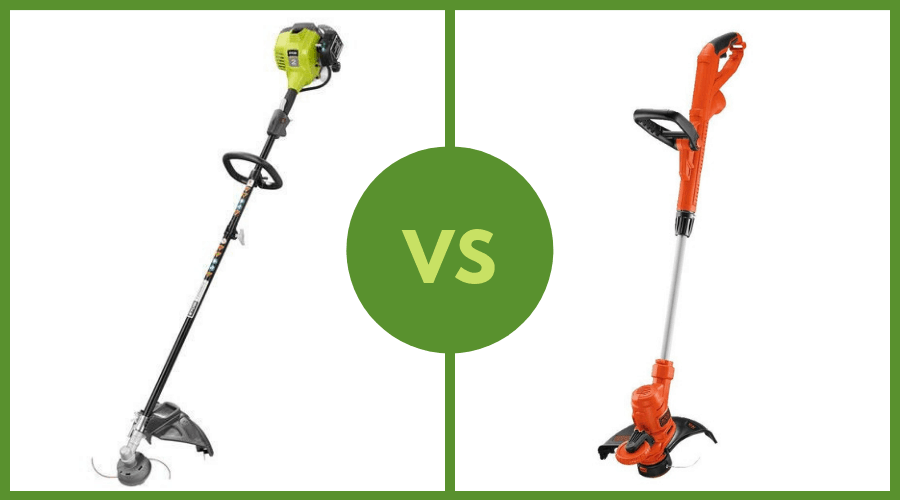
Understanding your specific trimmer type directly impacts how effectively you’ll learn how to use a string trimmer. Gas-powered models deliver maximum power for large yards and thick weeds but require fuel mixing, regular maintenance, and generate significant noise. Their unlimited runtime makes them ideal for professional landscapers and properties over half an acre.
Electric corded trimmers offer consistent power without fuel concerns but limit your range to cord length. These lightweight units work best for small yards under 1/4 acre where electrical access is convenient. Battery-powered models now rival gas performance with modern lithium-ion technology—perfect for medium yards where cord management feels cumbersome. Look for models with swappable batteries if you have more than 1/3 acre to maintain.
Pre-Operation Equipment Check in 60 Seconds
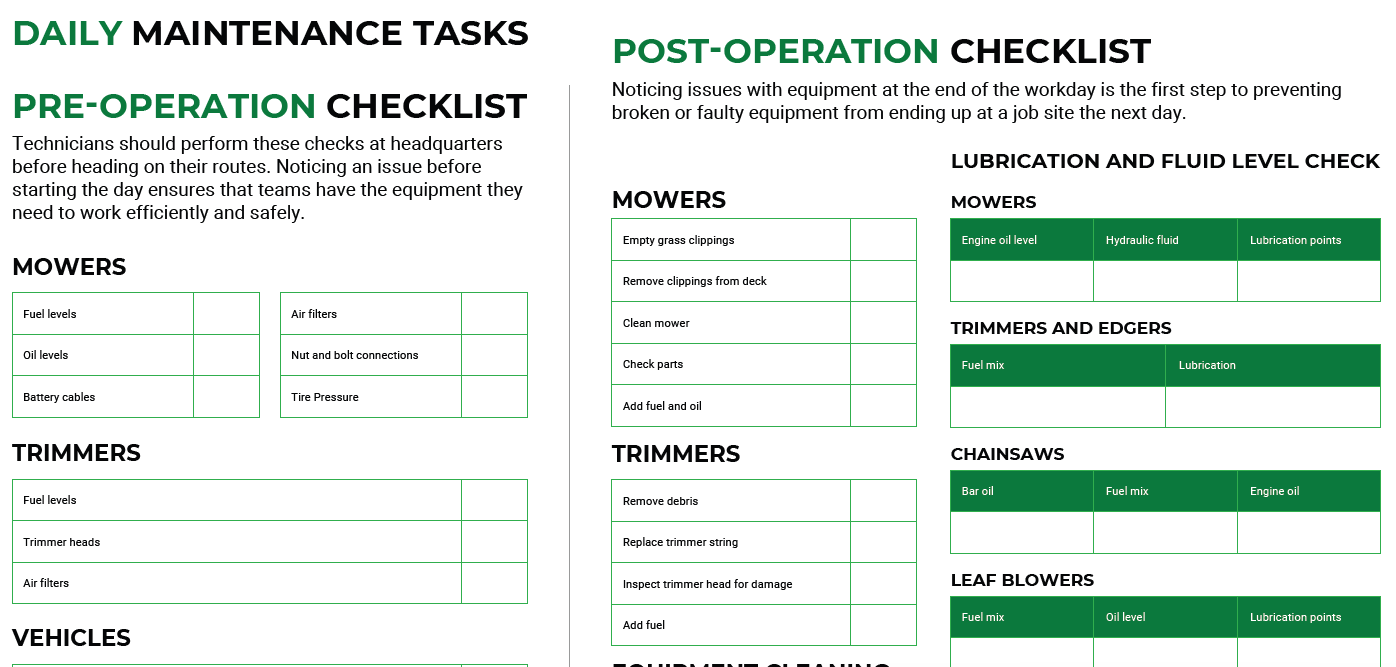
Never skip this critical step before learning how to use a string trimmer. A minute-long inspection prevents mid-job failures and dangerous situations:
For all trimmer types:
– Check for cracks or damage in the housing, especially around the cutting head
– Verify cutting line is properly installed and adequate length (6-8 inches extending)
– Clear debris from air vents and cooling fins
– Ensure all safety guards are securely in place
Gas-specific checks:
– Confirm fuel level and inspect for leaks in tank and lines
– Check air filter for blockages (clean or replace if dirty)
– Verify spark plug connection is secure
Electric-specific checks:
– Inspect power cord for fraying or exposed wires (if corded)
– Ensure battery is fully charged (if cordless)
Start Your Trimmer Correctly: Gas vs. Electric
Proper startup technique forms the foundation of knowing how to use a string trimmer effectively. For gas models, follow this sequence:
1. Set trimmer on flat ground with cutting head clear of obstacles
2. Move choke to “on” position for cold starts (check manual for specifics)
3. Press primer bulb 3-5 times until fuel visible
4. Hold safety lock while pulling starter rope with brisk, controlled motion
5. Gradually open choke as engine sputters to life
6. Let engine warm 30-60 seconds before engaging cutting head
Electric models simplify this process:
– Corded: Plug into grounded outdoor outlet, engage safety lock, pull trigger
– Cordless: Insert charged battery, engage safety lock, press trigger
Critical grip technique: Hold with both hands—primary hand on upper handle, secondary hand controlling throttle. Keep elbows slightly bent to absorb vibration and maintain the cutting head at hip height during operation.
Master Basic Trimming Motion in 3 Steps
The fundamental technique for how to use a string trimmer properly involves precise positioning and movement:
- Angle correctly: Hold trimmer at 15-20 degree angle with line cutting on outer edge (not flat against ground)
- Sweep properly: Move in smooth arcs—right to left for counterclockwise rotation models, left to right for clockwise
- Overlap passes: Slightly overlap each pass to ensure complete coverage without missed strips
Avoid these common mistakes:
– Forcing the trimmer through thick material (let the line do the cutting)
– Cutting more than one-third of grass height at once
– Holding trimmer too low (causes line to strike hard objects)
– Moving too quickly (reduces cutting efficiency)
Edge Sidewalks Like a Professional Landscaper
Creating crisp edges separates amateur from professional results when learning how to use a string trimmer. For models with convertible heads, rotate to edging position so line cuts vertically. Without this feature, carefully tilt the trimmer while maintaining steady forward movement.
Follow these edging steps:
1. Start with short practice sections in inconspicuous areas
2. Maintain consistent speed and angle throughout each pass
3. Work in 3-4 foot sections before adjusting position
4. Never go over the same spot multiple times (creates uneven edges)
Use a straight board as a visual guide when starting out. Regular edging every 2-3 weeks prevents grass from spreading onto paved surfaces and makes maintenance easier.
Handle Thick Weeds Without Breaking Line

Dense vegetation challenges even experienced users learning how to use a string trimmer. Instead of forcing through tough growth:
Use this technique for thick weeds:
– Start from the top of growth and work downward
– Cut around perimeter before moving inward
– Make multiple light passes rather than one aggressive attempt
– Step back slightly to maintain line clearance from obstacles
For stubborn woody weeds, consider a brush-cutting blade attachment. Warning: Always wear chainsaw-style chaps when using these aggressive attachments—they throw larger debris at dangerous velocities.
Replace Trimmer Line: Avoid Common Mistakes
Knowing when and how to replace line ranks among the most critical skills for how to use a string trimmer properly. Replace line when you notice:
– Reduced cutting power requiring multiple passes
– Excessive vibration or noise from the head
– Frequent line breakage during normal operation
Bump-feed head replacement:
1. Turn off trimmer and remove spool
2. Cut 8-20 feet of appropriate line (check manual)
3. Thread end through spool eyelet and wind evenly in direction shown
4. Leave 6 inches extending and reassemble
Line selection matters: Standard round line works for grass, square/hexagonal cuts thicker weeds, and twisted reduces vibration. Always match thickness to your model’s specifications.
Maintain Your Trimmer After Every Use
Proper maintenance extends your trimmer’s life and ensures consistent performance. After each session:
- Clean debris from housing, cutting head, and cooling vents
- Inspect line for wear and replace as needed
- Check all fasteners for tightness
- Wipe down with dry cloth to prevent rust
For gas models, add fuel stabilizer if storing longer than 30 days. Cordless users should recharge batteries when they reach 20-30% capacity—never let them fully deplete. Store trimmers in dry locations away from direct sunlight.
Fix These 3 Common Trimming Problems Immediately
When learning how to use a string trimmer, these issues frequently arise:
Poor cutting performance? Check:
– Worn or broken line needing replacement
– Depleted battery (cordless models)
– Dirty air filter or stale fuel (gas models)
Line won’t feed properly? Try:
– Cleaning spring mechanism in head
– Ensuring line is wound correctly (not tangled)
– Verifying correct line thickness for your model
Excessive vibration? Investigate:
– Bent or damaged shaft from hitting hard objects
– Loose cutting head connection
– Worn engine mounts (gas models)
Nighttime Trimming: Pro’s Secret for Better Results
Mastering how to use a string trimmer includes timing your work strategically. Trim after evening watering or light rain for significant advantages:
- Wet vegetation cuts more cleanly with less resistance
- Cooler temperatures reduce user fatigue
- Reduced dust and pollen in the air
- Extended line life due to less strain on the motor
Important safety note: Exercise extra caution on wet surfaces to prevent slips, and allow extra drying time before storing equipment. Take breaks every 15-20 minutes to prevent fatigue-related accidents.
With these techniques, you now know how to use a string trimmer safely and effectively. Regular practice builds muscle memory, transforming yard work into a satisfying routine that keeps your property looking professionally maintained all season long.
Leave a Reply