
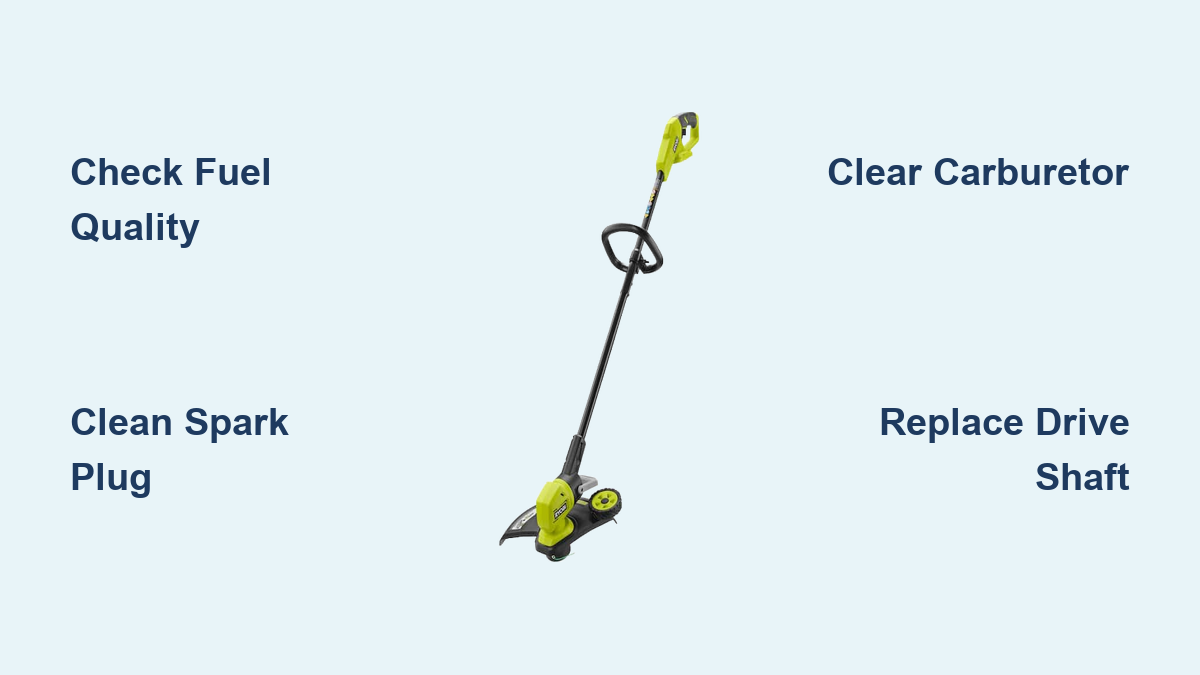
If your Ryobi weed trimmer suddenly stops working mid-task, you’re not alone. Thousands of homeowners face frustrating string trimmer issues each season when they need their equipment most. Without proper maintenance or troubleshooting knowledge, a simple problem can turn your yard work into an expensive repair bill. This guide covers practical fixes for the most frequent Ryobi trimmer problems, helping you get back to maintaining your lawn without unnecessary delays or costs. You’ll learn how to diagnose issues, perform essential maintenance, and determine when professional help is truly needed.
Identifying Your Ryobi Trimmer’s Core Problem
Before attempting any repairs, correctly diagnosing the specific issue prevents wasted effort and potential damage. Most Ryobi string trimmer problems fall into three main categories: starting difficulties, performance issues during operation, and mechanical failures. Understanding which category your problem belongs to streamlines the troubleshooting process and helps you focus on relevant solutions rather than checking every possible component.
Why Your Ryobi Weed Trimmer Won’t Start
When you pull the starter cord and nothing happens, several common culprits could be preventing ignition. The most frequent starting issues include fuel problems, spark plug failures, and air intake blockages. Many users mistakenly assume engine failure when the solution might be as simple as replacing old fuel or cleaning a clogged air filter. Always begin troubleshooting with the easiest and most accessible components before moving to more complex engine disassembly.
How to Check and Replace Bad Fuel
Old or contaminated fuel causes more starting problems than any other single factor. Gasoline begins degrading within 30 days, especially when mixed with oil for two-stroke engines. To verify fuel quality:
- Drain remaining fuel from the tank into a clear container
- Check for cloudiness, separation, or strong varnish-like odor
- Look for particles or debris floating in the fuel
- Inspect for water contamination (appears as droplets at the bottom)
If fuel shows any signs of degradation, completely empty the tank and replace with fresh 40:1 or 50:1 pre-mixed fuel (check your model’s requirements). Clean the fuel cap vent if present, as a clogged vent creates vacuum lock preventing proper fuel flow.
When to Clean or Replace Spark Plugs
A fouled or damaged spark plug prevents ignition even with perfect fuel. Access the spark plug by removing the protective boot and unscrewing the plug with a 5/8″ socket. Inspect for:
- Heavy carbon buildup (black, sooty deposits)
- Oil fouling (wet, oily appearance)
- Cracked porcelain insulator
- Worn or bridged electrodes
Clean minor carbon buildup with a wire brush, but replace plugs showing significant damage or excessive wear. Always check the gap with a feeler gauge (typically 0.020-0.030 inches for Ryobi models) and reinstall with proper torque to avoid stripping threads.
Fixing Poor Performance During Operation
Even when your Ryobi trimmer starts successfully, performance issues can severely limit effectiveness and create frustrating work conditions. Reduced power, inconsistent operation, and unexpected shutdowns often indicate underlying problems that worsen if ignored. Addressing these issues promptly prevents minor concerns from developing into major engine damage.
How to Clear a Clogged Carburetor on Ryobi Trimmers
A dirty carburetor causes poor acceleration, surging RPMs, and eventual stall-outs. Modern ethanol-blended fuels leave sticky residues that clog tiny fuel passages. Before disassembling:
- Try carburetor cleaner added to fresh fuel (follow product instructions)
- Replace the fuel filter inside the tank
- Clean or replace the air filter
If problems persist, remove the carburetor (typically 2-4 screws) and disassemble carefully. Soak non-rubber components in carburetor cleaner for 15 minutes, then use compressed air to clear all passages. Reassemble with a rebuild kit containing new gaskets and diaphragms. This process typically takes 45-60 minutes for first-time users.
Why Your Trimmer Loses Power Under Load
When your Ryobi string trimmer runs fine at idle but struggles when cutting grass or weeds, several factors could be responsible. Check these common issues in order:
- Air filter blockage: A dirty filter restricts oxygen, creating a rich fuel mixture that chokes the engine under load
- Exhaust restriction: Carbon buildup in the muffler reduces engine efficiency
- Ignition timing issues: Worn flywheel key can cause timing problems
- Fuel delivery problems: Clogged fuel line or filter prevents adequate supply during high demand
Clean or replace the air filter first, as this fixes most power loss issues. If problems continue, inspect the muffler for excessive carbon deposits and clean if necessary. Persistent issues likely require professional carburetor adjustment.
Solving Mechanical Component Failures
Mechanical failures often produce distinctive symptoms that help pinpoint the exact problem area. Unlike engine performance issues, mechanical problems typically involve visible components that either work correctly or show clear signs of damage or wear. Addressing these promptly prevents secondary damage to other trimmer components.
How to Replace a Broken Drive Shaft on Ryobi String Trimmers
A bent or broken drive shaft creates vibration, unusual noises, or complete power loss to the cutting head. To replace:
- Disconnect spark plug for safety
- Remove cutting head by unscrewing retaining nut (often reverse-threaded)
- Detach lower shaft housing from upper assembly
- Extract broken shaft while noting orientation of universal joints
- Insert new shaft, ensuring universal joints align properly
- Reassemble in reverse order, checking for smooth rotation
This repair typically takes 20-30 minutes with basic tools. Always inspect the flexible drive cable for fraying before reassembly, as damaged cables often cause shaft breakage.
Fixing a Malfunctioning Bump Feed Head

When the bump feed mechanism stops advancing line, check these common issues:
- Line jam: Debris or tangled line prevents proper feeding
- Worn clutch dogs: Plastic components that wear out over time
- Spring failure: Weak or broken return spring affects operation
- Incorrect line size: Using line thicker than specified jams the mechanism
Disassemble the head by removing the spool cover, then clean all components thoroughly. Replace worn clutch dogs or springs with OEM parts. Always use the correct diameter line (typically .080″ or .095″ depending on model) to prevent future jams.
Preventative Maintenance to Avoid Future Problems
Regular maintenance prevents most common Ryobi trimmer issues and extends equipment lifespan significantly. Investing 15-20 minutes after each use saves hours of troubleshooting and repair later in the season. Establishing a consistent maintenance routine transforms your string trimmer from a source of frustration to a reliable yard care tool.
Essential Post-Use Cleaning Procedures
After each trimming session, perform these quick maintenance steps:
- Wipe down the entire unit with a dry cloth
- Clean debris from cooling fins on the engine
- Remove grass buildup from the cutting head area
- Check for loose screws or bolts
- Drain fuel if storing longer than 30 days
Pay special attention to the air intake area near the engine, as clogged cooling fins cause overheating and premature engine failure. A stiff brush works well for removing stubborn debris from tight spaces.
Seasonal Storage Preparation for Ryobi Trimmers
Proper off-season storage prevents 80% of next season’s starting problems. Before storing your Ryobi weed trimmer for winter or extended periods:
- Mix fuel stabilizer with fresh fuel and run the engine for 5 minutes
- Drain remaining fuel from the carburetor by running engine until it stops
- Remove and clean the spark plug, applying light oil to the cylinder
- Store in a clean, dry location away from direct sunlight
- Keep the unit covered but not airtight to prevent moisture buildup
This simple routine prevents fuel degradation issues that account for most seasonal starting failures.
When to Seek Professional Repair Services
While many Ryobi trimmer problems can be resolved with basic tools and knowledge, certain issues require professional expertise. Attempting advanced repairs without proper training often creates additional problems and safety hazards. Recognizing your limitations saves time, money, and prevents dangerous situations.
Signs Your Trimmer Needs Professional Attention
Seek professional help when you encounter:
- Persistent compression issues indicating internal engine damage
- Fuel leaks from the carburetor housing
- Unusual metallic sounds from the engine
- Smoke that isn’t normal two-stroke exhaust
- Complete failure after verifying basic troubleshooting steps
Professional technicians have specialized tools for diagnosing complex fuel system problems and can properly rebuild carburetors with precision adjustments beyond typical DIY capabilities.
Final Note: Regular maintenance prevents most common Ryobi weed trimmer problems, but when issues arise, systematic troubleshooting saves time and money. Start with the simplest potential causes before moving to complex repairs, and always prioritize safety by disconnecting the spark plug before working on the engine. For model-specific guidance, consult your owner’s manual as Ryobi produces various trimmer types with unique components. Proper care extends your trimmer’s lifespan significantly, ensuring reliable performance season after season.
Leave a Reply