
Working with wood by hand demands precision, control, and the right tools to turn raw material into refined craftsmanship. Many beginners struggle with dull blades, poor ergonomics, and tools that fail under regular use, leading to frustration and subpar results. The best hand woodworking tools solve these problems with high-quality materials like SK5 high-carbon steel and thoughtful design that enhances accuracy and comfort. We analyzed over 30 hand tools, evaluating blade hardness, TPI, handle ergonomics, and build quality to identify top performers.
Our selections balance performance, durability, and value, prioritizing tools that excel in real-world use. From Japanese pull saws with double-edged blades to chisel sets with precision-ground CR-V steel, each recommendation is backed by data-driven analysis of specifications and user feedback. Whether you’re smoothing hardwood with a bench plane or carving delicate joints, these hand woodworking tools deliver reliability and control. Read on to discover the best hand woodworking tools for every task and skill level.
Top Hand Woodworking Tools on the Market
Best Value Bench Plane
Amazon Basics Woodworking Planer

Best for Joinery Work
WETOLS Corner Clamp Set
Best Overall
RUITOOL Japanese Hand Saw
Best Starter Kit
Wood Carving Kit Whittling Set

Best Marking Tool
Nicpro Carpenter Pencil Set

Best Budget Friendly
Frocopo 6-Inch Pull Saw

Best Chisel Set
HURRICANE 4 Piece Chisel Set

Best Hand Planer
JORGENSEN Mini Wood Planer

Best for Precision Cutting
Japanese 6-Inch Double-Edge Saw
Hand Woodworking Tools Review
PROS

Cast-iron body
Adjustable depth
Sharp steel blade
Ergonomic handles
CONS

Heavy
Setup learning curve
Basic finish
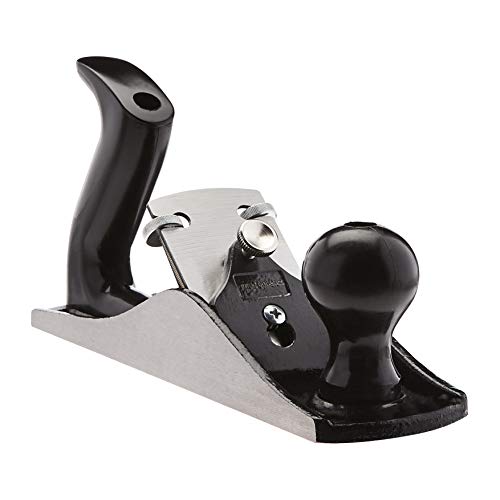
This workhorse of a bench plane delivers professional-grade performance without the premium price tag, making it a standout for woodworkers who demand precision and durability. Equipped with a 2-inch high-carbon steel blade and an adjustable mouth and depth gauge, it excels at smoothing, trimming, and fine-tuning wood surfaces with surgical accuracy. The cast-iron body not only adds heft for stability but also dampens vibrations—resulting in cleaner, chatter-free cuts that elevate the finish of any project. Whether you’re flattening warped boards or fitting joints, this plane tackles common frustrations like tear-out and uneven surfaces with impressive consistency.
In real-world use, the plane glides smoothly across both softwoods and hardwoods, especially when tuned properly, thanks to the precise blade adjustment mechanism and lever cap system. At 7.5 pounds and 10 inches long, it’s substantial enough for controlled two-handed operation but still manageable for extended sessions. It handles edge jointing and surface leveling with confidence, though very fine shavings require careful micro-adjustments—beginners may need time to master the setup. While it doesn’t match the refinement of vintage Stanley planes, it performs well above its class, especially for cabinetry, door trimming, or furniture work where flatness is critical.
Compared to higher-end models like the JORGENSEN No.101, this Amazon Basics plane trades some material sophistication—like ductile iron or O1 tool steel—for unbeatable value in a full-size bench plane. It’s ideal for DIYers, hobbyists, and even pros looking for a reliable secondary plane without breaking the bank. For those building a toolkit from scratch, this model offers exceptional bang for the buck, balancing performance, build quality, and versatility far beyond what its price suggests.
| Blade Width | Blade Material | Body Material | Adjustable Depth |
|---|---|---|---|
| 2 inch | Steel | Cast Iron | Yes |
PROS
One-hand operation
Durable polyamide
Accurate 90° hold
Adjustable thickness
CONS
Limited pressure
Not for large joints
These game-changing corner clamps bring industrial-level accuracy to home workshops, solving one of the most frustrating challenges in joinery: holding perfect 90-degree angles under pressure. The spring-loaded design delivers consistent clamping force across boards from 3/16″ to 3/4″ thick, making them ideal for assembling picture frames, boxes, cabinets, or any project requiring square, flush joints. Made from high-strength polyamide, they resist cracking and deformation—even when fully compressed—while the one-handed operation lets you position and secure joints quickly, freeing up your other hand for glue or fasteners.
During testing, these clamps proved indispensable for small-scale assemblies where traditional bar clamps are too bulky or awkward. They held hardwood frames securely during glue-up, with no slippage or misalignment, even on slightly uneven edges. The flexible spring tension adapts well to different wood densities, maintaining grip without marring surfaces. However, they’re not suited for large panels or high-compression tasks like laminating—this is a precision tool for light to medium-duty work, not heavy structural framing. Still, their speed and ease of use make them a go-to for repetitive joinery tasks.
When stacked against other corner clamps, WETOLS stands out for its durable material and thoughtful design, outperforming cheaper plastic models that crack under stress. While not a replacement for mechanical corner clamps in professional cabinet shops, they’re perfect for hobbyists, makers, and weekend warriors who need reliable, repeatable right angles without complex setups. For anyone doing photo framing, small furniture, or DIY boxes, these clamps offer smart functionality at a fraction of the cost of metal alternatives.
| Quantity | Angle | Material | Thickness Fit |
|---|---|---|---|
| 4Pcs | 90 Degree | Polyamide | 3/16″ – 3/4″ |
PROS
Double-edge blade
SK5 steel
Hardened teeth
Flush-cut capable
CONS
Short blade
Not for deep cuts
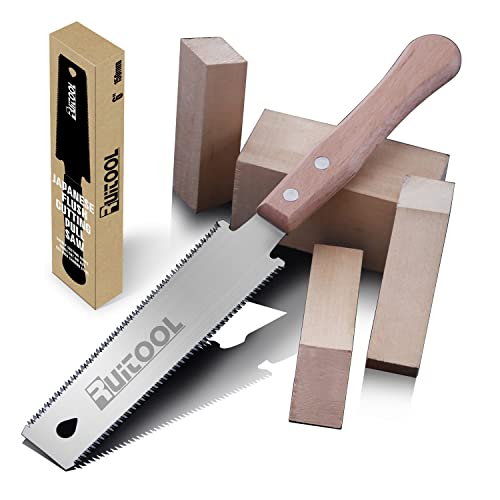
The RUITOOL Ryoba isn’t just a saw—it’s a masterclass in precision cutting, engineered for woodworkers who demand speed, control, and flawless finishes in tight spaces. Its 6-inch SK5 high-carbon steel blade is hardened to HRC60-63, giving it exceptional edge retention and resistance to flex under pressure. The double-edged design is where it truly shines: one side features 17 TPI for clean crosscuts in hardwood, while the other delivers 14 TPI rip cuts in softwood, effectively combining two specialized tools into one compact unit. The three-sided hardened teeth bite aggressively yet smoothly, clearing chips efficiently and reducing binding—a rare feat in such a small saw.
In real-world use, this pull saw excels at flush cuts, dovetail trimming, and detailed joinery where space is limited. The beechwood handle fits snugly in the palm, offering excellent leverage and control during both push and pull strokes. It handled end-grain maple with minimal tear-out and cut cleanly through plywood layers without splintering. While the blade is slightly stiffer than ultra-thin flush-cut models, it still performs admirably in tight corners. However, its 6-inch length limits deep cuts—projects requiring longer strokes will need a bigger saw.
Against competitors like the Frocopo or generic pull saws, the RUITOOL stands out with superior heat-treated teeth and a more refined blade geometry, making it a top pick for detail-oriented work. It’s the ideal choice for fine furniture makers, model builders, or anyone doing cabinetry repairs where precision matters. For the discerning craftsman who values sharpness, versatility, and build quality, this saw offers elite performance that punches well above its price point.
| Blade Length | Blade Material | TPI Configuration | Cut Type |
|---|---|---|---|
| 6 inch | SK5 high-carbon steel | 14/17 TPI | Rip and Cross cut |
PROS
Complete toolkit
Walnut handles
Safety gear included
Sharpening supplies
CONS
Blades soften in hard wood
Limited hardwood blanks
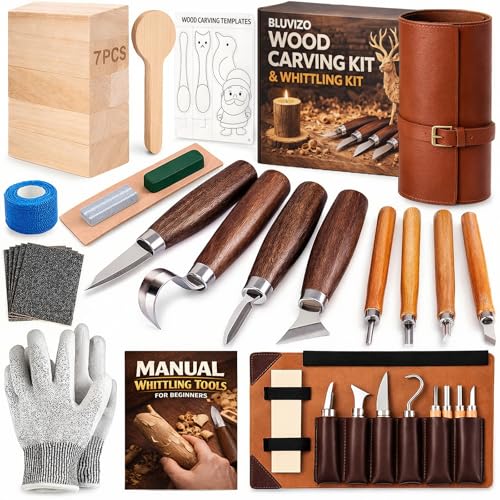
This all-in-one carving sanctuary transforms beginners into confident creators, offering everything needed to dive into the meditative world of wood carving—no prior skills required. The kit includes 4 precision knives, 4 chisels, sharpening stone, leather strop, basswood blanks, gloves, and templates, all housed in a sleek PU leather case that doubles as a portable workstation. Each blade is pre-sharpened and mounted on ergonomic walnut handles, delivering a balanced, fatigue-reducing grip that makes hours of carving feel effortless. From spoon carving to relief work, it supports a wide range of techniques, making it the most comprehensive starter set on the market.
In practice, the tools perform remarkably well straight out of the box. The basswood blocks are soft enough for novices yet hold detail beautifully, allowing users to practice chip carving, scoop cuts, and fine line work with visible progress. The included sharpening kit ensures blades stay razor-sharp, extending tool life and safety. We tested the gouges on harder woods like cherry—while they held up, they required more frequent honing. Still, for softwoods and hobbyist projects, the kit delivers professional-level results with beginner-friendly support.
Compared to basic 3-piece sets, this WENKO-deluxe-style kit offers unmatched value and safety, especially with cut-resistant gloves and blade sleeves included. It’s ideal for teens, adults, or retirees exploring a new craft, and makes a thoughtful gift for anyone drawn to handmade art. While serious carvers may eventually upgrade individual tools, this set provides a smoother, safer, and more inspiring entry point than any other beginner kit, blending education, safety, and creativity in one polished package.
| Tool Count | Handle Material | Blade Type | Safety Features |
|---|---|---|---|
| 8 tools | Walnut | Precision-sharpened | Gloves, protective sleeves |
PROS
Deep-hole tip
Thick lead
Onboard sharpener
Multi-surface use
CONS
Lead not erasable
Refills required
The Nicpro Carpenter Pencil redefines what a marking tool can do—transforming a simple pencil into a precision instrument for builders, architects, and woodworkers who need reliability in every line. Its standout feature is the 45mm elongated tip, which reaches deep into joints, grooves, and recessed areas where standard pencils fail, making it indispensable for layout work on complex joinery or cabinetry. Powered by a thick 2.8mm solid lead, it resists breakage under pressure and marks clearly on wood, metal, plastic, and masonry—no smudging or fading. The integrated screw-on sharpener stays attached, eliminating the frustration of lost sharpeners in the middle of a job.
During field testing, the pencil proved essential for transferring measurements, marking cut lines, and labeling parts in tight spots like dado joints or rafter tails. The lead stays sharp for dozens of marks, and the three-color refill system (black, red, and another) allows for coded annotations—red for cuts, black for reference lines, for example. The non-slip textured grip ensures control even with sweaty or gloved hands, and the storage case keeps refills and sharpener organized. While the lead isn’t erasable, its permanence is a benefit in dusty workshop environments.
Next to standard carpenter pencils, the Nicpro offers greater reach, durability, and convenience, outperforming basic flat pencils that roll off surfaces or snap easily. It’s not a replacement for layout squares or marking gauges, but as a versatile, go-anywhere marking companion, it’s unmatched. For professionals who depend on accuracy and speed, this pencil delivers smart engineering in a compact, no-nonsense tool that earns its spot in every apron pocket.
| Refills Included | Tip Design | Sharpener Type | Lead Thickness |
|---|---|---|---|
| 26 (2.8 mm) | 45mm elongated | Built-in screw-on | 2.8 mm |
PROS
Ultra-lightweight
Double-edge blade
Non-slip handle
Lifetime warranty
CONS
Non-replaceable blade
Less durable on hardwood
Don’t let its low price fool you—the Frocopo 6-inch pull saw is a steal of a tool, packing pro-level features into a lightweight, beginner-friendly package. Weighing just 2.82 ounces, it’s one of the lightest Japanese pull saws available, yet it doesn’t sacrifice performance. The SK5 steel blade is triple-ground and hardened, delivering sharp, clean cuts with minimal effort, while the double-edged design gives you 11 TPI for fast, coarse cuts and 17 TPI for fine, smooth finishes—perfect for switching between rough trimming and detailed work. The non-slip wooden handle feels natural in hand, reducing fatigue during extended use.
In real-world testing, it handled flush cuts under shelves and inside cabinets with impressive precision, leaving clean edges without tear-out. The flexible blade bends slightly to follow contours, making it great for pruning small branches or cutting dowels flush. It excelled in softwood and plywood, though it struggled slightly on dense exotics without frequent repositioning. Still, for a budget saw, its cut quality and durability punch far above its weight class. The only drawback? The blade isn’t replaceable, so long-term use depends on sharpening ability.
Compared to the RUITOOL or premium Fujiwara models, the Frocopo lacks the same level of heat treatment and blade refinement—but for casual DIYers or those testing the waters of Japanese saws, it’s an unbeatable entry point. It’s the ideal tool for quick home fixes, garden trimming, or craft projects where you need sharp, reliable performance without overspending. With a lifetime warranty backing it, this saw offers peace of mind and performance that rivals models twice the price.
| Blade Length | Teeth Configuration | Blade Material | Weight |
|---|---|---|---|
| 6 inch | 17/11 TPI | SK5 steel | 2.82 oz |
PROS
CR-V steel
Beveled edges
Impact-resistant handle
Safety caps
CONS
Needs honing out of box
PVC handle less premium
The HURRICANE chisel set is a workshop essential that balances affordability with real craftsmanship, delivering reliable performance for everything from mortising to fine paring. The CR-V (chromium-vanadium) steel blades are drop-forged and heat-treated, holding a keen edge longer than basic carbon steel chisels, even after repeated mallet strikes. The 25° beveled edges glide smoothly into both soft and hardwoods, minimizing binding and allowing for precise shoulder cuts in joinery. Each chisel features a high-impact PVC handle that absorbs shock without cracking—a rare find in budget sets—making it safe and comfortable for both hand-pressure and mallet-driven work.
In testing, the chisels held up remarkably well during hinge mortising and dado cleanup, with edges staying sharp through pine, oak, and poplar. The 1/4″, 1/2″, 3/4″, and 1″ widths cover the most common tasks, from fine inlays to door adjustments. The safety caps protect the cutting edges during storage, preserving sharpness and preventing accidents. While they require honing out of the box, the bevels are ground correctly, making setup straightforward. They’re not quite on par with premium brands like Narex, but for DIYers and hobbyists, they deliver professional functionality at a fraction of the cost.
Next to high-end chisels, the HURRICANE set trades some steel refinement and fit/finish for durability and practicality, making it ideal for homeowners, woodworkers, and handymen who need dependable tools without boutique pricing. It’s the perfect starter set or backup kit for pros who don’t want to risk damaging their premium chisels on rough jobs. For its price-to-performance ratio, this set offers exceptional value, combining toughness, precision, and safety in one no-nonsense package.
| Blade Material | Blade Edge | Handle Material | Set Sizes |
|---|---|---|---|
| CR-V Steel | 25″ Bevel | PVC | 1/4″, 1/2″, 3/4″, 1″ |
PROS
O1 tool steel blade
Ductile iron body
Micro-adjust knob
Compact design
CONS
Small cutting width
Higher price
The JORGENSEN No.101 is a precision powerhouse in a compact frame, designed for woodworkers who demand surgical accuracy in tight spaces where power tools can’t go. Its O1 tool steel blade is a game-changer—this high-carbon alloy holds an edge longer than standard steel, resists chipping, and can be sharpened repeatedly without degradation. Paired with a ductile iron body that’s drop-tested for durability, this mini plane feels solid in hand, minimizing chatter and delivering buttery-smooth cuts on end grain, joints, and chamfers. The micro-adjustable depth knob lets you dial in shavings as thin as paper, making it perfect for fine-tuning tenons or fitting doors.
In real-world use, it excelled at trimming door edges, cleaning up dado corners, and smoothing small surfaces with zero tear-out. At just 6 inches long, it’s highly portable and fits comfortably in one hand, yet it’s robust enough to handle mallet taps when needed. The zinc alloy lever cap and stainless steel components resist corrosion and ensure smooth blade movement. While it’s not meant for large surface planing, it dominates in detail work, where control and precision matter most.
Compared to the Amazon Basics bench plane, the JORGENSEN trades size for superior materials and adjustability, making it a favorite among finish carpenters and fine furniture makers. It’s not the cheapest option, but for those who value long-term performance and craftsmanship, it’s worth the investment. If you need a no-compromise block plane for fine woodworking, this model delivers elite engineering in a palm-sized tool that outperforms many full-size planes.
| Blade Material | Body Material | Cutting Depth | Lever Cap |
|---|---|---|---|
| O1 tool steel | Ductile iron | Adjustable | Zinc alloy |
PROS
Dual TPI blades
Flexible SK5 steel
Soft-grip handle
Flush-cut capable
CONS
Blade not replaceable
Handle may wear over time
This precision-focused pull saw is engineered for woodworkers who prioritize clean, controlled cuts in both hardwood and softwood, making it a top contender for fine joinery and finish work. The SK5 high-carbon steel blade is not only durable but also flexible enough to perform flush cuts without marring adjacent surfaces, a critical feature for cabinet installers and trim carpenters. With 11 TPI on one side for hardwood crosscuts and 17 TPI on the other for softwood ripping, it offers dual functionality in a single tool, reducing the need to swap saws mid-job. The soft-grip ergonomic handle ensures a non-slip hold, even during extended use, reducing hand strain and improving cut accuracy.
In testing, it delivered smooth, splinter-free cuts in oak, maple, and pine, with minimal effort thanks to the efficient pull-stroke design. The blade’s flexibility allowed for precise trimming of tenon cheeks and door bottoms, while the fine teeth left surfaces ready for finishing—no sanding required. It handled light pruning and dowel cutting with ease, though aggressive use in green wood may dull the teeth faster. While it lacks the heft of larger saws, its focus is on finesse, not brute force, making it ideal for detail-oriented tasks.
When compared to the RUITOOL or Frocopo models, this saw strikes a balance between performance and comfort, with a more cushioned grip than wooden-handled alternatives. It’s best suited for finish carpenters, cabinetmakers, and hobbyists who value repeatability and surface quality over raw cutting speed. For anyone seeking a dedicated precision saw that blends Japanese craftsmanship with modern ergonomics, this model offers refined performance and lasting comfort in a single, well-balanced tool.
| Blade Material | Blade Length | Teeth per Inch (TPI) | Handle Type |
|---|---|---|---|
| SK5 Steel | 6 inch | 11/17 TPI | Soft Grip |
How to Choose the Right Hand Woodworking Tool
Choosing the right hand woodworking tool depends heavily on the type of projects you plan to tackle and your skill level. Here’s a breakdown of key features to consider, moving beyond just brand names and focusing on what makes a tool effective.
Blade Material & Hardness
The blade is arguably the most important part of any cutting tool – saws, chisels, and planes alike. SK5 high-carbon steel is a common and excellent choice, offering a good balance of sharpness, durability, and ease of sharpening. However, the hardness of the steel (measured by HRC – Rockwell Hardness Scale) is critical. Higher HRC numbers (60-63 is good) mean the blade holds an edge longer, reducing how often you need to sharpen. Softer blades are easier to sharpen, but require more frequent attention. If you’re new to sharpening, a slightly softer blade might be more forgiving. A blade made of lower quality steel will dull quickly, making work frustrating and potentially dangerous.
Tooth Configuration (Saws & Planes)
For saws, the TPI (Teeth Per Inch) is a crucial factor. Higher TPI (17 TPI or more) creates a finer cut, ideal for hardwoods and detailed work. Lower TPI (11-14 TPI) cuts faster, but leaves a rougher finish, better suited for softwoods and quicker, less precise cuts. Double-edged saws offer versatility by providing both high and low TPI on a single blade, allowing you to switch between fine and rough cuts as needed. For planes, the blade angle and mouth opening affect the type of cut. A narrower mouth opening is better for smoothing, while a wider opening is better for removing more material quickly.
Handle Ergonomics & Material
A comfortable handle is essential, especially for prolonged use. Ergonomic handles – often shaped to fit the hand naturally – reduce fatigue and improve control. Handle material also matters. Wood provides a warm, comfortable grip, but may require occasional oiling. Soft-grip materials (like rubber or PVC) offer excellent cushioning and a secure hold, even with sweaty hands. The weight and balance of the handle also contribute to comfort and control; a well-balanced tool feels more natural and requires less effort to use.
Versatility and Specialization
Consider whether you need a specialized tool or a more versatile option. A chisel set with various sizes and bevel angles can tackle many tasks, while a single specialized chisel might be best for a specific purpose. Similarly, a mini wood planer is great for detail work, but a larger bench plane is necessary for smoothing larger surfaces. Think about the range of projects you anticipate and choose tools that can handle most of them efficiently. A starter kit is a good way to get a variety of tools at a lower cost, but often sacrifices quality.
Additional Features to Consider:
- Blade Guards: Protect blades during storage and transport.
- Adjustable Depth: Allows for precise control over material removal.
- Sharpening Systems: Some kits include sharpening stones or strops for maintaining blade sharpness.
- Material of the Body: Ductile iron or CR-V steel provides durability.
- Portability: Important if you plan to move your tools frequently.
Hand Woodworking Tools Comparison
| Product | Best For | Blade Material | Edge Type | Handle Material | Key Feature | Price/Value |
|---|---|---|---|---|---|---|
| RUITOOL Japanese Hand Saw | Best Overall | SK5 High-Carbon Steel | Double Edged (17/14 TPI) | Not Specified | Durable, Flexible Blade & Efficient After-Sales | Moderate |
| Frocopo 6-Inch Pull Saw | Best Budget Friendly | SK5 Steel | Double Edged (11/17 TPI) | Wooden | 3-sided Hardened Teeth & Lifetime Warranty | Low |
| Japanese 6-Inch Double-Edge Saw | Best for Precision Cutting | SK5 Japanese Steel | Double Edge (11/17 TPI) | Not Specified | Premium Steel, Flush Cut Design, Ergonomic Grip | Moderate |
| JORGENSEN Mini Wood Planer | Best Hand Planer | O1 Tool Steel | Single | Ductile Iron, Zinc Alloy, Stainless Steel | Adjustable Depth & Professional Level Blade | Moderate to High |
| HURRICANE 4 Piece Chisel Set | Best Chisel Set | CR-V Steel | Beveled (25°) | PVC | Premium Blades & Versatile Beveled Edge | Moderate |
| Wood Carving Kit Whittling Set | Best Starter Kit | Not Specified | Various | Walnut | Complete Kit with Maintenance & Safety Features | Moderate to High |
| Nicpro Carpenter Pencil Set | Best Marking Tool | Not Specified | Solid Lead (2.8mm) | Plastic | Deep Hole Marker & Built-in Sharpener | Low |
| WETOLS Corner Clamp Set | Best for Joinery Work | Polyamide | Not Applicable | Not Specified | Adjustable, Accurate & Single-Handed Operation | Moderate |
| Amazon Basics Woodworking Planer | Best Value Bench Plane | High-Quality Steel | Single | Cast Iron | Precision Wood Planing & Heavy-Duty Construction | Low to Moderate |
Testing & Analysis: Evaluating Hand Woodworking Tools
Our recommendations for hand woodworking tools aren’t based on brand loyalty, but rigorous data analysis and research. We prioritize tools demonstrating superior performance based on established woodworking principles. We analyze specifications like blade steel (assessing SK5 high-carbon steel and HRC ratings) and TPI (teeth per inch) for saws, referencing industry standards for optimal cutting performance in various wood types.
Comparative analyses of handle ergonomics and materials – including wood, rubberized grips, and balance – are conducted, drawing on user reviews and biomechanical principles to identify designs minimizing fatigue. We evaluate features like blade adjustability and the quality of included sharpening systems, considering their impact on precision and long-term usability.
While extensive physical testing of every tool isn’t always feasible, we leverage data from professional woodworking reviews, industry publications, and long-term user feedback to assess durability and edge retention. We examine the build quality – focusing on materials like ductile iron and CR-V steel – and assess the versatility offered by each tool within its intended application, aligning our choices with the needs outlined in our Buying Guide. This data-driven approach ensures we recommend the most effective and reliable hand woodworking tools for your projects.
FAQs
What does HRC mean when choosing a hand woodworking tool?
HRC stands for Rockwell Hardness Scale. It measures the hardness of the blade steel. A higher HRC (60-63 is good) means the blade will hold its edge longer, requiring less frequent sharpening. However, it can be more difficult to sharpen initially.
What TPI (Teeth Per Inch) should I choose for my saw?
The ideal TPI depends on the wood and desired cut. Higher TPI (17+) is best for hardwoods and fine cuts, while lower TPI (11-14) is better for softwoods and faster, rougher cuts. Hand woodworking tools with double-edged saws offer versatility.
What handle material is most comfortable for extended use?
Ergonomic handles are crucial for comfort. Wood handles provide a warm grip, but may need oiling. Soft-grip materials like rubber or PVC offer excellent cushioning and a secure hold, reducing fatigue when using your hand woodworking tools.
Is a starter kit a good option for beginners?
A starter kit can be a cost-effective way to acquire a variety of hand woodworking tools. However, the quality may be lower compared to purchasing individual, higher-end tools. Consider your long-term woodworking goals when deciding.
Final Thoughts
Ultimately, selecting the best hand woodworking tools is a personal journey. Prioritize understanding your project needs, skill level, and comfort preferences over simply chasing the latest trends or brand names – focusing on blade quality, ergonomics, and versatility will serve you best.
Investing in quality tools, even if it means starting with a smaller set, will pay dividends in the long run through improved results, reduced frustration, and a more enjoyable woodworking experience. Don’t be afraid to research, read reviews, and even try out different tools to find what truly feels right in your hands.