
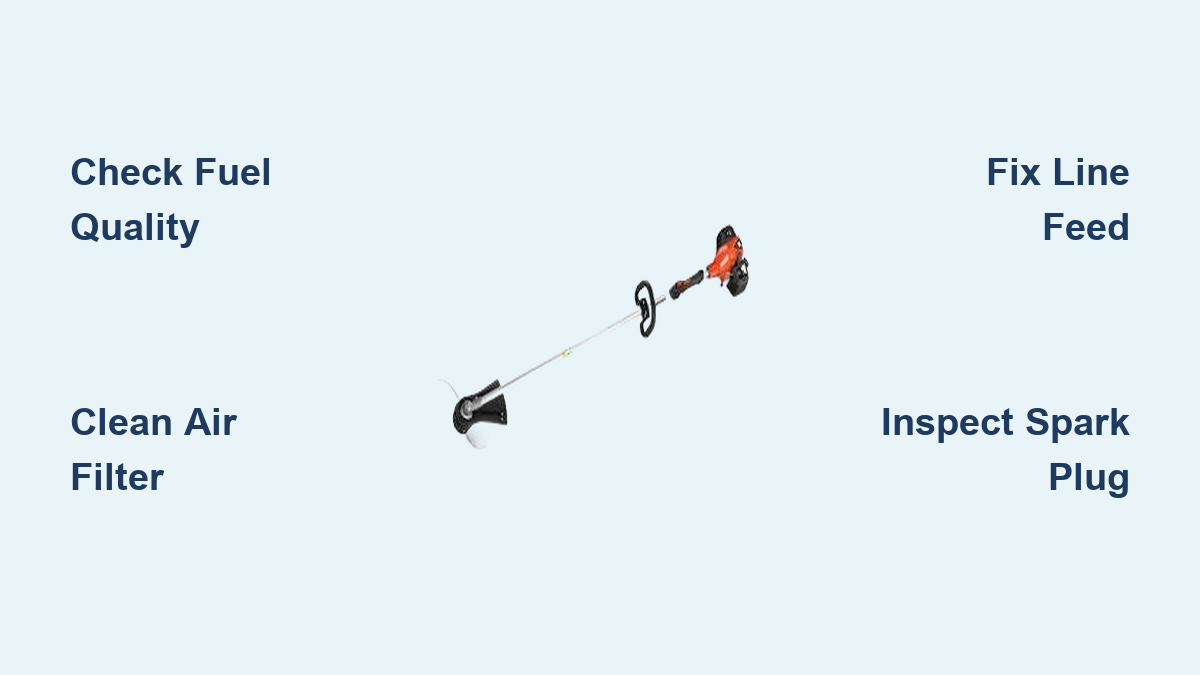
Your Echo weed trimmer sputters and dies just as you’re tackling that overgrown patch along the fence line. You’re not alone—thousands of homeowners face frustrating Echo weed trimmer troubleshooting scenarios every season. When your reliable trimmer won’t start, the line won’t feed properly, or the engine runs rough, you need immediate solutions, not vague suggestions. This practical troubleshooting guide delivers specific fixes for the most frequent Echo trimmer problems across popular models like the SRM-225, SRM-230, and GT-266, saving you time and money on unnecessary repairs. By the time you finish reading, you’ll have diagnosed and solved your issue in under 30 minutes with basic tools already in your garage.
Why Your Echo Trimmer Won’t Start Despite Fresh Fuel
When you pull the starter cord and hear nothing but silence, check these critical components before assuming major engine failure. Most Echo weed trimmer troubleshooting cases stem from preventable issues that take less than 15 minutes to resolve.
Check for Fuel Flow Blockages in Seconds
Stale fuel causes 70% of starting problems in two-stroke trimmers. Even if you filled the tank yesterday, ethanol-blended gasoline breaks down quickly. Remove the fuel cap and smell the fuel—sour or varnish-like odors indicate contamination. Drain old fuel through the filler neck using a siphon pump, then add fresh 50:1 mixture (2.6 oz oil per gallon gas). While draining, inspect the fuel filter inside the tank—it should be clean white or translucent. A brown or black filter restricts fuel flow; replace it with an Echo-specific filter (part #500-101-001) in under two minutes.
Identify Spark Plug Failure Symptoms Instantly
A faulty spark plug stops combustion dead in its tracks. Remove the plug using a 13/16″ socket and examine the electrode. Wet, black deposits mean flooding—let the cylinder dry for 20 minutes before retrying. White or blistered electrodes indicate overheating from incorrect fuel mix. The critical measurement? Electrode gap must be exactly 0.024 inches. Use a feeler gauge to verify before reinstalling. If the porcelain shows cracks, replace immediately with NGK BPMR7A or equivalent—never reuse damaged plugs.
Fix Echo Trimmer Line Feed Problems in Under 10 Minutes

Nothing halts yard work faster than a trimmer head that won’t advance line or line that snaps constantly. These targeted fixes address the root causes behind frustrating line issues.
Clean and Reset the Bump Feed Mechanism Properly
When tapping the head produces no new line, debris has jammed the spool mechanism. Remove the trimmer head by pressing the lock button while unscrewing counterclockwise. Empty all tangled line remnants and grass clippings from the housing. Reinstall line following Echo’s specific winding pattern: insert both ends through eyelets, wind clockwise keeping tension, leaving 6 inches protruding. For models with dual-line heads (like SRM-230), ensure equal line length on both sides—imbalance causes vibration. Reassemble while holding the spool depressed to engage the feed mechanism.
Prevent Constant Line Breakage During Operation
Frequent snapping often relates to line type and technique. Verify you’re using 0.095″ diameter line for residential models—thicker line strains the head mechanism. During operation, maintain 90% throttle for consistent centrifugal force. When approaching obstacles like fence posts, reduce speed to 50% throttle to prevent impact breakage. For dense weeds, switch to serrated line (Echo part #99933-10100) which cuts tougher vegetation without snapping. Most importantly, never let the line contact hard surfaces—keep it 1-2 inches above concrete edges.
Eliminate Dangerous Vibration Before It Damages Your Trimmer
Excessive vibration isn’t just annoying—it signals impending component failure. Address these issues immediately to prevent costly repairs.
Diagnose Bent Shaft or Drive Cable Issues
A bent shaft creates rhythmic vibration that intensifies with RPM. Disconnect the spark plug and remove the trimmer head. Rotate the drive shaft by hand—if you feel resistance or binding at specific points, the shaft is bent. For straight-shaft models, inspect the entire length against a straight edge; even minor bends require replacement. Curved-shaft models often develop kinks at connection points—disassemble the coupler and check for twisted sections. Never attempt to straighten bent components—they’ll fail catastrophically during operation.
Secure Loose Engine Mounts That Cause Shaking
Loose engine bolts create dangerous vibration that accelerates wear. With the engine off, grasp the engine housing and shake firmly—you should feel zero movement. Remove the shroud and tighten all four mounting bolts to 100-120 inch-pounds torque. Use blue Loctite on threads to prevent future loosening. While accessing the engine, inspect the clutch drum for scoring—worn clutches cause vibration during acceleration and require professional replacement.
Restore Peak Cutting Performance to Your Echo Trimmer

When your trimmer struggles through vegetation it previously cut easily, these precision adjustments will revive its cutting ability.
Tune the Carburetor for Maximum Power Output
Most Echo models have two adjustment screws labeled “L” (low speed) and “H” (high speed). Start with engine warm at idle. Turn the “L” screw slowly clockwise until the engine speeds up, then back counterclockwise until it just begins to stumble. Set at the midpoint between these positions for smooth idle. For the “H” screw, accelerate to full throttle—turn clockwise until RPMs drop, then back counterclockwise to just before stumbling. Optimal setting delivers crisp acceleration without bogging. Never adjust more than 1/8 turn at a time.
Optimize Line Length and Cutting Technique
Line that’s too short reduces cutting diameter while excessive length causes breakage. Maintain 6-8 inches of usable line during operation. When cutting tall grass, approach at a 30-degree angle rather than straight down—this engages more line surface area. For thick weeds, use a sweeping motion rather than pushing forward. Replace line when it wears below 4 inches in length; worn line cuts inefficiently even at proper RPM. Keep your line fresh—UV exposure degrades nylon after 6 months of storage.
Clean Your Air Filter Correctly to Prevent Engine Damage
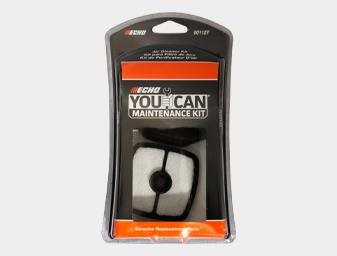
A clogged air filter causes 30% of performance issues but takes only 5 minutes to address properly.
Differentiate Between Foam and Paper Filter Maintenance
Foam filters (common on residential models) require washing, not replacement. Remove the filter and wash in warm soapy water, squeezing gently to force out debris. Rinse thoroughly under running water until completely clear. Squeeze dry with a clean towel, then saturate with air filter oil—never run without oiling foam filters. Paper filters (found on commercial models) must be replaced when dirty—attempting to clean them damages the media. Always inspect the filter housing gasket for cracks during replacement; a compromised seal allows unfiltered air into the engine.
Prevent Future Problems With Proactive Maintenance
Avoid most Echo weed trimmer troubleshooting scenarios through these simple seasonal routines.
Implement the 10-Hour Maintenance Checklist
Every 10 hours of operation, perform these critical tasks: clean the air filter, inspect the spark arrestor screen in the muffler (remove carbon buildup with wire brush), lubricate the drive shaft with graphite powder, and check all fasteners for tightness. After 25 hours, replace the spark plug and fuel filter. Before storage, run the engine dry or add fuel stabilizer to prevent carburetor clogs. Store with the trimmer head covered to prevent debris accumulation in the spool mechanism.
Store Fuel Properly to Avoid Seasonal Starting Issues
Ethanol fuel degrades within 30 days, causing hard starting next season. Always mix only what you’ll use within 4 weeks. For long-term storage, add STA-BIL 360 Marine fuel stabilizer at double the recommended rate (1 oz per 2.5 gallons) and run for 5 minutes to circulate through the carburetor. Never store fuel in plastic containers longer than 6 months—even with stabilizer, plastic leaches chemicals into gasoline. Metal cans with tight seals preserve fuel quality significantly longer.
Key Takeaways: Most Echo weed trimmer troubleshooting scenarios resolve with simple fixes to fuel quality, air filtration, or line feeding mechanisms. Keep fresh 50:1 fuel mixture on hand, clean your air filter every 10 hours, and replace spark plugs annually to prevent 80% of common problems. When diagnosing issues, always check the simplest solutions first—stale fuel or clogged filters cause more headaches than complex engine failures. By implementing these targeted maintenance practices, your Echo trimmer will start reliably and deliver clean cuts season after season without costly dealer visits.
Leave a Reply