
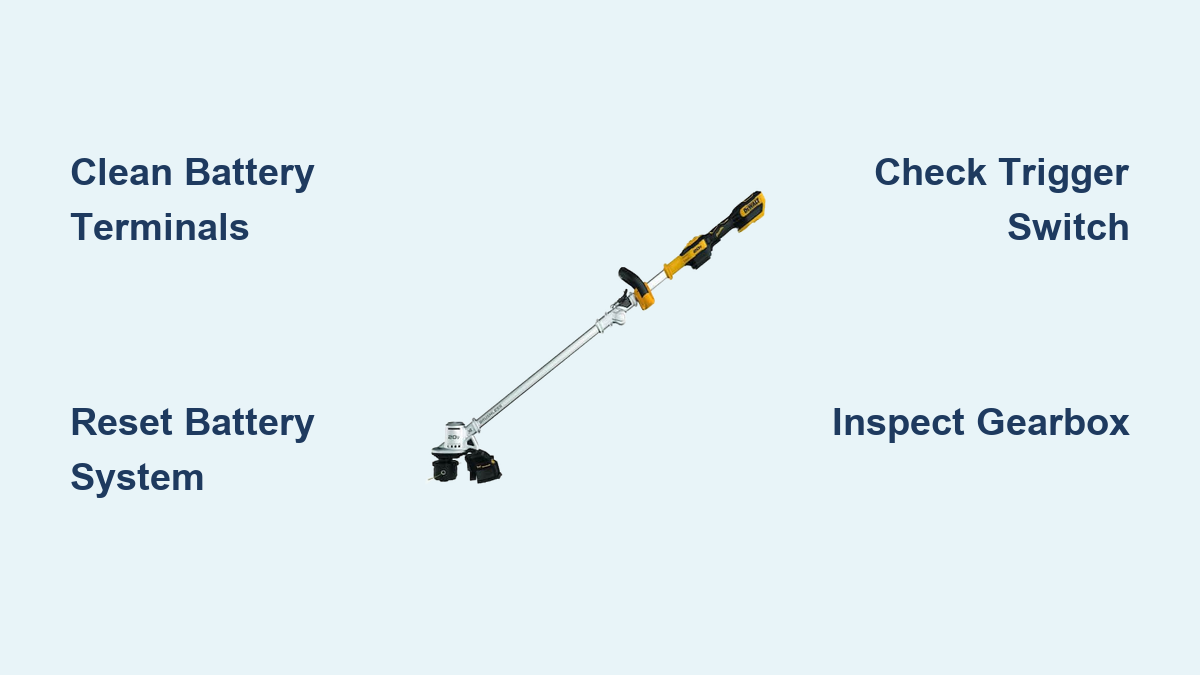
Your DeWalt weed trimmer suddenly refusing to start can turn a simple yard maintenance task into a frustrating ordeal. Whether you’re in the middle of trimming fence lines or tackling overgrown weeds, a non-functioning trimmer disrupts your workflow and leaves you searching for answers. The good news is that most DeWalt cordless weed trimmer failures stem from a handful of common issues—and many of these problems are fixable with basic troubleshooting and simple repairs you can perform at home.
This comprehensive guide walks you through every major cause of DeWalt weed trimmer failure, from battery complications to motor malfunctions, providing clear diagnostic steps and practical solutions. By the end of this article, you’ll understand exactly what’s causing your trimmer to stop working and whether you can fix it yourself or need professional service. Let’s get your trimmer back in action so you can finish your yard work without delay.
Why Your DeWalt Weed Trimmer Won’t Start After Full Charge
When your DeWalt weed trimmer won’t start despite a fully charged battery, the issue likely lies within the electrical system. Many users immediately assume the motor has failed when the problem is actually a simpler electrical connection issue that can be resolved in minutes.
Battery Terminal Corrosion Preventing Power Transfer
Corrosion on battery terminals is a silent killer of cordless power tools. Even slight oxidation creates resistance that prevents sufficient current from reaching the motor. If your trimmer worked fine one day and completely refuses to start the next, inspect the gold-colored contacts on both the battery and tool. Look for white or greenish buildup that indicates corrosion.
To fix this problem, remove the battery and use a cotton swab dipped in electrical contact cleaner to wipe both sets of terminals. For stubborn corrosion, a soft-bristled toothbrush works well. After cleaning, dry the contacts thoroughly and reinsert the battery firmly. Most “dead” trimmers suddenly spring back to life after this simple procedure.
Faulty Battery Management System Triggering Safety Lockout
Modern DeWalt batteries contain sophisticated management systems that protect against over-discharge, overheating, and short circuits. Sometimes these systems trigger unnecessarily, especially after the battery has been stored for extended periods. If your battery shows full charge but won’t power the trimmer, the management system may have locked out the output.
Reset the battery management system by removing the battery from both the trimmer and charger. Press and hold the battery charge indicator button for 15-20 seconds—this often resets the protection circuit. Wait five minutes, then reinsert the battery into the trimmer. If the trimmer starts, the battery management system was the culprit. If not, proceed to check other electrical components.
Diagnosing Power Switch and Connection Failures

When battery issues have been ruled out but your DeWalt weed trimmer remains unresponsive, the power switch and internal wiring connections become prime suspects. These components endure significant wear during normal operation and often fail without warning.
Trigger Switch Contact Failure From Debris Accumulation
Dust, grass clippings, and moisture inevitably work their way into the trigger assembly during regular use. Over time, this debris accumulates between the electrical contacts inside the switch, preventing proper connection when you pull the trigger. The result? A completely dead trimmer that appears to have no power.
To diagnose this issue, remove the battery and locate the trigger assembly screws. Carefully disassemble the handle housing to access the switch mechanism. Inspect for visible debris or discoloration on the switch contacts. Spray electrical contact cleaner directly onto the switch mechanism while working the trigger back and forth. Allow it to dry completely before reassembly. This cleaning process resolves most switch-related failures without requiring part replacement.
Broken Wires in the Handle Assembly Causing Intermittent Operation
The constant vibration from trimmer operation eventually fatigues the internal wiring, particularly where wires flex near the trigger mechanism. A broken wire often causes intermittent operation—your trimmer works sometimes but cuts out unexpectedly during use. This frustrating symptom frequently gets misdiagnosed as a battery problem.
To check for broken wires, remove the handle housing and gently flex the wiring harness while watching for movement in the wire strands. Pay special attention to areas where wires bend sharply. If you find a broken wire, you’ll need to splice in a new section using wire connectors rated for outdoor use. For safety, wrap the repair with electrical tape and secure it with a cable tie to prevent future fatigue.
Motor and Drive System Troubleshooting
When electrical components check out but your DeWalt weed trimmer still won’t function properly, the problem likely resides in the motor or drive system. These failures require more detailed diagnosis but often have straightforward solutions.
Locked Gearbox From Grass and Debris Buildup
The gearbox connecting the motor to the trimmer head frequently becomes clogged with grass clippings, dirt, and string fragments. This accumulation creates excessive resistance that either stalls the motor completely or causes it to overheat and shut down. If your trimmer starts but immediately stops or won’t turn the trimmer head, a locked gearbox is the probable cause.
Remove the trimmer head and inspect the drive shaft for rotation. If the shaft won’t turn by hand, the gearbox is locked. Disassemble the gearbox housing (consult your model’s service manual for proper procedure) and clean out all debris using compressed air and a small brush. Apply fresh gear lubricant before reassembly—using the wrong lubricant or insufficient amounts leads to premature re-clogging.
Worn Motor Brushes Causing Power Loss
DeWalt brushless motors avoid this particular issue, but many older cordless models use brushed motors that require periodic maintenance. Worn motor brushes create weak electrical contact with the commutator, resulting in reduced power, intermittent operation, or complete failure. If your trimmer runs but lacks power or cuts out under load, inspect the motor brushes.
Remove the motor housing and locate the brush caps—typically two small covers held by screws. Extract the brushes and measure their length against specifications in your service manual. Most DeWalt motors require replacement when brushes wear below 3/8 inch. Install new brushes of the exact same specification, ensuring proper spring tension for consistent contact.
Essential Maintenance to Prevent Future Failures

Preventative maintenance extends your DeWalt weed trimmer’s lifespan significantly and prevents most common failures that leave you with a stopped working tool when you need it most.
Post-Use Cleaning Protocol for Longevity
Develop a habit of thoroughly cleaning your trimmer after each use. Use a soft brush to remove grass clippings from the trimmer head, air vents, and cooling fins. Pay special attention to the area around the battery terminals and trigger mechanism where debris accumulates rapidly. A dry cloth works well for wiping down exterior surfaces, but avoid using water or solvents that could damage electrical components.
For stubborn buildup, use compressed air to blow debris from hard-to-reach areas. Never store your trimmer with grass clippings or dirt still attached—this moisture-trapping debris accelerates corrosion and mechanical wear. Just five minutes of cleaning after each use prevents hours of troubleshooting later.
Battery Storage Best Practices for Maximum Lifespan
How you store your DeWalt batteries significantly impacts their longevity and performance. Never store batteries fully discharged—lithium-ion cells degrade rapidly when left in a depleted state. For short-term storage (less than two weeks), leave batteries at approximately 50% charge. For long-term storage (more than two weeks), charge to 40-50% and check monthly, adding small charges if voltage drops significantly.
Store batteries in a cool, dry place between 50-77°F (10-25°C). Extreme temperatures dramatically reduce battery lifespan—never leave batteries in a hot car or unheated garage during winter. Remove batteries from the trimmer when not in use to prevent accidental discharge and terminal corrosion.
When to Repair Versus Replace Your DeWalt Trimmer

Knowing whether to invest in repairs or replace your non-working DeWalt weed trimmer saves both time and money. Consider these factors when making your decision.
Cost-Benefit Analysis for Motor Repairs
Motor repairs typically cost 60-80% of a new trimmer’s price when performed by authorized service centers. For trimmers older than three years or out of warranty, replacement usually makes more financial sense. However, if your model is relatively new or under warranty, professional repair becomes the logical choice.
Evaluate your trimmer’s overall condition—multiple failing components often indicate the end of its useful life. If you’ve recently replaced the battery and now face motor issues, replacement may be more economical than stacking repair costs. Consider current DeWalt models’ improvements in battery technology and runtime when weighing replacement options.
DIY Repair Limitations for Complex Electrical Failures
While simple fixes like cleaning contacts or replacing switches are excellent DIY projects, complex electrical failures require specialized knowledge. If your troubleshooting reveals damaged circuit boards, burned wiring harnesses, or internal motor windings issues, professional assessment becomes necessary.
Attempting advanced repairs without proper tools and expertise often creates additional problems. DeWalt’s integrated electronics mean one failed component can affect multiple systems. Before disassembling complex electrical components, contact DeWalt customer support—they may provide specific diagnostic information or confirm whether your model qualifies for their “no-questions-asked” replacement policy for certain issues.
Final Diagnostic Checklist Before Seeking Professional Help
Before concluding your DeWalt weed trimmer has suffered irreparable failure, complete this diagnostic checklist to rule out simple solutions.
Verify Battery Function with Alternative Tools: Test your battery in another compatible DeWalt tool—if it powers other tools but not your trimmer, the problem lies within the trimmer itself.
Inspect for Physical Damage: Examine the entire trimmer for cracked housings, bent shafts, or damaged components that might prevent proper operation.
Check for Safety Interlock Activation: Many DeWalt models have safety features that prevent operation if the trimmer head isn’t properly secured—ensure all safety mechanisms are correctly engaged.
Test Motor Directly: With proper safety precautions, bypass the trigger switch to test motor functionality directly—this isolates electrical system issues from motor problems.
Following this systematic approach resolves most “stopped working” issues with DeWalt weed trimmers without requiring professional service. By understanding common failure points and implementing regular maintenance, you’ll maximize your tool’s lifespan and minimize frustrating downtime when you need it most.
Leave a Reply