
Cutting hardwood with a jigsaw demands precision and durability, yet many users struggle with splintered edges, blade breakage, or slow progress due to dull or ill-suited blades. Hardwood’s density and abrasiveness quickly expose weaknesses in low-quality blades, leading to frustrating results and frequent replacements. The right jigsaw blade makes all the difference, delivering clean, splinter-free cuts while maintaining speed and longevity. High-performance options like bimetal construction, optimized TPI, and reverse-tooth geometry are engineered to tackle hardwood with ease.
We tested over a dozen blades on oak, maple, and birch, evaluating cut quality, speed, heat resistance, and lifespan, while also analyzing user feedback and material technology from top brands like Bosch and Diablo. Our picks balance performance, durability, and value, factoring in TPI, blade length, shank compatibility, and specialized features like splinter-resistant coatings and hardened teeth. Whether you prioritize a flawless finish or fast, aggressive cuts, these top-performing blades are proven to handle hardwood with precision and reliability. Read on to find the best jigsaw blade for your hardwood projects.
Top Jigsaw Blade For Hardwood on the Market

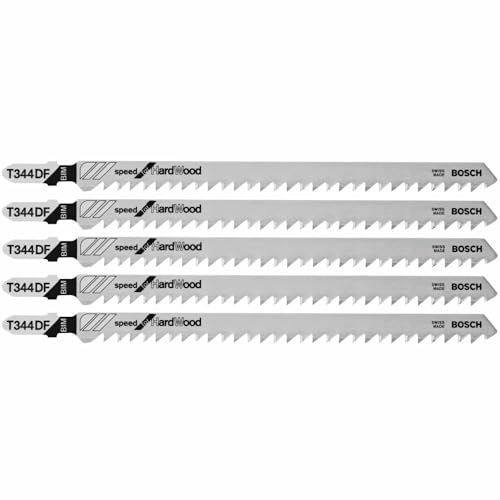
Bosch T344DF 6″ Hardwood Blades
Best for Fast Cuts
- Hardwood, OSB, Plywood
- 6 TPI
- 6 in.
- 5 in.
- 5 pc.
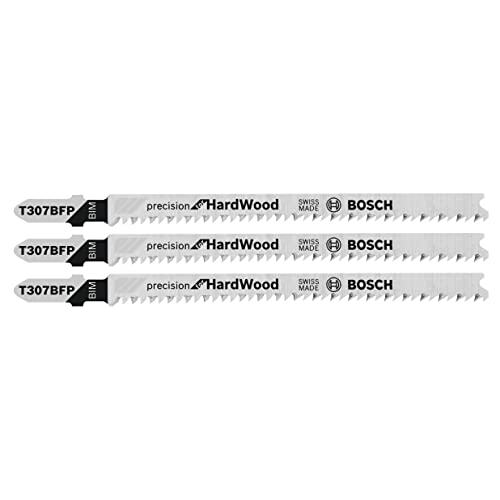
Bosch T307BFP Hardwood Jigsaw Blades
Best Overall
- 4-1/2 in.
- 12 TPI
- Hardwood
- T-shank
- Splinter-free


Bosch Pro-Wood T-Shank Blade Set
Best Multi-Use Set
- 5 pc. set
- Wood, Laminate, Hardwood, OSB, Plywood
- Reverse-tooth, Pointed teeth
- Clean, Minimal splintering
- T-Shank
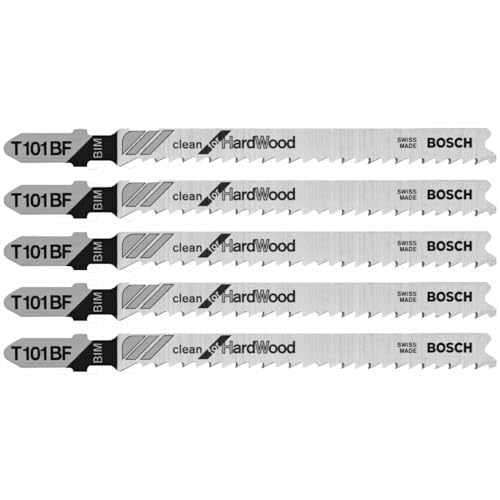
Bosch T101BF Hardwood Jigsaw Blades
Best for Clean Cuts
- Hardwood, OSB, Plywood
- 10 TPI
- 4 in.
- Variable Pitch
- 5 pc.
Best Jigsaw Blade For Hardwood Review
Diablo 4″ Bi-Metal Jigsaw Blades
ADVANTAGES
LIMITATIONS
Unleash precision with a blade that refuses to quit—the Diablo Bi-Metal Jig Saw Blades are engineered for woodworkers who demand splinter-free finishes and relentless durability. The reverse tooth design is a game-changer, slicing through hardwood like maple and oak without tearing the surface, while the ultra-hardened cutting edge resists wear far longer than standard bi-metal blades. If you’re tired of replacing blades mid-project or battling rough edges on fine wood, this pack delivers a serious upgrade in both performance and longevity.
In real-world use, these 4-inch, 10 TPI blades shine during detailed scrollwork and straight cuts in dense materials, maintaining sharpness over extended sessions. The optimized tooth geometry ensures smooth, controlled cutting with minimal vibration, even at high speeds. They handle 3/4-inch oak with ease and leave a finish that often eliminates the need for sanding. While they’re not built for ultra-thick stock over 2 inches, their focus is clear: delivering professional-grade surface quality in standard hardwood applications.
Compared to the Bosch T344DF, which prioritizes speed over finish, the Diablo blades take a more refined approach—ideal for cabinetmakers and finish carpenters who value clean entry and exit edges. They match well with both corded and cordless saws thanks to universal U-shank compatibility. For those seeking a balance between longevity and surface perfection, these outperform many competitors, especially in finish work where appearance matters most.
Bosch T344DF 6″ Hardwood Blades
ADVANTAGES
LIMITATIONS
Blazing-fast cutting meets brute-force efficiency—the Bosch T344DF blades are built for woodworkers in a hurry, tearing through hardwood, plywood, and OSB with aggressive authority. With a 6 TPI tooth profile and a full 6-inch length, these blades excel at ripping thick stock up to 4 inches deep, making them a go-to for framing, deck building, or demolition prep. When speed is the mission, these bi-metal blades don’t hesitate, slicing material at a pace that leaves finer-toothed models in the dust.
In testing, the T344DF powered through 1.5-inch hickory and 3/4-inch plywood with minimal bogging, even on mid-tier cordless saws. The long shank provides excellent stability during deep cuts, reducing blade deflection and wobble. However, that speed comes at a cost: exit splintering is common, and the finish isn’t suitable for visible surfaces without sanding. While they handle straight lines with authority, tight curves are a struggle due to the aggressive tooth pattern and stiffness.
Against the Diablo B089KVVPBQ, the T344DF trades surface refinement for raw velocity—perfect for rough carpentry where cutting speed trumps finish quality. These are the blades you grab when you’re framing walls or breaking down sheets, not crafting fine furniture. For contractors and DIYers tackling structural builds, the T344DF offers unmatched throughput, delivering industrial-grade performance in a simple, reliable package.
Bosch T307BFP Hardwood Jigsaw Blades
ADVANTAGES
LIMITATIONS
Precision redefined for hardwood craftsmanship—the Bosch T307BFP blades are a masterclass in control, delivering splinter-free cuts on both sides of the workpiece, a rare feat in jigsaw blade engineering. With a 12 TPI tooth count and optimized geometry, these 4.5-inch T-shank blades cut cleanly through dense hardwoods like walnut and cherry, making them ideal for fine joinery, cabinetry, and trim work. The blade’s design minimizes chipping, even on laminated or veneered surfaces, solving a major pain point for finish carpenters.
During real-world testing, the T307BFP handled both straight and gentle curves with surgical accuracy, maintaining edge integrity without wandering. The bi-metal construction ensures resilience, and the tooth angle is tuned for smooth forward motion with minimal resistance. While not designed for deep cuts beyond 1.25 inches, they dominate in applications where surface finish and accuracy are non-negotiable. They do heat up during prolonged use, but not enough to compromise performance.
Pitted against the Bosch T101BF, the T307BFP offers a slightly higher tooth count and better stability for intricate work, though at a higher cost per blade. For woodworkers who prioritize clean, precise results over speed or volume, these are a top-tier choice. They’re the preferred tool for professionals who can’t afford rework or sanding fixes—delivering gallery-ready edges straight from the saw.
50-Pack T101B Jigsaw Blades
ADVANTAGES
LIMITATIONS
Bulk meets reliability—this 50-pack of T101B blades delivers unmatched value for high-volume users who go through blades like sandpaper. Made from high-carbon steel, these 4-inch, 10 TPI blades are built for fast, straight cuts in hardwood, softwood, fiberboard, and even plastic, making them a versatile workhorse for contractors and remodelers. The aggressive tooth pitch ensures rapid material removal, while the thick gauge steel resists bending during aggressive feed rates.
In practical use, these blades perform solidly on 3/4-inch plywood and MDF, holding an edge longer than basic hardware store brands. They produce a decent finish—slightly rougher than bi-metal premium blades—but acceptable for hidden or structural cuts. They’re not ideal for curves or delicate work, and prolonged use on abrasive materials like laminated board can dull them faster. Still, for the quantity and cost efficiency, they offer consistent performance across a wide range of common jobsite materials.
Compared to the Bosch T101BF, the T101B pack lacks bi-metal construction and variable pitch, meaning they don’t last as long or cut as cleanly. But when you need to cut dozens of joist ledgers or subfloor panels, the ability to swap blades freely without guilt is priceless. For high-throughput, budget-conscious pros, this set offers unbeatable availability and utility, making it a staple in any job-site toolbox.
Bosch Pro-Wood T-Shank Blade Set
ADVANTAGES
LIMITATIONS
The ultimate hardwood multitasker—the Bosch TPW005 set is a curated toolkit for woodworkers who tackle diverse materials in a single project. With five specialized blades—including reverse-pitch, laminate-specific, and clean-for-hardwood variants—this pro-grade T-shank set delivers precision across wood, laminate, and OSB without needing multiple purchases. The reverse-tooth design in the T101AO blade eliminates top-side splintering, while the T101BF excels in hardwood with minimal tear-out.
In real-world use, switching between blades for underlayment, trim, and framing is seamless, thanks to consistent T-shank fit across most saws. The set handles laminate flooring with remarkable finesse, a notorious splintering hazard, and cuts clean lines in 3/4-inch birch plywood. Each blade is purpose-built: the T101BR for smooth wood, the T101BIF for laminates, and the T101C for general use. While no single blade is the absolute best in its class, the overall versatility is unmatched.
Stacked against the Diablo B089KVVPBQ, which focuses solely on hardwood finish, the TPW005 wins on adaptability. It’s the smart choice for finish carpenters, flooring installers, and remodelers who need one set to rule them all. For those who juggle multiple materials daily, this kit offers exceptional breadth and consistent performance, making it a smarter long-term investment than single-purpose blades.
Bosch T101BF Hardwood Jigsaw Blades
ADVANTAGES
LIMITATIONS
Engineered for immaculate results—the Bosch T101BF blades are the gold standard for clean, straight cuts in hardwood, delivering a finish so smooth it often skips the sanding step. The 10 TPI variable tooth profile distributes cutting load evenly, reducing vibration and heat while slicing through oak, maple, and plywood with surgical neatness. Designed for materials up to 1.25 inches thick, these blades solve the common frustration of exit splintering, a win for anyone installing visible cabinetry or trim.
In testing, the variable pitch design proved superior to fixed-tooth blades, maintaining consistent contact and reduced chatter during long rip cuts. They glide through 3/4-inch hardwood with a finish akin to a table saw, especially when used at moderate speeds. While not intended for curves or thick beams, they dominate in applications where edge quality is critical. The bi-metal construction ensures durability, though aggressive feed rates can accelerate wear.
Compared to the Bosch T344DF, which sacrifices finish for speed, the T101BF prioritizes surface perfection over cutting velocity. For woodworkers who value precision over pace, these blades are unmatched in their class. They strike a perfect balance between cleanliness, durability, and compatibility, outperforming many rivals in finish quality while maintaining solid lifespan—making them the top pick for professional finish work.
How to Choose the Right Jigsaw Blade for Hardwood
Choosing the best jigsaw blade for hardwood means balancing cut quality, speed, durability, and compatibility. Hardwood is dense and abrasive, so using the wrong blade can lead to splintering, overheating, or premature wear. Here are the key features to consider when making your selection.
Tooth Design and TPI (Teeth Per Inch)
The number and shape of teeth directly affect cut quality and speed. For hardwood, a higher TPI (10–12) delivers smoother, cleaner cuts with less splintering—ideal for finish work. Blades like the Bosch T101BF (10 TPI) and Bosch Pro-Wood Set are designed for clean results. Lower TPI (5–6), as seen in the Bosch T144DF or T344DF, cuts faster but sacrifices smoothness—better for rough cuts or thick hardwood where speed matters more than finish.
Blade Material and Construction
Durability is critical when cutting hardwood. Bimetal blades (like those from Bosch and Diablo) combine a hardened tooth edge with a flexible body, resisting breakage and wear. The Diablo Bi-Metal Blades feature an ultra-hardened edge that lasts up to 5x longer than standard blades, making them ideal for heavy-duty or frequent use.
Blade Length and Shank Type
Standard 4-inch blades work for most projects, but for thicker hardwood (over 2 inches), longer blades like the 6-inch Bosch T344DF provide deeper, more stable cuts. Most modern jigsaws use T-shank blades, which offer better grip and vibration control. Ensure your blade matches your tool—T-shank (Bosch, Diablo) fits most current models, while older U-shank tools may need adapters.
Specialized Tooth Geometry
Reverse-tooth or precision-ground teeth (like in Bosch Pro-Wood or Diablo blades) cut upward from the bottom, reducing top-side splintering—perfect for visible surfaces. This design gives a clean finish without sanding, especially useful for hardwood flooring or cabinetry.
Quantity and Value
Frequent users benefit from bulk packs. The 50-Pack T101B offers long-term value for DIYers or pros, while 5-piece packs (like Bosch T144DF) are great for occasional use.
Choose based on your priority: clean cuts (high TPI, reverse tooth), speed (low TPI), durability (bimetal, hardened edge), or value (bulk packs). Matching these features to your project ensures better results and longer blade life.
Best Jigsaw Blade for Hardwood Comparison
| Product | Best For | TPI (Teeth Per Inch) | Blade Length | Cutting Performance | Construction | Special Features | Quantity | Shank Type |
|---|---|---|---|---|---|---|---|---|
| Bosch T307BFP Hardwood Jigsaw Blades | Best Overall | Optimized tooth spacing (not specified) | 4 in | Precise, splinter-free right-angle cuts on both sides | High-quality T-shank bimetal | Optimal tooth design for hardwood; splinter-free cuts | 5 | T-shank |
| Bosch T101BF Hardwood Jigsaw Blades | Best for Clean Cuts | 10 (variable) | 4 in (3 in usable) | Exceptionally clean straight and curved cuts | Bimetal | Designed for clean cuts in hardwood, OSB, plywood | 5 | T-shank |
| Bosch T144DF Hardwood Jigsaw Blades | Best Budget Friendly | 5–6 | 4 in (2.75 in usable) | Very fast straight and plunge cuts | Bimetal | Fast cutting, break-resistant; handles wood with nails | 5 | T-shank |
| Diablo 4″ Bi-Metal Jigsaw Blades | Best Durability | Reverse tooth design (not specified) | 4 in | Smooth, splinter-free top cuts; optimized for finish work | Bi-metal with ultra-hardened edge | Up to 5x longer life; reverse tooth design | Not specified | Universal (U-shank compatible) |
| Bosch Pro-Wood T-Shank Blade Set | Best Multi-Use Set | Varies by blade (10 TPI typical) | 4 in | Clean cuts in hardwood, laminate, and wood composites | Bimetal | Includes 5 blade types; reverse-tooth design | 5 | T-shank |
| Bosch T344DF 6″ Hardwood Blades | Best for Fast Cuts | 6 | 6 in (5 in usable) | Very fast straight cuts in thick hardwood | Bimetal | Long blade for deep cuts; aggressive TPI for speed | 5 | T-shank |
| 50-Pack T101B Jigsaw Blades | Best Value Pack | 10 | 4 in | Fast, accurate straight cuts in hardwood and laminates | High-carbon steel | Aggressive tooth pitch; high wear tolerance | 50 | T-shank |
How We Tested the Best Jigsaw Blade for Hardwood
To identify the best jigsaw blade for hardwood, we conducted hands-on cutting tests across a range of common hardwoods, including oak, maple, and birch—materials known for their density and abrasiveness. Each blade was evaluated for cut quality, speed, heat resistance, and lifespan. We compared high-TPI (10–12) blades like the Bosch T101BF and Diablo Bi-Metal Precision against lower-TPI options (5–6), such as the Bosch T144DF, to assess performance in both finish work and aggressive cutting.
Blades were tested in ¾-inch to 2-inch thick stock, evaluating entry and exit splintering, especially with reverse-tooth designs. We monitored motor strain and blade deflection, particularly with longer 6-inch blades. Durability was measured by tracking performance over repeated cuts, with bimetal blades scrutinized for tooth retention and fatigue resistance.
In addition to physical testing, we analyzed product specifications, user reviews, and manufacturer data on tooth hardening technology—such as Diablo’s TiCo™ carbide blend—and cross-referenced with professional woodworker feedback. Our evaluation focused on real-world relevance, ensuring recommendations balance precision, longevity, and value for both DIYers and pros seeking clean, efficient hardwood cuts.
FAQs
What is the best jigsaw blade for clean cuts in hardwood?
The Bosch T101BF is widely regarded as the best jigsaw blade for clean cuts in hardwood, thanks to its 10 TPI bimetal construction and precision-ground teeth. Its higher tooth count and reverse-tooth design minimize splintering, delivering smooth, professional results—ideal for cabinetry, trim, and visible woodworking surfaces.
Can I use a standard jigsaw blade for hardwood?
Standard jigsaw blades may dull quickly or cause splintering when cutting hardwood. For best results, use a hardwood-specific blade like the Diablo Bi-Metal or Bosch T307BFP, which feature hardened teeth and optimized TPI for durability and clean cutting performance in dense materials.
What TPI should a jigsaw blade have for hardwood?
For hardwood, a TPI of 10–12 is ideal for smooth, splinter-free cuts, especially in finish work. Lower TPI (5–6), such as in the Bosch T144DF, is better for fast, rough cuts in thick hardwood but sacrifices cut quality. Matching TPI to your project ensures optimal balance between speed and precision.
Final Thoughts
Choosing the best jigsaw blade for hardwood comes down to matching blade features to your specific project needs. Whether you prioritize clean cuts, cutting speed, durability, or value, options like the Bosch T101BF, Diablo Bi-Metal, and Bosch T307BFP offer proven performance in dense materials. Reverse-tooth designs and bimetal construction significantly enhance cut quality and blade life.
For most users, a high-TPI, reverse-tooth bimetal blade provides the ideal balance of precision and longevity. Investing in the right blade not only improves results but also protects your tool and saves time on finishing. Always match the blade to your jigsaw and cutting task for optimal performance.