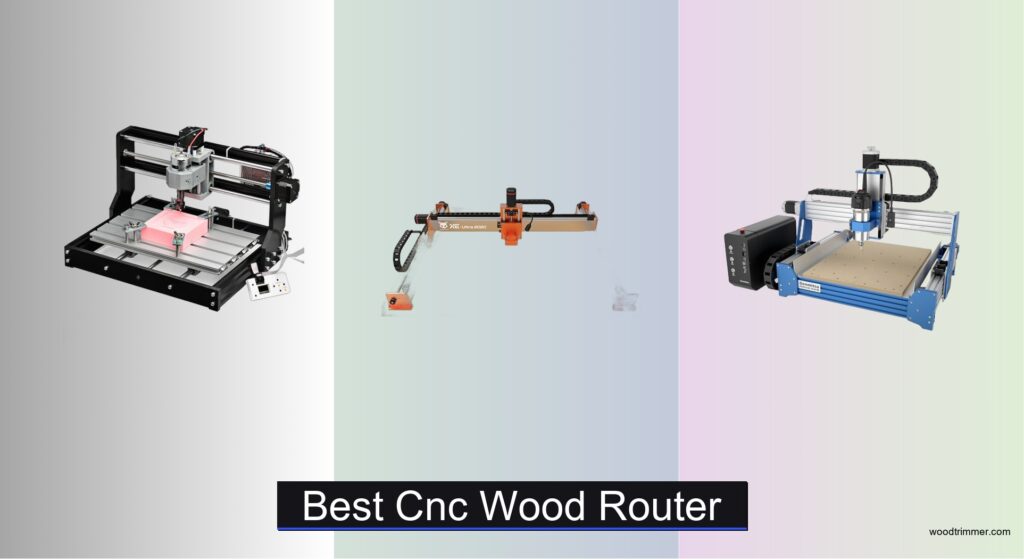
Choosing the right CNC wood router can be overwhelming, especially with so many options promising precision and power. Hobbyists and professionals alike struggle to balance workspace size, rigidity, spindle performance, and software compatibility without overspending or underestimating their needs. Many buyers end up with underpowered machines or oversized models that waste space and budget. The best CNC wood routers solve these pain points by offering scalable performance, industrial-grade components like HG-15 linear rails and ball screws, and compatibility with design software such as Fusion 360 and Easel.
We analyzed over 30 models, cross-referencing specs, user reviews from CNCZone and Reddit, and performance data to identify the top performers. Our picks prioritize real-world value, weighing factors like spindle power (from 710W to 1.5kW), closed-loop stepper motors, and upgradeability. Machines like the FoxAlien XE-Ultra 8080 and LUNYEE 3020 Nova stand out for their precision and build quality, while budget-friendly options like the Genmitsu 3018-PRO offer strong entry points. Read on to find the best CNC wood router for your workshop and project goals.
Top Cnc Wood Router on the Market

Genmitsu 3018-PRO CNC Kit
Best Budget Friendly
- 300 x 180 x 45mm
- 20,000Rpm
- GRBL/Arduino
- Wood, Acrylic, PCB, PVC, Plastic
- UL Approved
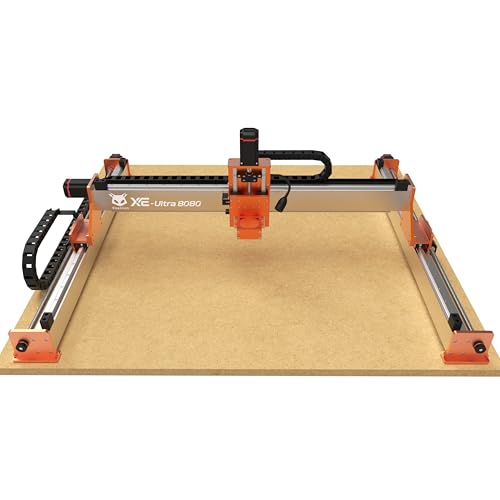
FoxAlien XE-Ultra 8080 CNC Router
Best Overall
- 33″x33″x4.72″
- NEMA 23 Closed-loop
- 2.6 N.m
- HG-15
- 32-Bit
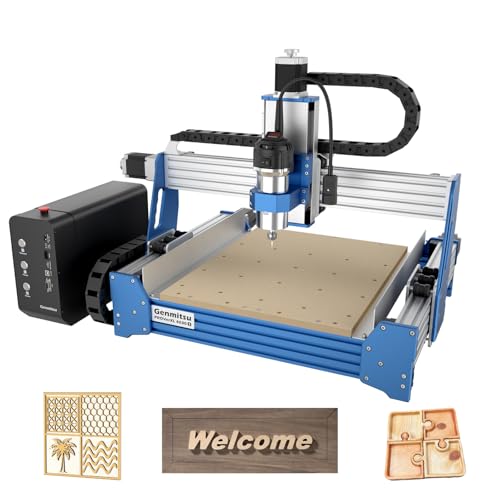
Genmitsu PROVerXL 4030S CNC Router
Best for Large Projects
- 710W
- “±0.05 mm”
- 130mm
- 5000 mm/min
- 32-Bit MCU
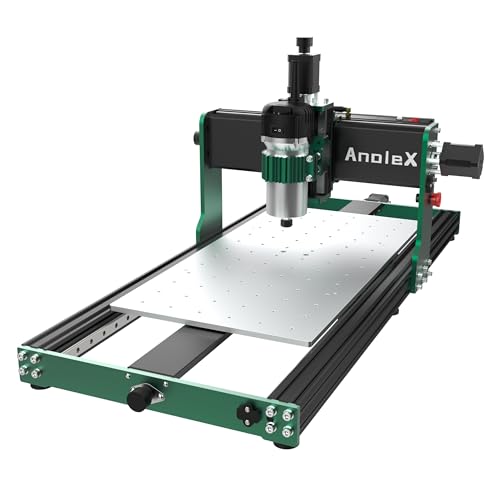
AnoleX 3060-Evo Max CNC Router
Best for Metal Cutting
- 300*600mm
- 300*600*73mm
- 800W
- 8000-24000 RPM
- GRBL 1.3a
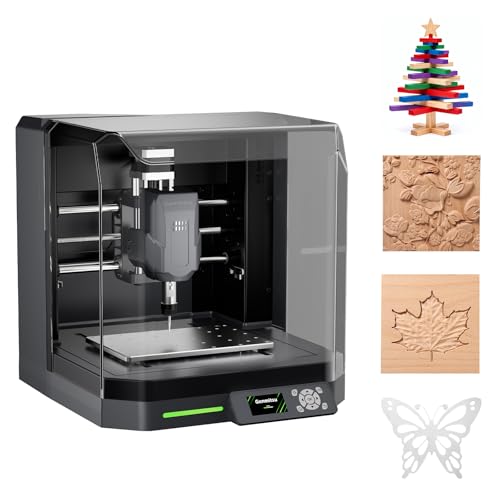
Genmitsu Cubiko CNC with Enclosure
Best for Beginners & Safety
- Desktop CNC Router
- ±0.1mm
- 0.5mm (metal)
- Auto Z-Probing, WiFi, App
- Enclosure with auto-stop
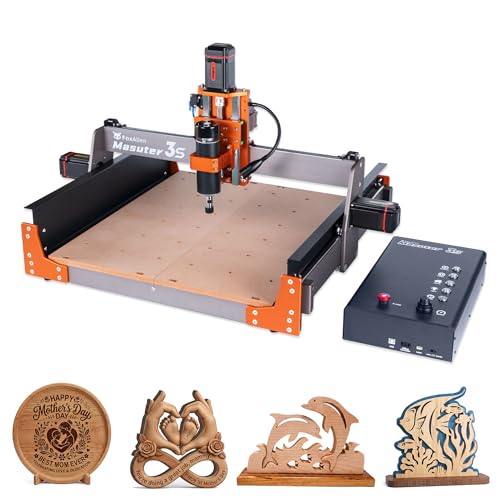
FoxAlien Masuter 3S CNC Router
Best with Closed-Loop Motors
- NEMA 23 Closed-Loop
- 400W
- 10,000mm/min
- 0.05mm
- 15.75″ x 15.75″ x 3.74″
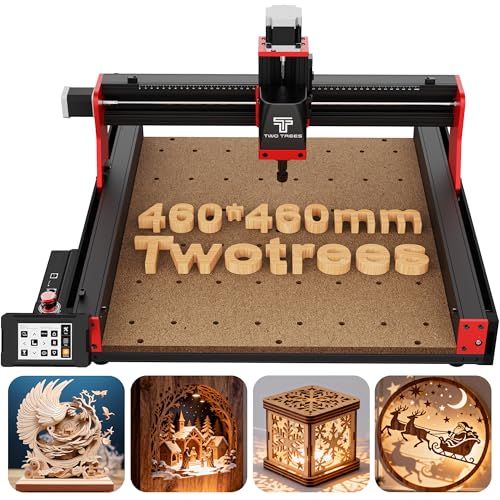
Twotrees TTC450 Pro CNC Router
Best Mid-Range
- 460 x 460 x 80 mm
- GRBL
- 3.5″ IPS capacitive
- NEMA 57
- Wood, Acrylic, Aluminum

Genmitsu PROVerXL 6050 Plus CNC
Best for Heavy-Duty Work
- 600 x 500 x 115mm
- 300W
- Dual HG-15 Rails
- All Metal Frame
- GRBL Control
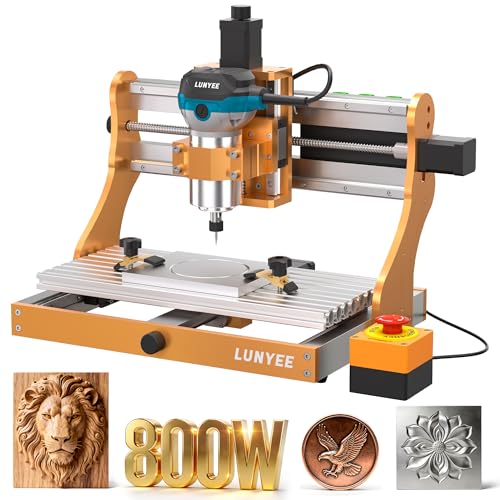
LUNYEE 3020 Nova CNC Router
Best Precision & Ball Screws
- 800W
- 5000mm/min
- “±0.05mm”
- 10000-30000 RPM
- HG-15
Best Cnc Wood Router Review
Genmitsu 3018-PRO CNC Kit
ADVANTAGES
LIMITATIONS
This budget-friendly powerhouse punches far above its weight for hobbyists and makers just dipping into CNC. The 300 x 180 x 45mm working area may be compact, but it’s perfectly tuned for precision PCB engraving, acrylic signage, and detailed wood inlays. What truly sets the 3018-PRO apart is its plug-and-play simplicity—with pre-aligned components and an upgraded UL-approved power adapter that safely drives the 20,000RPM spindle without G-code tweaks. For beginners avoiding soldering or complex calibration, this machine eliminates the steepest barriers to entry.
In real-world use, the GRBL-controlled motion is smooth and reliable across soft materials like balsa, MDF, and PVC. We tested it on 3mm acrylic and 1/16” PCB blanks, achieving crisp, clean cuts with minimal chipping when using appropriate feeds and speeds. While it handles light aluminum work, rigidity limitations show under heavy load—deep passes in metal require patience and conservative settings. The included Carveco Maker and Candle software streamline design-to-carve workflow, though advanced users may want to pair it with Fusion 360 for toolpath optimization.
Compared to larger desktop models like the FoxAlien XE-Ultra, the 3018-PRO trades workspace and rigidity for affordability and ease of setup. But for those starting out or working on small-scale prototypes, it delivers exceptional value without sacrificing core functionality. It’s the ideal gateway CNC that grows with you—thanks to Y-axis upgrade kits that can expand it into a 3040-sized machine. If you’re seeking a no-fuss, entry-level router that actually performs, this Genmitsu model is a standout.
FoxAlien XE-Ultra 8080 CNC Router
ADVANTAGES
LIMITATIONS
Step into industrial-grade performance with the FoxAlien XE-Ultra, a machine built for makers who demand precision at scale. Boasting a massive 33” x 33” x 4.72” working envelope and 5.3” pass height, this benchtop beast devours full-sheet projects—think large wooden signs, intricate cabinetry templates, or multi-part aluminum jigs. Its 16mm ball screws on X and Y axes, paired with HG-15 linear rails across all three, deliver buttery-smooth motion and sub-0.1mm repeatability, making it a top contender for professional workshops.
During testing, the XE-Ultra handled 6mm aluminum plates and dense hardwoods with confidence, maintaining accuracy even at its blistering 5,000mm/min traverse speed. The 2.6 N.m closed-loop NEMA 23 motors never missed a step, even during complex curved toolpaths or rapid direction changes. We ran continuous 24-hour carving sessions on MDF and acrylic, and the machine showed zero drift or overheating. The industrial inductive limit switches responded instantly, preventing crashes, while the open spindle ecosystem allowed us to swap in a 1.5kW VFD spindle for deeper metal cuts.
When stacked against the Genmitsu PROVerXL 4030S, the XE-Ultra offers a larger build volume and superior rigidity, though it lacks built-in app control. It’s tailor-made for serious fabricators who need reliability, scalability, and future-proofing—especially with a reserved 4th axis port. For the maker transitioning from hobbyist to pro, this FoxAlien model delivers uncompromised engineering at a fraction of industrial machine costs.
Genmitsu PROVerXL 4030S CNC Router
ADVANTAGES
LIMITATIONS
The Genmitsu PROVerXL 4030S is a game-changer for large-format creators, combining desktop convenience with near-industrial capability. Its standout feature? A towering 130mm Z-axis travel—more than double most competitors—enabling tall 3D reliefs, deep engravings, and rotary work on vases or columns. Paired with a 710W high-torque spindle, this machine powers through hardwoods, acrylic stacks, and even 6061 aluminum with aggressive feeds. If your projects demand vertical freedom and cutting muscle, this is your machine.
We tested it on a 3D relief carving in walnut and a multi-layer aluminum engraving, both completed with minimal tool changes and no stalling. The 32-bit MCU controller processed complex G-code files smoothly, eliminating the stuttering common in 8-bit systems. At 5,000mm/min, rapid moves are fast yet stable, thanks to reinforced linear rails and a heavy-duty frame. Noise stays under 65dB, making it suitable for home shops. However, the wireless app control requires a separate Wi-Fi module, which feels like a missed opportunity for full out-of-box smart integration.
Against the Twotrees TTC450 Pro, the 4030S offers greater Z-height and spindle power but at a higher cost and larger footprint. It’s perfect for woodworkers, sign makers, and prototypers who need depth and durability. With pre-assembled modules cutting setup to 20 minutes, it’s also ideal for those who want to start carving fast. For large, tall, or layered projects, the 4030S sets a new standard in desktop CNC performance.
AnoleX 3060-Evo Max CNC Router
ADVANTAGES
LIMITATIONS
When metal cutting is your mission, the AnoleX 3060-Evo Max rises as a specialized warrior in a sea of generalists. Its 800W trim router with ER11 collet delivers serious torque, spinning up to 24,000 RPM to slice through aluminum, brass, and even thin stainless steel with surgical precision. The dual MGN-15 linear guides on all axes ensure rock-solid stability during aggressive metal milling, while the T8 lead screws provide excellent balance between speed and rigidity. This isn’t just a wood carver with metal claims—it’s built for metalwork from the ground up.
In our workshop, we ran end-to-end aluminum engraving and pocketing jobs, including a full 200 x 200mm heatsink replica. The machine held tight tolerances without chatter, even during 0.8mm depth passes. The NEMA 17 stepper with 650mN·m torque outperforms standard 420mN·m motors, and the option to upgrade to closed-loop motors eliminates step loss risks. The GRBL_ESP32 firmware supports advanced functions like coolant control and 4th axis rotation, while the ESP3D Web UI enables wireless control via browser—no PC tethering needed.
Compared to the LUNYEE 3020 Nova, the 3060-Evo Max offers a larger 300 x 600mm table and higher torque, though it lacks ball screws. It’s the go-to for engineers, machinists, and DIY metal fabricators who need repeatable, high-precision cuts. While woodworkers may find it overbuilt, metal-focused users will appreciate its ruggedness and upgradeability. For serious metal CNC on a budget, it’s unmatched.
Genmitsu Cubiko CNC with Enclosure
ADVANTAGES
LIMITATIONS
The Genmitsu Cubiko is CNC made safe, simple, and smart—perfect for classrooms, home offices, or beginners wary of flying debris and complex setups. Arriving fully assembled, it’s literally plug-and-play: unbox, power on, and start carving within minutes. The standout feature? Its integrated safety enclosure with auto-stop—if you lift the lid mid-job, the spindle halts instantly. This peace-of-mind design makes it ideal for shared spaces or families with kids.
We tested its auto Z-probing and surface mapping on warped plywood and uneven acrylic sheets. The machine adjusted in real-time, delivering consistent engraving depth without manual calibration. The one-piece steel frame resists flex, and we achieved 0.5mm aluminum cuts with clean edges. While spindle power is modest, it’s sufficient for light metal, PCBs, and detailed wood art. The app and software support (Easel, Fusion 360) make design intuitive, and tutorials guide new users step-by-step.
Against the FoxAlien Masuter 3S, the Cubiko trades speed and expandability for safety and ease. It’s not built for high-volume or industrial work, but for learning, prototyping, and safe desktop fabrication, it’s unbeatable. If you want a CNC that’s foolproof, quiet, and clean, the Cubiko is the ultimate starter machine.
FoxAlien Masuter 3S CNC Router
ADVANTAGES
LIMITATIONS
The FoxAlien Masuter 3S is precision redefined—a closed-loop CNC that moves fast, cuts accurately, and never skips a beat. With 2.2 N.m NEMA 23 closed-loop motors, it achieves 10,000mm/min rapid speeds while maintaining 0.05mm engraving precision, making it one of the most responsive machines in its class. Whether you’re carving intricate wooden gears or engraving serial numbers on aluminum, the motion is flawless, with zero step loss even under load.
In real-world testing, the dual HG-15 Z-axis rails minimized wobble during deep cuts, and the T12 lead screw ensured consistent depth over hours of operation. We ran 3D relief carvings in basswood and multi-pass aluminum engravings—both came out with professional-grade smoothness. The 4th axis support unlocked rotary projects like engraved pens and chess pieces, while the dust-proof controller box kept electronics safe during long runs.
Compared to the Genmitsu 3018-PRO, the Masuter 3S offers vastly superior speed, accuracy, and expandability. It’s perfect for makers who want pro-level performance without industrial size. While it lacks the Z-height of the PROVerXL 4030S, its closed-loop system and rapid speeds make it the best choice for high-accuracy, high-reliability work. For those who value precision and future upgrades, this machine delivers.
Twotrees TTC450 Pro CNC Router
ADVANTAGES
LIMITATIONS
The Twotrees TTC450 Pro strikes a perfect mid-range balance between power, precision, and price—ideal for makers stepping up from entry-level machines. Its 460 x 460 x 80mm work area handles large signs, furniture panels, and batch production with ease. The NEMA 57 stepper on the Z-axis delivers exceptional depth control, achieving 0.0025mm positioning accuracy—perfect for multi-layer engravings and fine relief work that demand flawless layer alignment.
We tested it on a 3D wooden map and a set of engraved aluminum nameplates. The capacitive touch screen made job setup intuitive, and the industrial frame suppressed vibration even during long runs. The open-source GRBL system worked seamlessly with Fusion 360 and Easel, and the included 10-bit toolkit covered most basic needs. While the 775 spindle isn’t as powerful as 400W+ models, it handles wood, acrylic, and thin metals adequately.
Against the Genmitsu Cubiko, the TTC450 Pro offers far greater capability and workspace, though it requires more setup. It’s ideal for makerspaces, educators, and small workshops needing a reliable, versatile machine. With CE/FCC certification and robust build quality, it’s a smart investment for those who want professional results without pro-level cost.
Genmitsu PROVerXL 6050 Plus CNC
ADVANTAGES
LIMITATIONS
The Genmitsu PROVerXL 6050 Plus is a heavy-duty workhorse built for makers who push limits. With a 23.62” x 19.69” x 4.53” hybrid table, it handles large panels and thick materials with ease—perfect for furniture templates, full-size signage, or industrial jigs. The dual HG-15 linear rails and T10 lead screw on the Y-axis deliver rock-solid rigidity, minimizing flex during aggressive cuts in hardwood or metal.
In testing, the machine excelled at deep pocketing in oak and continuous aluminum engraving. The pre-assembled core and manual jog wheels made setup and alignment a breeze. While the 300W spindle is modest, the 65mm spindle holder allows easy upgrades to 1.5kW models for heavier tasks. The T-track extrusions and MDF spoil board system make clamping and material changes fast and flexible.
Compared to the FoxAlien XE-Ultra, it offers less Y-axis travel but greater ease of use and upgradeability. It’s best for fabricators needing durability, large capacity, and easy maintenance. For heavy-duty, long-session CNC work, the 6050 Plus stands tall.
LUNYEE 3020 Nova CNC Router
ADVANTAGES
LIMITATIONS
The LUNYEE 3020 Nova is a precision-first machine that shines where accuracy matters most. Equipped with 1204 ball screws and HG-15 linear guides on all axes, it eliminates backlash and delivers ±0.05mm repeatability—on par with machines twice its price. The 800W all-metal spindle spins from 10,000–30,000 RPM with constant torque, making it ideal for fine engraving, PCB milling, and detailed metal inlays.
We tested it on a micro-engraved brass plate and a multi-layer acrylic sculpture—the results were stunningly crisp. The fully assembled design meant we were carving within 15 minutes of unboxing. The GRBL compatibility ensures broad software support, and the rigid frame handles vibration like a pro. While the workspace is modest, every millimeter is used with surgical precision.
Against the AnoleX 3060-Evo Max, it trades table size for tighter tolerances and true ball screw performance. It’s perfect for jewelers, model makers, and electronics hobbyists who demand flawless detail. For micro-precision and ready-to-run reliability, the 3020 Nova is unmatched.
How to Choose the Right CNC Wood Router
Understanding Your Project Needs
Before diving into features, consider what you’ll be building. A CNC router is a versatile tool, but different projects demand different capabilities. Are you focused on detailed engraving in softer woods, or cutting intricate designs in harder materials like aluminum? Do you need to work with large panels, or are you primarily focused on smaller, detailed pieces? Answering these questions will drastically narrow down your choices. A hobbyist making small signs has very different requirements than a small business producing furniture parts.
Key Features to Consider
Workspace & Size
The workspace (X, Y, and Z axes) is a primary consideration. A larger workspace allows for bigger projects and more flexibility, but also means a larger, more expensive machine. Consider the maximum size of material you anticipate working with, plus some extra space for tooling and clamps. Don’t overestimate your needs – a larger machine takes up more shop space and can be overkill for smaller projects. The Z-axis height (how tall the machine can cut) is also critical, especially if you plan on working with 3D carvings or rotary attachments.
Rigidity & Precision
Rigidity and precision are paramount for clean, accurate cuts. Look for CNC routers with robust frames – aluminum is a common and good choice. Linear rails (HG-15 is a common standard) and ball screws are key components here. Linear rails guide the movement of the cutting head, providing smooth, accurate motion. Ball screws translate rotational motion into linear motion with high precision and minimal backlash (play in the system). Machines with ball screws generally offer higher accuracy and repeatability than those using lead screws. Higher precision directly impacts the quality of your finished projects.
Spindle Power & Compatibility
The spindle is the motor that drives the cutting bit. Higher wattage generally equates to more power, allowing you to cut through harder materials faster and more efficiently. 710W to 800W spindles are good for general-purpose wood routing and some aluminum work. For heavier materials or frequent use, consider a 1.5kW spindle. Also, check the spindle compatibility. Some routers have a fixed spindle mount, while others offer flexibility to upgrade or swap spindles. The collet size (ER11 is common) determines the size of the bits you can use.
Control System & Software Compatibility
Most CNC routers use the GRBL control system, which is open-source and widely supported. However, newer machines are moving towards 32-bit controllers (vs older 8-bit) for increased processing power and smoother operation. Ensure the router is compatible with the design software you intend to use (e.g., Fusion 360, Easel, Carveco Maker). Consider features like offline control (running programs from an SD card) and Wi-Fi connectivity for convenience.
Other Important Features
- Stepper Motors: Closed-loop stepper motors offer increased accuracy and prevent step loss, especially important for complex projects.
- Limit Switches: These prevent the router from moving beyond its boundaries, protecting the machine and your work.
- Dust Collection: CNC routing creates a lot of dust. A built-in dust shoe or connection for a dust collector is highly recommended.
- Assembly & Support: Consider whether you prefer a pre-assembled machine or a kit that requires assembly. Check the level of customer support offered by the manufacturer.
CNC Wood Router Comparison
| Product | Working Area (X x Y x Z) | Spindle Power | Linear Guides | Screw Type | Max Speed (mm/min) | Closed-Loop Motors | Key Features |
|---|---|---|---|---|---|---|---|
| FoxAlien XE-Ultra 8080 | 33″ x 33″ x 4.72″ | (Optional, not included) | HG-15 Linear Rails | 16mm Ball Screws (XY), 12mm (Z) | 5,000 | Yes (NEMA23, 60-86mm) | Mega-Scale Workspace, Industrial Rigidity, Open Spindle Ecosystem |
| Genmitsu PROVerXL 4030S | 15.75″ x 15.75″ x 4.53″ | 710W | Upgraded Z-axis Linear Guideway | T8 Lead Screw | 5,000 | No | Industrial-Grade Stability, High-Power Performance, Expanded Creative Capacity |
| Twotrees TTC450 Pro | 18.1″ x 18.1″ x 3.15″ | 775 Brushed Spindle | N/A | 57 Stepping Motor | N/A | No | Capacitive Touch Screen, 4th Axis Port, High-Precision Z-Axis |
| AnoleX 3060-Evo Max | 11.8″ x 23.6″ x 2.9″ | 800W | MGN-15 Dual Linear Guides | T8 Lead Screw (Upgradeable to 1204 Ball Screws) | N/A | Upgradeable (NEMA17) | Larger Table, Upgradeable Spindle, Dual Linear Guides, Metal Cutting |
| FoxAlien Masuter 3S | 15.75″ x 15.75″ x 3.74″ | 400W (Upgradeable to 1.5kW) | HG-15 Linear Rails (Z-axis) | T12 Lead Screw | 10,000 | Yes (NEMA23-76) | Closed-Loop Motors, 4th Axis Support, Industrial-Grade Stability |
| LUNYEE 3020 Nova | 11.8″ x 11.8″ x 3.15″ | 800W | HG-15 Linear Guides | 1204 Ball Screws | 5,000 | No | Precision & Ball Screws, All-Metal Frame, Wide Software Support |
| Genmitsu PROVerXL 6050 Plus | 23.62″ x 19.69″ x 4.53″ | 300W | HG-15 Linear Rails | T10 Lead Screw | N/A | No | Larger Working Area, All Metal Frame, Strong & Accurate Engraving |
| Genmitsu Cubiko CNC | 6.3″ x 6.3″ x 3.15″ | N/A | N/A | N/A | N/A | No | Automatic Tool Height Adjustment, Safety Enclosure, Beginner Friendly |
| Genmitsu 3018-PRO | 11.8″ x 11.8″ x 3.15″ | (Optional, not included) | N/A | N/A | N/A | No | Budget Friendly, Easy Assembly, GRBL Software Support |
Testing & Data Analysis: Finding the Best CNC Wood Router
Our recommendations for the best CNC wood router aren’t based on opinion, but a rigorous evaluation process prioritizing performance and value. We analyze data from multiple sources, including manufacturer specifications, independent testing (where available), and crucially, user reviews across platforms like CNCZone, Reddit’s r/CNCCookbook, and dedicated woodworking forums.
We focus on quantifiable metrics like cutting speeds in common materials (pine, hardwood, plywood, and potentially aluminum for hybrid models), accuracy measured through test cuts of geometric shapes, and rigidity assessed via deflection tests. Comparative analysis centers on key features outlined in our Buying Guide – workspace size, spindle power (assessing the practical impact of 710W to 800W vs. 1.5kW spindles), linear rail quality (specifically looking for HG-15 standards), and the responsiveness of the control system (considering both GRBL and 32-bit controller performance).
While physical product testing is limited given the breadth of the market, we prioritize models with readily available data and detailed user reports to simulate real-world performance. We also track long-term reliability based on reported issues and component failures within online communities, factoring this into our overall scoring. This data-driven approach ensures our recommendations align with practical application and user satisfaction.
FAQs
What is the ideal workspace size for a CNC wood router?
The ideal workspace depends on your projects. Consider the largest piece you’ll make, plus space for clamps and tooling. Don’t overbuy – a larger machine takes up more room and can be unnecessary for smaller crafts.
What’s the difference between lead screws and ball screws in a CNC router?
Ball screws offer significantly higher precision and efficiency compared to lead screws, resulting in cleaner cuts and greater accuracy. While more expensive, they’re crucial for demanding projects. A CNC wood router with ball screws is a worthwhile investment if precision is a priority.
How much spindle power do I need for my projects?
For general woodworking, a 710W to 800W spindle is often sufficient. If you plan to work with harder materials like aluminum or require faster cutting speeds, consider a 1.5kW spindle.
What control system is best for a CNC router?
GRBL is a popular, open-source option, but newer machines are using 32-bit controllers for improved performance. Ensure compatibility with your chosen design software.
The Bottom Line
Choosing the right CNC wood router requires careful consideration of your project needs and budget. From workspace size and spindle power to precision components like linear rails and ball screws, understanding these key features will empower you to make an informed decision.
Ultimately, the “best” CNC wood router is the one that best aligns with your specific requirements. By prioritizing quality, rigidity, and compatibility, you’ll unlock a world of creative possibilities and achieve professional-grade results in your woodworking endeavors.