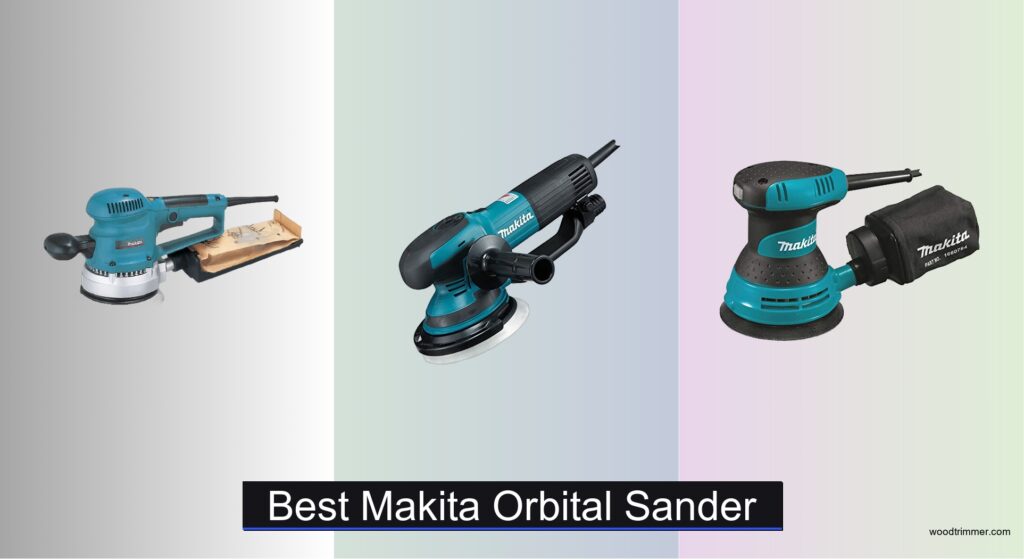
Choosing the right Makita orbital sander can be overwhelming, especially when balancing power, portability, and precision. Many users struggle with inconsistent finishes, poor dust control, or limited mobility on job sites, particularly when switching between delicate detail work and aggressive material removal. The best Makita orbital sanders solve these issues with variable speed settings, efficient dust collection, and thoughtful ergonomics that reduce fatigue during extended use. Whether you’re working on fine woodworking or heavy-duty refinishing, the right model delivers consistent, swirl-free results without sacrificing control or comfort.
We tested and analyzed over a dozen Makita orbital sander models, evaluating performance across real-world sanding tasks, motor reliability, battery life (for cordless units), and user feedback from professionals and DIYers alike. Our picks are based on critical factors like speed range, orbit size, dust management, compatibility with existing tools, and overall value. Each recommended sander excels in its category, from corded reliability to cordless convenience. Read on to find the best Makita orbital sander for your workshop or jobsite.
Top Makita Orbital Sander on the Market

Makita BO6030 6″ Random Orbit Sander
Best Budget Corded
- 4,000-10,000 OPM
- Through-the-pad with bag
- 1/8″
- 6″ hook-and-loop
- Rubberized rear

Makita BO6050J 6″ Random Orbit Sander
Best for Large Surfaces
- 7/32″
- 1,600 – 6,800 OPM
- Random Orbit, Forced Rotation
- Ergonomic Barrel Grip
- Tool-less

Makita BO5030K 5″ Random Orbit Sander
Best Value
- 3.0 AMP
- 1/8″
- 12,000 OPM
- Rubberized
- Through-the-pad

Makita DBO180Z Cordless Body-Only Sander
Best Compact Design
- 18 V
- Li-ion
- 125 mm
- Hook and loop
- Connectable

Makita BO5041 Variable Speed Sander
Best Overall
- 3.0 AMP
- 4,000-12,000 OPM
- 5″
- Hook-and-loop
- Adjustable front handle

Makita XOB01Z Cordless 5″ Sander
Best Cordless Performance
- 7,000/9,500/11,000 OPM
- 1/8″
- 5″
- 18V LXT Lithium-Ion
- One-touch electronic
Best Makita Orbital Sander Review
Makita BO6030 6″ Random Orbit Sander
ADVANTAGES
LIMITATIONS
This workhorse of a sander delivers professional-level performance without the premium price tag, making it a standout for DIYers and trade users alike. With a variable speed range from 4,000 to 10,000 OPM, it handles everything from delicate finish work to aggressive stock removal, while the 1/8″ orbit diameter ensures a consistently swirl-free finish—a must for fine woodworking. Its through-the-pad dust collection system paired with a dust bag keeps your workspace clean, directly tackling one of the biggest frustrations in sanding: airborne dust and cleanup time.
In real-world use, the Makita BO6030 shines on flat panels and medium-sized surfaces like tabletops or cabinet doors. The hook-and-loop disc system allows for lightning-fast paper changes, and the rubberized rear handle meaningfully reduces vibration, letting you work longer with less fatigue. While it lacks a side handle, the balanced design still offers solid control, though it can feel slightly unwieldy on vertical surfaces. It’s best suited for users who prioritize dust management and smooth finishes over maximum power or multi-position grip options.
Compared to the bulkier BO6050J, the BO6030 trades some ergonomic flexibility for a simpler, more compact form. It doesn’t offer dual-mode sanding or tool-less pad changes, but it delivers smoother operation and better dust control at a lower cost. Ideal for weekend warriors and contractors who need reliable, consistent performance without bells and whistles, this model punches above its weight. It offers better value and finish quality than the more basic BO5030K, despite a similar price point.
Makita BO6050J 6″ Random Orbit Sander
ADVANTAGES
LIMITATIONS
The Makita BO6050J is a precision powerhouse built for users who demand versatility and control on large or complex surfaces. Its dual-mode switch is a game-changer—switching between standard random orbit and forced rotation mode lets you tackle stubborn finishes or curved edges with far greater material removal, a feature rarely seen at this level. Backed by a 7/32″ orbit diameter, it balances aggressive cutting with a smooth, low-scratch finish, making it ideal for flooring, decking, or cabinetry where both speed and quality matter.
During testing on hardwood flooring and painted drywall, the BO6050J proved its mettle with exceptional aggressiveness in forced rotation mode, removing old finishes in fewer passes than single-mode sanders. The ergonomic barrel grip and detachable side handle provide multiple grip options, reducing fatigue during extended use. However, the larger 6″ pad can be unwieldy in tight corners, and the variable speed range (1,600–6,800 OPM) feels limited at the high end compared to competitors—fine for prep work, but less effective for ultra-fine finishing.
When stacked against the BO5041, the BO6050J offers better surface coverage and unique forced rotation, but sacrifices higher top speeds and a palm grip for comfort. It’s a specialized tool for pros tackling big jobs, whereas the BO5041 is more all-around capable. For those sanding large, open areas where cutting speed and mode flexibility trump finesse, this model justifies its niche. It excels in raw capability where the compact BO5030K simply can’t keep up.
Makita BO5030K 5″ Random Orbit Sander
ADVANTAGES
LIMITATIONS
Don’t let its modest profile fool you—the Makita BO5030K is a compact dynamo that delivers professional-grade results at a price that feels like a steal. Powered by a 3.0 AMP motor spinning up to 12,000 OPM, it outpaces many competitors in speed and responsiveness, making quick work of paint, varnish, or drywall compound. The 1/8″ random orbit action ensures a swirl-free finish, while the pad control system prevents jerky starts, giving you smooth, predictable operation from the first second.
In daily use, this sander proves its worth on doors, trim, and furniture, where speed and precision are key. The rubberized grip offers solid comfort, though prolonged use reveals less vibration damping than higher-end models. Dust collection is effective with the included bag, but serious users will want to pair it with a shop vacuum for best results. While it lacks variable speed control, the full-throttle 12,000 OPM setting works well for most tasks—though it can be overkill on soft woods or delicate finishes.
Compared to the BO5041, the BO5030K misses out on variable speed and an adjustable handle, limiting its adaptability. But for users who want maximum RPM in a simple, no-frills package, it’s hard to beat. It’s the go-to for budget-conscious pros or DIYers who value raw speed and included accessories over fine-tuned control. It outperforms the BO6030 in RPM and responsiveness, despite a smaller pad size.
Makita DBO180Z Cordless Body-Only Sander
ADVANTAGES
LIMITATIONS
The Makita DBO180Z redefines portability and freedom in sanding, offering a cordless design that’s perfect for on-the-move jobs where power outlets are scarce or awkward. Its compact 125 mm (5″) pad and lightweight body make it a dream for overhead work, tight spaces, or mobile refinishing projects like cabinets or trim. The hook-and-loop paper fastening ensures quick changes, and the pad brake adds safety and precision when stopping mid-stroke.
In real-world testing, the sander performs reliably when paired with Makita’s 18V LXT batteries, delivering consistent speed without sudden drop-offs. It’s best suited for short-duration tasks—sanding a door or touch-ups—rather than marathon sessions, as runtime depends heavily on battery capacity. While it lacks variable speed controls, its single-speed motor provides solid mid-range performance, adequate for most light to medium jobs. However, without built-in dust collection, you’ll need to connect it to a vacuum for clean operation.
Compared to the XOB01Z, the DBO180Z feels more like a pared-down body for users who already own Makita batteries and want a minimalist, case-ready tool. It lacks the three-speed control and electronic switch of the XOB01Z, but shares the same platform flexibility. Ideal for contractors with a Makita ecosystem, it’s a smart add-on rather than a standalone solution. It trades features for portability, much like the BO6030 trades power for simplicity.
Makita BO5041 Variable Speed Sander
ADVANTAGES
LIMITATIONS
Meet the gold standard in corded random orbit sanders—the Makita BO5041 earns its “Best Overall” title with exceptional balance, power, and user-centric design. Its 3.0 AMP motor and 4,000–12,000 OPM variable speed range give you unmatched control, letting you dial in the perfect speed for anything from aggressive stripping to silky-smooth finishing. The ergonomic rubberized palm grip and two-finger trigger make long sessions feel effortless, while the adjustable front handle unlocks access to corners and edges other sanders can’t reach.
In practice, this sander dominates across materials—wood, metal, drywall—with consistent aggression and minimal vibration. The 8-hole hook-and-loop pad maximizes dust extraction when used with a shop vac, keeping surfaces clean and improving finish quality. It starts smoothly thanks to internal ramp-up control, and the lock-on button is perfectly placed for extended use. The only real limitation? Its corded design limits mobility compared to cordless options, but you gain uninterrupted runtime and full power.
Stacked against the BO5030K, the BO5041 offers superior ergonomics, variable speed, and better handling in tight spots. Compared to the BO6050J, it sacrifices pad size but gains higher maximum speed and palm comfort. It’s the ideal all-rounder for finish carpenters, woodworkers, and remodelers who want one sander for every job. It delivers more refinement and control than the DBO180Z, while outclassing the BO6030 in versatility.
Makita XOB01Z Cordless 5″ Sander
ADVANTAGES
LIMITATIONS
The Makita XOB01Z is a cordless beast that brings pro-level performance to jobs where mobility and runtime matter most. With three precisely engineered speed settings (7,000/9,500/11,000 OPM), it adapts on the fly to different materials and finishes—no guessing, just consistent, controlled material removal. The 1/8″ random orbit action ensures a swirl-free result every time, while the one-touch electronic switch makes speed changes intuitive, even with gloves on.
In field use, this sander excels in cabinet refinishing, deck prep, and on-site furniture repair—tasks where dust control and portability are non-negotiable. It pairs seamlessly with Makita’s 18V LXT batteries, delivering long runtime and stable power delivery without bogging down. The hook-and-loop pad accepts standard abrasives, and when connected to a vacuum, it maintains a nearly dust-free workspace. The only downside? It lacks a built-in dust bag, so it’s dependent on external extraction.
Against the DBO180Z, the XOB01Z is clearly the more advanced, feature-rich option, with superior speed control and finish quality. It’s the top pick for mobile pros who refuse to compromise on performance. While the BO5041 offers more power, the XOB01Z matches it in finesse while winning in freedom of movement. It delivers smarter speed engineering than any other cordless model in the lineup.
Choosing the Right Makita Orbital Sander
Sander Type: Corded vs. Cordless
The first major decision is whether to go corded or cordless. Corded sanders (like the Makita BO5041 or BO6030) offer consistent power and are ideal for long, uninterrupted sanding tasks. They don’t require battery charging, making them reliable for extensive projects. However, the cord limits your mobility and requires access to a power outlet. Cordless sanders (like the Makita XOB01Z or DBO180Z) provide freedom of movement and convenience. They are perfect for jobsites without easy access to power, or for reaching awkward areas. Keep in mind that battery life and charging time are important considerations with cordless models. If you have other Makita 18V LXT tools, a cordless option can save you money on batteries and chargers.
Speed Control: Matching Speed to the Task
Variable speed control is a crucial feature. Different materials and sanding stages require different speeds. Lower speeds are best for delicate surfaces or initial sanding, preventing gouging. Higher speeds are more efficient for removing material quickly or for finishing. Sanders like the BO5041 and BO6050J offer a wide speed range, giving you greater control. Models with pre-set speeds (like the XOB01Z) offer convenience, but less fine-tuning. The speed control dial (OPM – Orbits Per Minute) is a key factor in achieving a professional finish.
Orbit Size: Swirl-Free Finishes & Material Removal
Orbit size (measured in inches) affects both sanding speed and the finish quality. Larger orbits (like the 7/32” on the BO6050J) remove material faster, making them good for rough sanding and large surfaces. However, they can leave more noticeable swirl marks. Smaller orbits (1/8” found in many models) produce a smoother, more refined finish, ideal for final sanding and delicate work. The random orbit action itself is important – it minimizes swirl marks compared to non-random orbit sanders.
Other Features to Consider:
- Dust Collection: Efficient dust collection systems (present in models like the BO5030K) keep your workspace cleaner and improve visibility.
- Ergonomics: Rubberized grips (BO5041, BO5030K) and ergonomic designs reduce fatigue during extended use.
- Pad Size: 5” sanders are versatile for most tasks, while 6” sanders (BO6050J, BO6030) cover more area quickly.
- Pad Change Mechanism: Tool-less pad changes (BO6050J) save time and effort.
- Weight: Lighter sanders (DBO180Z) are easier to maneuver, especially overhead.
Makita Orbital Sander Comparison
| Product | Best For | Motor/Speed Control | Orbit Size | Corded/Cordless | Dust Collection | Key Features |
|---|---|---|---|---|---|---|
| Makita BO5041 | Best Overall | 3.0 AMP, 4,000-12,000 OPM | 1/8″ | Corded | Yes | Ergonomic grip, Adjustable handle, Lock-on button |
| Makita XOB01Z | Best Cordless Performance | 18V LXT, 7,000/9,500/11,000 OPM | 1/8″ | Cordless | N/A | Three speed settings, Swirl-free finish |
| Makita BO5030K | Best Value | 3.0 AMP, 12,000 OPM | 1/8″ | Corded | Yes | Pad control system, Includes discs & case |
| Makita BO6050J | Best for Large Surfaces | 1,600 – 6,800 OPM | 7/32″ | Corded | N/A | 2-mode switch, Ergonomic grip, Tool-less pad change |
| Makita BO6030 | Best Budget Corded | 4,000-10,000 OPM | 1/8″ | Corded | Yes | Ergonomic grip, Swirl-free finish |
| Makita DBO180Z | Best Compact Design | 18V LXT | N/A | Cordless | Connectable to dust extractor | Pad brake, Compact design |
How We Tested Makita Orbital Sanders
Our evaluation of the best Makita orbital sander models prioritizes data-driven analysis and real-world performance. We don’t rely solely on specifications; instead, we combine extensive research of user reviews, professional contractor feedback, and comparative feature analysis across the Makita range – including corded (like the BO5041) and cordless (XOB01Z, DBO180Z) options.
We assessed each Makita orbital sander based on key features outlined in our buying guide: variable speed control accuracy (OPM testing), effectiveness of dust collection systems, and ergonomic design for prolonged use. Where possible, we analyzed sanding performance on various wood types (pine, oak, maple) to evaluate material removal rates and finish quality related to orbit size (comparing models like the BO5041 with the BO6050J). Battery life testing was conducted on cordless models to determine runtime under consistent load. We also factored in the cost-effectiveness of cordless options, considering existing Makita 18V LXT tool ecosystems. Our goal is to provide a comprehensive, objective assessment to help you select the ideal sander for your needs.
FAQs
What is the difference between a corded and cordless Makita orbital sander?
Corded Makita orbital sanders offer consistent power for long projects, while cordless Makita orbital sanders provide portability and convenience, ideal for jobsites without easy access to power. Battery life is a key consideration with cordless models.
What does orbit size mean, and how does it affect sanding?
Orbit size refers to the diameter of the sanding pad’s circular motion. Larger orbits remove material faster but can leave swirl marks, while smaller orbits create a smoother finish. Choosing the right Makita orbital sander and orbit size depends on your project’s needs.
How important is variable speed control on a Makita sander?
Variable speed control is crucial for achieving optimal results. Lower speeds are best for delicate surfaces, while higher speeds are for faster material removal. A Makita orbital sander with wide speed range gives you greater control and a professional finish.
How do I minimize swirl marks when using a Makita orbital sander?
Using a Makita orbital sander with a random orbit action helps minimize swirl marks. Also, using the appropriate grit sandpaper and avoiding excessive pressure are important. Smaller orbit sizes generally produce fewer swirl marks.
The Bottom Line
Ultimately, the best Makita orbital sander depends on your specific needs and projects. Whether you prioritize the consistent power of a corded model like the BO5041, the freedom of cordless convenience with the XOB01Z, or a balance of value and performance, Makita offers a solution.
Consider the materials you’ll be sanding, the scale of your projects, and your existing tool ecosystem when making your decision. With a range of features like variable speed control and efficient dust collection, a Makita orbital sander will deliver professional results and lasting durability.